

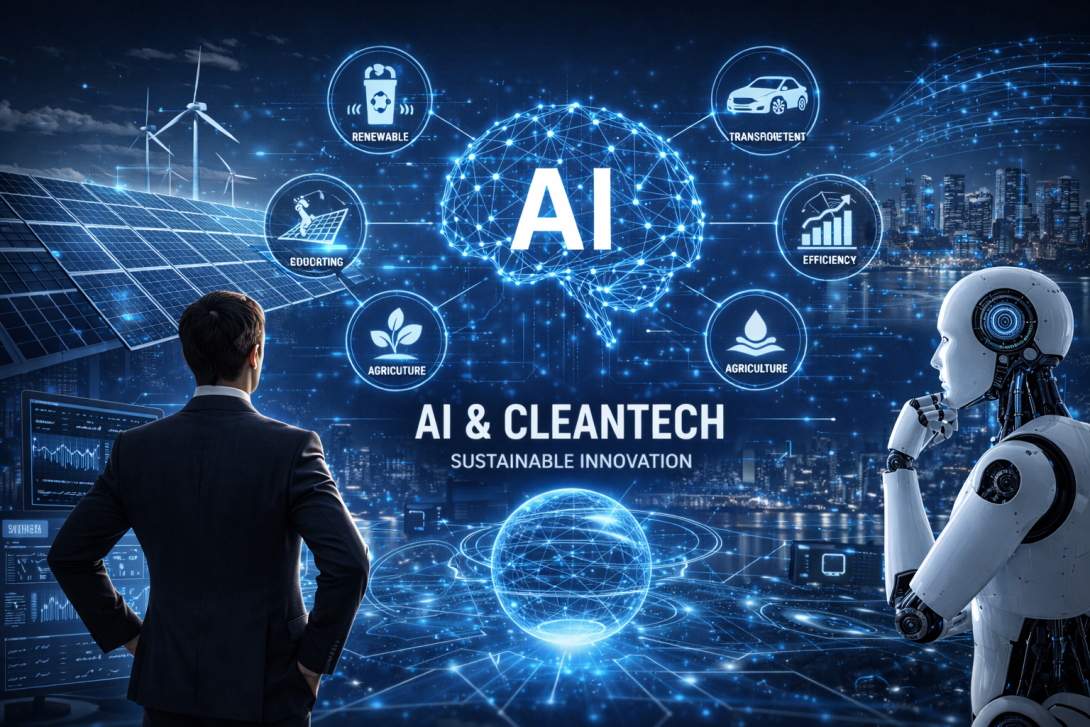
Artificial Intelligence (AI) and Clean Technology (Cleantech) are two of the most powerful forces shaping the future of the global economy. While AI focuses on creating intelligent systems capable of learning and decision-making, Cleantech aims to develop environmentally friendly technologies that reduce pollution and improve sustainability. Together, AI and Cleantech are helping businesses, governments, and organizations build a greener and more efficient future.
As climate change, energy demand, and environmental challenges continue to grow, the need for smart and sustainable solutions is becoming more important. AI-powered technologies are now helping improve renewable energy systems, optimize resource management, reduce waste, and enhance environmental protection.
The combination of artificial intelligence and clean technology is creating new opportunities for innovation and economic growth.
Understanding AI and Cleantech
Artificial Intelligence refers to computer systems that can perform tasks that normally require human intelligence. AI systems analyze data, identify patterns, and make decisions with minimal human involvement.
Cleantech refers to technologies designed to reduce environmental impact and improve sustainability. These technologies focus on renewable energy, energy efficiency, electric vehicles, smart grids, water management, and waste reduction.
When AI is integrated with cleantech solutions, it helps improve efficiency and performance. AI can process large amounts of environmental data and provide insights that help optimize energy use and reduce carbon emissions.
AI-powered cleantech solutions are transforming industries such as energy, transportation, manufacturing, and agriculture.
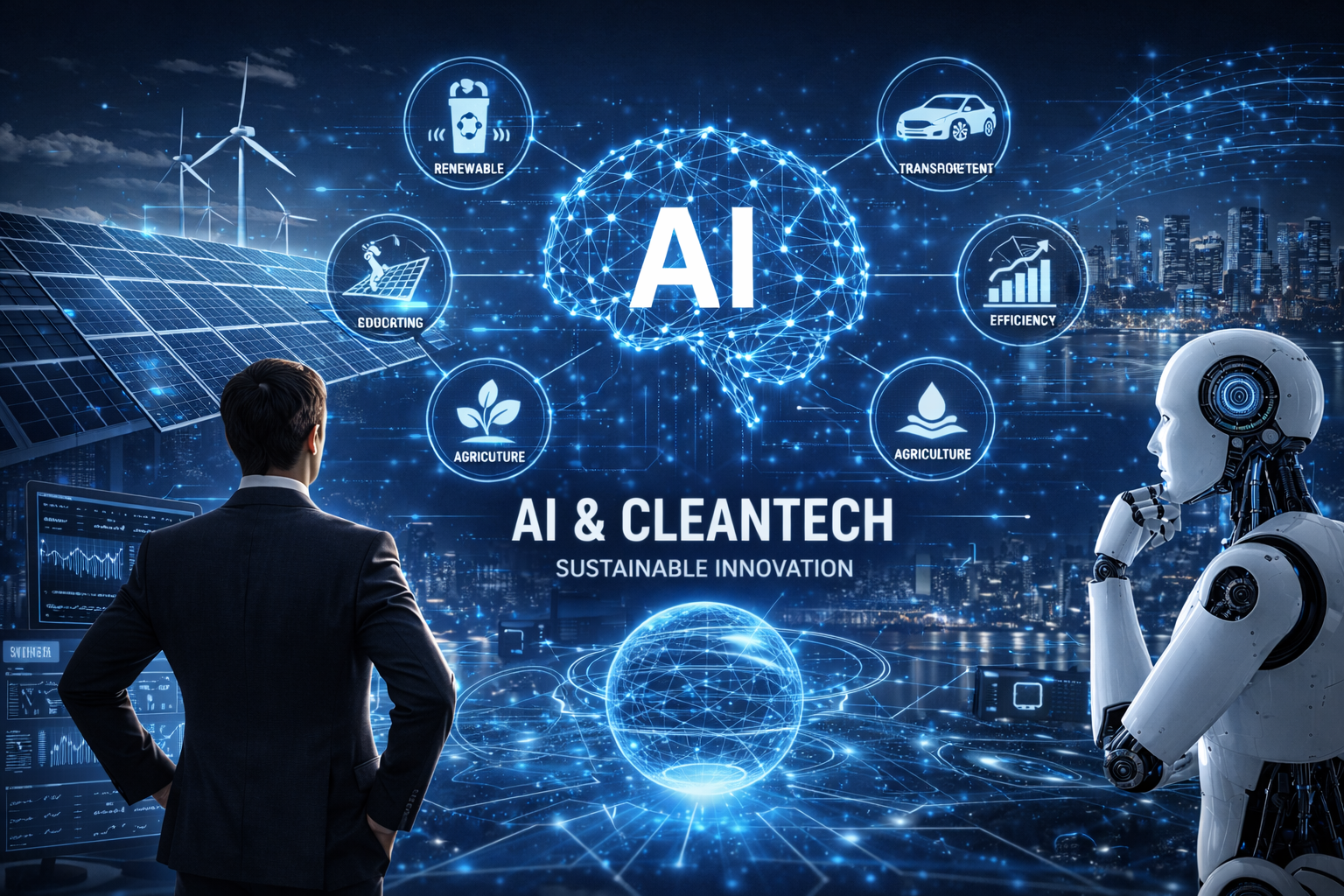
Role of AI in Renewable Energy
Renewable energy sources such as solar power, wind energy, and hydroelectric power are important for reducing dependence on fossil fuels. However, renewable energy systems require advanced monitoring and management to operate efficiently.
Artificial intelligence helps improve renewable energy performance by analyzing weather patterns, predicting energy demand, and optimizing power generation.
For example, AI algorithms can predict how much solar energy will be generated based on weather conditions. This helps energy companies manage electricity supply more effectively.
Wind energy systems also use AI to adjust turbine performance based on wind speed and direction.
Smart grid technology powered by AI helps distribute electricity efficiently and prevent energy wastage.
AI improves energy reliability while reducing environmental impact.
Smart Energy Management Systems
Energy consumption is one of the major contributors to carbon emissions. AI-powered energy management systems help organizations monitor and control energy usage more efficiently.
Smart buildings use AI to optimize lighting, heating, and cooling systems. Sensors collect real-time data and adjust energy consumption automatically.
For example, AI systems can reduce electricity use during low occupancy periods and increase efficiency during peak hours.
Industries use AI-powered tools to monitor machinery energy consumption and reduce wastage.
Smart energy systems help businesses lower costs while supporting environmental sustainability.
AI in Sustainable Transportation
Transportation is a major source of air pollution and greenhouse gas emissions. AI and cleantech are helping develop smarter transportation systems that reduce environmental impact.
Electric vehicles (EVs) are becoming increasingly popular as eco-friendly alternatives to traditional fuel-powered cars.
AI helps optimize battery performance and improve energy efficiency in electric vehicles.
Autonomous driving technology powered by AI helps reduce traffic congestion and improve fuel efficiency.
AI-based traffic management systems analyze traffic patterns and suggest faster routes, reducing fuel consumption and emissions.
Public transportation systems also use AI to optimize routes and schedules, improving efficiency and reducing environmental impact.
AI in Waste Management and Recycling
Waste management is another important area where AI and cleantech are making significant contributions.
AI-powered systems can identify recyclable materials using computer vision technology.
Smart recycling systems automatically separate plastic, metal, and paper materials.
AI helps improve recycling efficiency and reduce landfill waste.
Predictive analytics helps waste management companies optimize collection routes, reducing fuel consumption.
AI-powered waste sorting systems improve resource recovery and reduce environmental pollution.
Such technologies contribute to a circular economy where resources are reused efficiently.
AI in Agriculture and Water Management
Agriculture consumes large amounts of water and energy. AI-powered cleantech solutions help farmers improve productivity while reducing environmental impact.
Smart irrigation systems use AI to monitor soil moisture and weather conditions.
These systems automatically adjust water usage, reducing wastage.
AI-powered drones help farmers monitor crop health and detect diseases early.
Precision agriculture technologies help optimize fertilizer use and improve crop yield.
Water management systems powered by AI monitor water quality and detect leaks in pipelines.
AI helps conserve natural resources and improve sustainability in agriculture.
Benefits of AI in Cleantech
The integration of artificial intelligence and cleantech offers several benefits:
Reduced Carbon Emissions
AI helps optimize energy use and reduce greenhouse gas emissions.
Improved Energy Efficiency
Smart systems help industries use energy more efficiently.
Cost Savings
AI-powered solutions help reduce operational costs.
Better Resource Management
AI helps optimize water, energy, and raw material usage.
Environmental Protection
AI technologies support sustainable development and reduce pollution.
Innovation and Economic Growth
AI and cleantech create new business opportunities and jobs.
Challenges in AI and Cleantech Development
Despite many advantages, AI and cleantech development face certain challenges.
High Initial Investment
Developing AI-powered cleantech solutions requires significant investment.
Data Availability
AI systems require accurate environmental data to function effectively.
Technology Integration
Integrating AI with existing infrastructure can be complex.
Skilled Workforce
Developing AI and cleantech solutions requires skilled professionals.
Governments and organizations are investing in research and development to overcome these challenges.
Future of AI and Cleantech
The future of AI and cleantech looks promising as technology continues to advance.
AI-powered renewable energy systems will improve energy efficiency.
Smart cities will use AI to optimize traffic, energy use, and waste management.
Electric vehicles and autonomous transportation systems will reduce pollution.
AI-driven environmental monitoring systems will help protect natural ecosystems.
Businesses investing in AI and cleantech today will contribute to a more sustainable future.
AI will continue to play a major role in reducing environmental impact and improving resource efficiency.
Conclusion
Artificial Intelligence and Cleantech are transforming the way industries approach sustainability and innovation. AI-powered solutions help optimize energy use, reduce waste, and improve environmental protection.
The integration of AI with clean technology is creating smarter and more efficient systems that support long-term sustainability.
As global environmental challenges continue to grow, AI and cleantech will play an important role in building a greener future.
Organizations adopting AI-powered cleantech solutions will benefit from improved efficiency, reduced costs, and sustainable growth.
AI and Cleantech together represent the future of innovation, combining technology and sustainability to create a better world.