
In a world marked by increasing complexity, volatility, and high-stakes competition, leadership today demands more than academic intelligence and technical know-how. Top MBA/PGDM colleges in Jaipur, such as Poddar Business School, emphasize meditation to maintain the balance between leadership roles and mental well-being in a constantly developing business world. This article explores the role of meditation in enhancing holistic growth among management students, examining its effects on mental resilience, emotional balance, and leadership capabilities. The integration of mindfulness-based practices in management education is discussed as a progressive pedagogical approach that nurtures future leaders equipped to lead with compassion, clarity, and ethical consciousness.
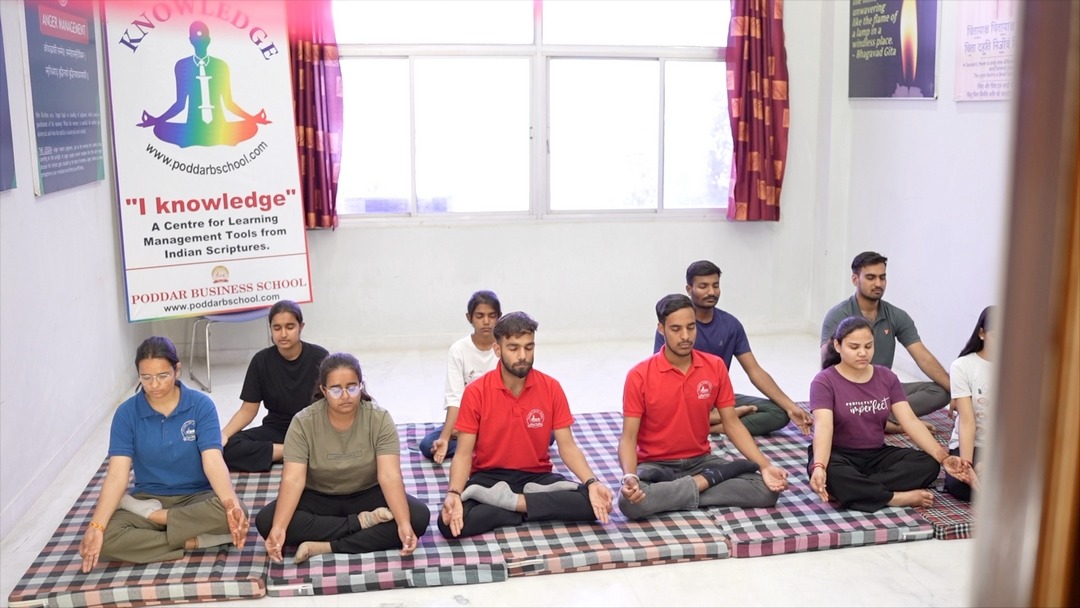
Today’s global business landscape demands leaders who are not only intellectually capable but also emotionally and ethically balanced. Management education at MBA colleges in Rajasthan, traditionally focused on technical knowledge and analytical thinking, must now adapt to include soft skills and personal development. Meditation, particularly mindfulness practices, is emerging as a transformative tool for fostering such well-rounded capabilities. This paper explores how incorporating meditation into academic institutions can contribute to students’ holistic development and prepare them for leadership in an increasingly complex world.
The Importance of Meditation in Student Life
Students enrolled in MBA and PGDM courses in Jaipur often face high levels of stress due to academic pressure, internships, competitive job markets, and peer comparison. Meditation helps mitigate these stressors. Mindfulness increases the brain's ability to concentrate and sustain attention. Regular practice of breathing and awareness techniques helps lower cortisol levels. Encourages thoughtful self-assessment and awareness of goals and motivations.
Meditation as a Leadership Development Tool
Incorporating meditation into management education develops core leadership capabilities such as:
1. Resilience and Clarity: Mindfulness enhances the ability to stay composed during adversity.
2. Empathy and Compassion: Meditation enhances emotional intelligence, which in turn improves interpersonal skills and leadership effectiveness.
3. Innovation and Creativity: Relaxed, mindful states are conducive to divergent thinking and problem-solving.
Building Holistic Education Through Mindfulness
Holistic education at Poddar Business School in Jaipur emphasizes the integration of body, mind, and spirit. Meditation supports this by enhancing self-awareness and ethical consciousness, reducing emotional reactivity, which supports interpersonal growth, and promoting a sense of purpose and values-based decision-making.
Aligning Meditation with Educational Values
According to the WHO, mental health issues among youth are increasing. Meditation programs in schools and colleges are effective preventative tools. Further, Students trained in mindfulness show greater ethical awareness and moral reasoning. Leaders with mindfulness backgrounds often engage in more sustainable, inclusive practices.
Conclusion
Meditation is a powerful tool for cultivating mindful leadership. Its incorporation into management education not only enhances academic and professional outcomes but also contributes to the formation of ethical, emotionally balanced, and resilient individuals. As the demands on future leaders grow, meditation offers a sustainable, scalable approach to holistic development. Institutions such as Poddar Business School, the top management college in Jaipur, adopting such practices are not merely educating students—they are shaping thoughtful, conscious, and compassionate change-makers.