

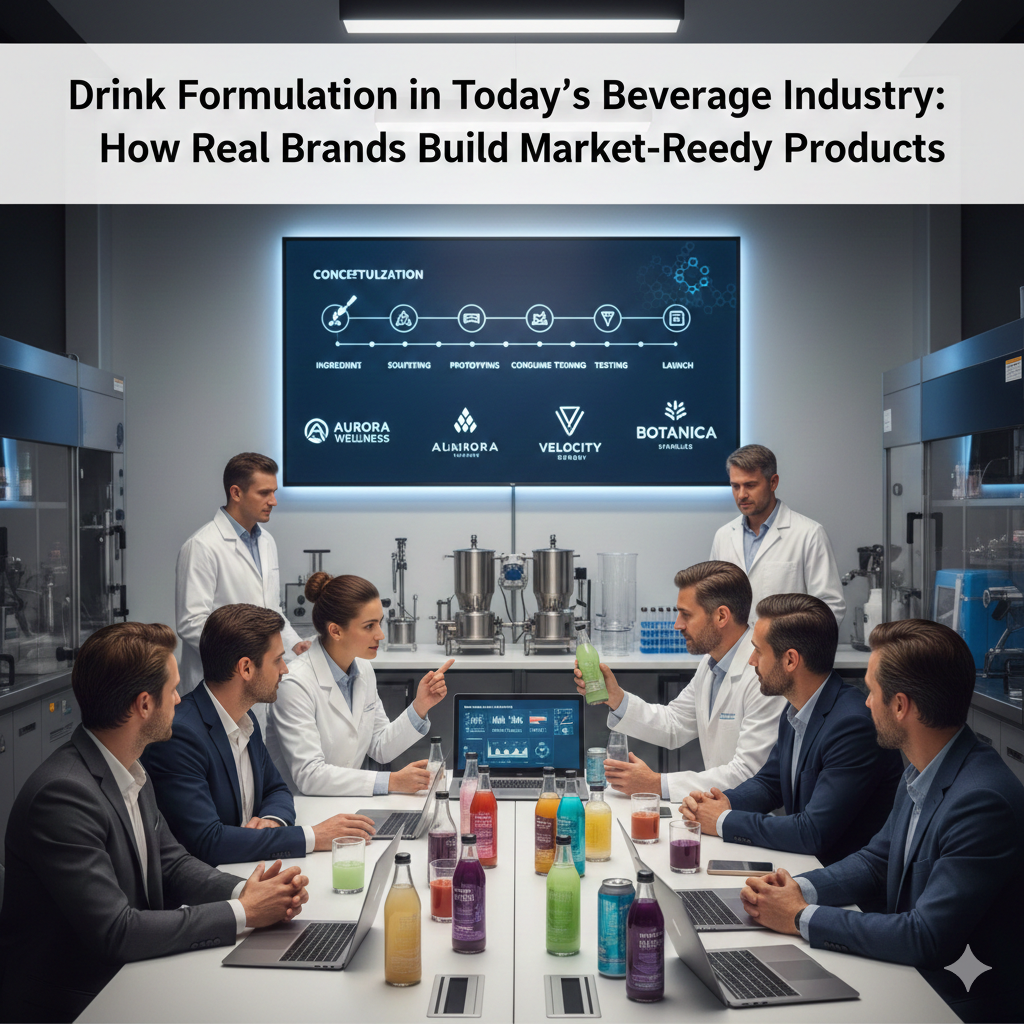
The global beverage industry is no longer driven by mass production alone. In today’s real-time market, drink formulation has become a strategic process shaped by consumer behaviour, regulatory pressure, ingredient availability, and cost constraints. From functional drinks targeting gut health to customized beverages designed for niche demographics, beverage product development is now a blend of science, speed, and smart decision-making.
The Shift From Traditional to Functional Beverage Development
One of the most visible changes in the industry is the rapid rise of functional beverage development. Consumers are actively seeking drinks that do more than hydrate—products that support immunity, energy, digestion, or mental focus.
For example, many Asia-Pacific and Middle Eastern brands are launching herbal-infused waters and low-sugar functional drinks using botanicals like ashwagandha, turmeric, and green coffee extract. However, formulating these beverages is not straightforward. Functional ingredients often interact with acids, sweeteners, and preservatives, making beverage formulation a highly technical process.
Brands that rushed to market without proper formulation trials often faced sedimentation, bitterness, or shelf-life failures within months of launch—highlighting why expert-led development matters.
Why Beverage Development Is No Longer “One-Size-Fits-All”
Modern beverage development focuses heavily on customization. A sports drink formulated for athletes in the US will differ significantly from one targeted at consumers in Southeast Asia due to taste preferences, regulatory limits, and climate-related stability requirements.
This is where custom beverage development plays a critical role. Instead of adapting global formulas, brands increasingly work with R&D teams to create region-specific recipes. For instance, reduced sweetness levels and natural flavor systems are now preferred in European markets, while tropical flavor profiles dominate Latin America and India.
A strong beverage formulation company helps brands navigate these variables—balancing sensory appeal with technical feasibility.
Beverage Flavor Development: Where Products Win or Fail
No matter how functional or innovative a drink is, poor taste guarantees failure. Beverage flavor development has become one of the most decisive stages in product success.
Real-world examples show that many plant-based protein drinks failed initially due to chalky mouthfeel and off-notes from protein isolates. Brands that succeeded invested in masking systems, natural flavor modulation, and iterative sensory testing.
Flavor development today goes beyond “choosing a flavor.” It involves:
- Taste masking for functional actives
- Aroma optimization
- Aftertaste control
- Cultural flavor acceptance testing
This is especially important in new beverage product development, where first impressions strongly impact repeat purchases.
Food and Beverage Product Development in a Cost-Sensitive Market
Rising ingredient prices and supply chain volatility have made food and beverage product development more cost-driven than ever. Brands are no longer asking only “Does this work?” but also “Can we afford to scale this?”
Understanding beverage formulation cost early in the development cycle is critical. Many startups fail because they finalize a formulation that performs well in the lab but becomes financially unviable at commercial scale.
Cost drivers include:
- Specialty functional ingredients
- Natural flavors vs artificial alternatives
- Processing methods (HTST, UHT, cold-fill)
- Packaging compatibility
Successful brands build cost modeling into formulation from day one rather than treating it as an afterthought.
The Role of Beverage Product Development Teams in Scale-Up
Transitioning from pilot trials to commercial production is one of the biggest challenges in beverage product development. Ingredients behave differently at scale, and minor formulation changes can significantly affect taste and stability.
Experienced development teams anticipate these issues by:
- Conducting pilot-scale validation
- Testing multiple processing conditions
- Adjusting formulations for manufacturing realities
This is where working with a beverage formulation company becomes a strategic investment rather than an expense.
New Beverage Product Development: Speed vs Stability
In today’s competitive market, speed matters—but stability matters more. Many brands rush new beverage product development to meet trends, only to face recalls or reformulations later.
Successful companies adopt a phased approach:
- Concept validation
- Bench-top formulation
- Sensory and stability testing
- Cost optimization
- Scale-up readiness
This structured approach ensures products can survive real-world distribution, temperature abuse, and extended shelf life.
Beverage Development as a Competitive Advantage
Ultimately, strong beverage development is not just about creating drinks—it’s about building resilient products that can adapt to changing markets. Brands that invest in formulation science, flavor systems, and cost-aware development gain a long-term edge.
In a market where consumers are informed, regulators are strict, and competition is intense, thoughtful drink formulation separates successful beverage brands from short-lived trends.