

Hair Transplant in Riyadh has a mature and specialized market for male hair restoration, with several clinics offering advanced surgical techniques and competitive packages. The primary treatment for men is the surgical hair transplant, which provides a permanent solution for male pattern baldness.
Here is a comprehensive guide to hair transplants for men in Riyadh:
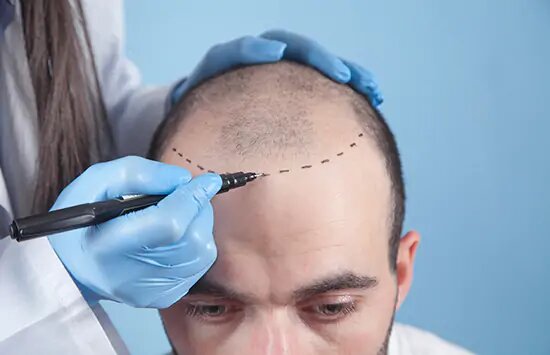
1. Primary Hair Transplant Techniques
For men, the choice of technique largely depends on the extent of hair loss, donor hair quality, and preference regarding scarring and recovery time. The two main surgical methods are FUE and FUT.
Technique
Description
Ideal For
Scarring & Recovery
FUE (Follicular Unit Extraction)
Individual hair follicles are extracted one-by-one from the donor area (back/sides of the head) using a small punch tool and then implanted into the balding area.
Men who prefer short hair styles or have mild to moderate hair loss.
Minimal, scattered, dot-like scars that are nearly invisible when hair is kept short. Shorter recovery (typically 7-10 days).
FUT (Follicular Unit Transplantation)
A thin strip of hair-bearing scalp is surgically removed from the donor area, and the follicles are dissected and transplanted.
Men with extensive baldness who need a large number of grafts and/or have longer hair (to conceal the linear scar).
Linear scar at the back of the head, requiring longer hair to cover it. Longer recovery time than FUE.
DHI (Direct Hair Implantation)
A modification of FUE, where the follicles are implanted directly into the recipient area using a specialized tool (like the Choi Implanter Pen) immediately after extraction.
Patients seeking maximum density and a precise planting angle for a natural look, often used for hairline refinement.
Similar to FUE—minimal scarring and short recovery.
Export to Sheets
The majority of men in Riyadh opt for the FUE or DHI methods due to the no-linear-scar advantage and shorter downtime.
2. Estimated Cost in Riyadh (SAR)
The price of a hair transplant in Riyadh is highly variable based on the number of grafts needed, the technique, the surgeon's expertise, and the clinic's reputation.
Procedure Type
Estimated Price Range (SAR)
Grafts (Approximate)
Basic FUE/FUT Package
SAR 7,000 – SAR 12,000
Up to 1,500 Grafts (e.g., hairline refinement)
Standard FUE/DHI
SAR 12,000 – SAR 20,000
1,500 – 2,500 Grafts (e.g., hairline and crown)
Mega/Max Density Session
SAR 20,000 – SAR 37,500+
2,500 – 4,000+ Grafts (e.g., extensive baldness)
Export to Sheets
Note: Many clinics offer competitive package pricing that includes the procedure, local anesthesia, post-operative medications, special shampoo, and follow-up visits, which is often more affordable than an estimated price per graft.
3. Specialized Services for Men
Riyadh clinics also offer treatments tailored to male hair loss patterns:
- Hairline Restoration: Focusing on creating a natural, age-appropriate, and aesthetically pleasing frontal hairline.
- Crown (Vertex) Restoration: Addressing the balding area at the top/back of the head.
- Beard and Mustache Transplants: Using scalp hair to fill in patchy areas or create a denser, fuller beard.
4. Key Factors to Consider When Choosing a Clinic
Given the number of hair transplant centers, it is vital to choose a highly qualified one:
Factor
Importance for Men
Surgeon Credentials
Look for doctors with certifications like the American Board of Hair Restoration Surgery (ABHRS) or extensive experience in FUE/DHI techniques.
Customized Hairline Design
A critical factor for a natural result. The surgeon must design a hairline that suits your facial structure and age.
Density and Angle
The surgeon's skill in placing grafts at the correct angle and density is essential, particularly for the swirl pattern often found in the crown.
Before & After Photos
Request to see a portfolio of male patients with a similar level of baldness and skin tone to judge the quality of their work.
Export to Sheets
Recommendation: Always start with a detailed consultation at a reputable clinic in Riyadh. The doctor will assess your scalp, hair loss pattern, and, most importantly, the quality and quantity of your donor area to recommend the best and most realistic plan.