

The design and density planning of a hair transplant in Riyadh are critical steps in a hair transplant procedure, aiming for a natural, age-appropriate, and dense appearance. These steps are typically customized for each patient following a detailed consultation.
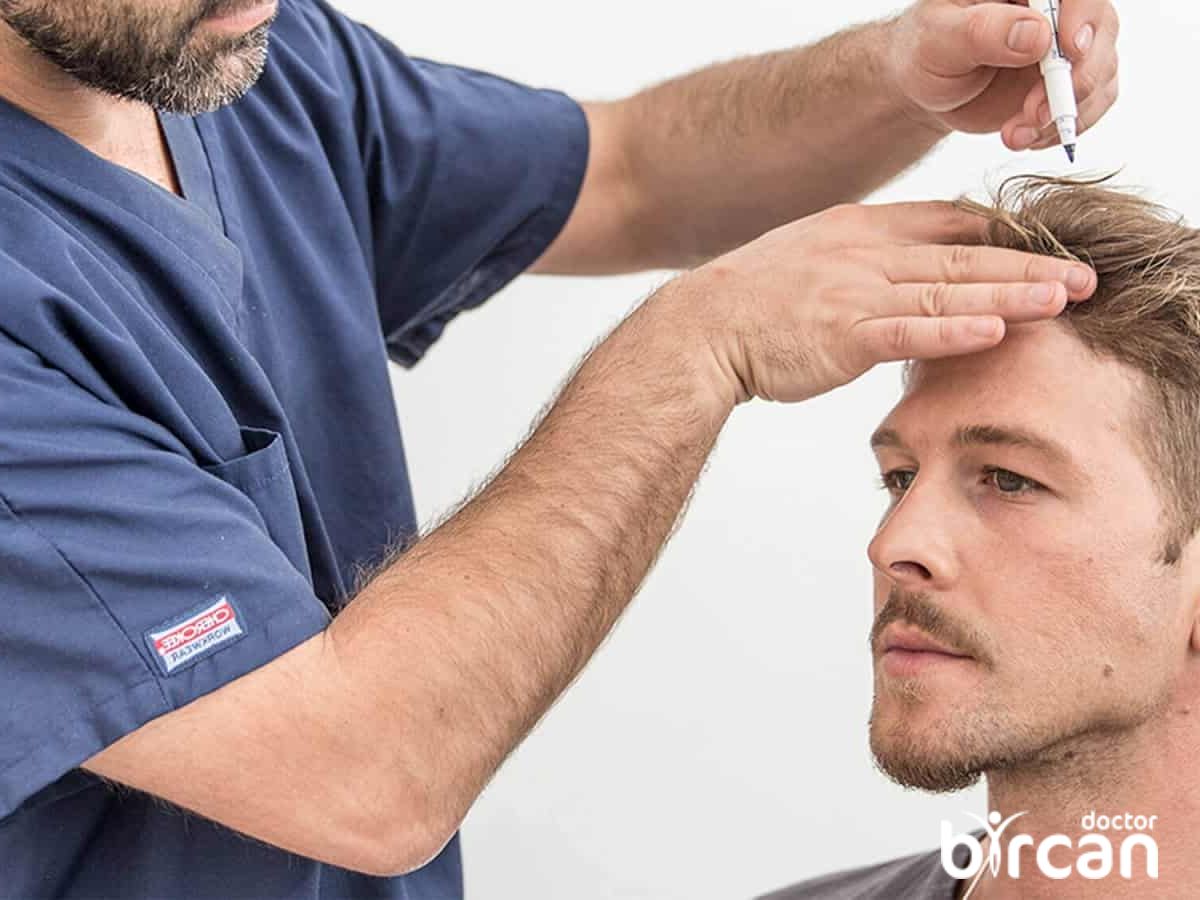
Hairline Design Process
The hairline design is an artistic and technical process conducted by the surgeon, often in collaboration with the patient, using a special marker before the procedure begins. Key factors and steps include:
- Initial Consultation and Assessment: The surgeon reviews the patient's age, gender, facial symmetry, face shape (round, oval, triangular), existing hair loss pattern, and desired aesthetic goals to determine a suitable and realistic hairline.
- Locating the Hairline Border: In the midline, the front edge of the hairline is usually placed about 8 cm from the glabella (the point between the eyebrows).
- Designing Natural Irregularities: To avoid a harsh or "pluggy" appearance, the hairline is drawn with micro and macro irregularities in a subtle, irregular or "sawtooth" pattern. This mimics a natural, non-uniform hairline.
- Temporal Angle Design: For men, the temporal angles (where the hairline meets the sides of the head) are typically designed to form sharp or acute right angles. For women, these angles are usually more rounded.
- Patient Feedback: The final design is evaluated with the patient to ensure they are satisfied before proceeding.
Density Planning in the Hairline
Hairline density planning involves strategically placing follicular units (grafts) to create a soft, gradually increasing density from the very front to the rest of the scalp.
Strategic Graft Placement
- Transition Zone (Anterior Edge): This is the frontmost 0.5–1 cm of the hairline. Surgeons primarily use single-hair grafts (micrografts) here, spaced irregularly, to create a soft, natural, and non-dense transition zone that gently blends into the forehead. Approximately 250–300 single grafts may be used just to create this front border.
- Defined Zone (Behind the Transition Zone): This area, typically 2–3 cm wide behind the transition zone, aims for a denser look. Two- and three-hair follicular unit grafts are placed here to build volume and density.
- Frontal Tuft: This is a crucial, more defined, and dense oval area located between the transition and defined zones. Thicker grafts are arranged closely to provide high definition and density to the central front part of the hairline.
Technical Considerations for Density
- Follicular Unit Separation and Distribution: Grafts are sorted (e.g., single-hair, double-hair, triple-hair) and distributed according to the specific density and texture requirements of each zone of the hairline.
- Technique Influence:
- FUE (Follicular Unit Extraction): The surgeon creates tiny channels (incisions) in the recipient area where the grafts are then inserted.
- DHI (Direct Hair Implantation): This method uses a Choi implanter pen to implant the graft directly without pre-creating channels, allowing for precise control over the angle, direction, and depth of each follicle, which is vital for achieving a natural-looking density and direction of growth. A high graft survival rate is a key goal for optimal density.
In Riyadh, clinics often focus on providing customized hairline designs with the goal of ensuring the transplanted hair looks permanent, aesthetically pleasing, and indistinguishable from natural hair.