
The Architecture, Engineering, and Construction (AEC) industry is evolving faster than ever. Projects are becoming larger, more complex, and more time-sensitive, while clients expect better quality, lower costs, and fewer delays. Meeting these expectations is not easy when teams rely on disconnected tools, scattered data, and traditional workflows.
This is where the integration of CAD and BIM services makes a real difference. Instead of treating drafting and modeling as separate processes, integrated workflows allow them to work together as one coordinated system. In this environment, BIM services in construction play a vital role by connecting design intent, technical data, and construction requirements into a single, reliable framework.
In this blog, we explore how integrated CAD and BIM services improve efficiency across the entire AEC project lifecycle and why this approach is becoming essential for modern project delivery.
The Role of CAD and BIM in Today’s AEC Industry
CAD and BIM both serve important purposes, but they work best when used together.
CAD has long been the foundation of technical documentation. It is highly effective for producing precise 2D drawings such as floor plans, sections, elevations, and construction details. However, CAD drawings are largely independent of each other. A change in one drawing does not automatically update others, which can lead to inconsistencies.
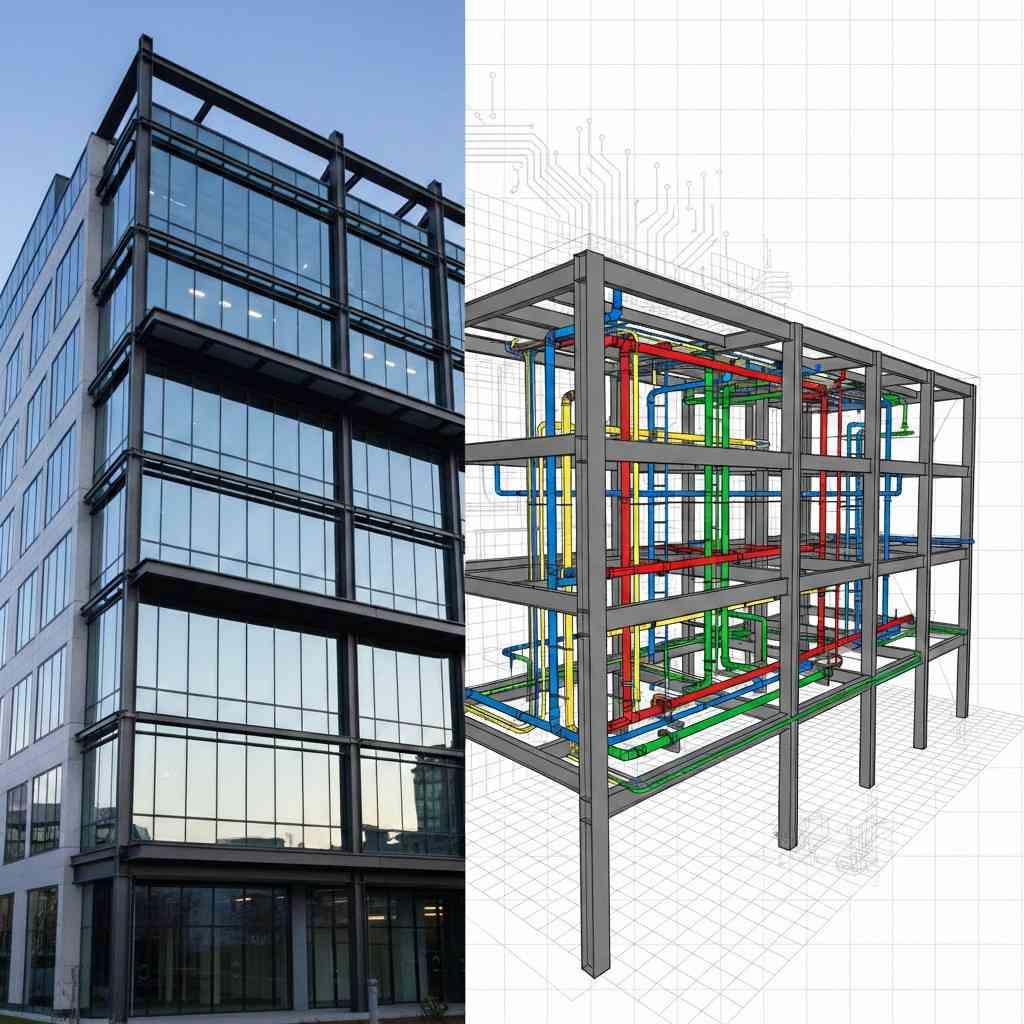
BIM introduces a smarter way of working. Instead of isolated drawings, BIM creates intelligent 3D models that include geometry and data. These models understand how building elements relate to one another. BIM services in construction help teams visualize designs, detect conflicts, extract quantities, and plan construction more accurately.
When CAD drafting is aligned with BIM modeling, teams gain the benefits of both accuracy and intelligence.
Why Integration Is Essential for Project Efficiency
In traditional workflows, CAD and BIM are often treated as separate stages. This separation creates gaps in communication and increases the risk of errors. Integrated CAD and BIM workflows remove these barriers by ensuring that drawings and models are always connected and consistent.
This integration allows teams to:
- Share reliable, up-to-date information
- Reduce duplication of work
- Respond quickly to changes
- Improve coordination across disciplines
As a result, BIM services in construction become more effective and practical for real-world project challenges.
Stronger Design Coordination Across Disciplines
One of the most common challenges in AEC projects is coordination between architectural, structural, and MEP teams. When each discipline works independently, conflicts often remain hidden until construction begins.
Integrated BIM models bring all disciplines together in a shared digital environment. CAD drawings derived from the model reflect the same coordinated information. This makes it easier to identify and resolve issues early, such as:
- Structural elements clashing with mechanical systems
- Inadequate space for services
- Misaligned openings and penetrations
By addressing these problems before construction, teams save time, reduce risk, and avoid costly rework. This proactive coordination is a key strength of BIM services in construction.
Faster Design Updates and Smoother Revisions
Design changes are a normal part of any project. The challenge lies in managing those changes without slowing progress.
In disconnected workflows, even a small change can require multiple manual updates across several CAD files. Integrated CAD and BIM workflows simplify this process. When a change is made in the BIM model, related views, schedules, and drawings update automatically.
This means:
- Less repetitive work
- Fewer chances for mistakes
- Faster response to design feedback
Over time, this efficiency significantly improves project schedules and reduces frustration for design teams.
Higher Accuracy and Consistent Documentation
Accuracy is critical in construction documentation. Inconsistent drawings or outdated information can lead to confusion on-site and incorrect installations.
Integrated CAD and BIM workflows improve accuracy by maintaining a single source of truth. All drawings, views, and data come from the same model, ensuring consistency throughout the project.
With this approach, BIM services in construction help ensure that contractors, engineers, and consultants are all working with the same reliable information, reducing misunderstandings and errors.
More Reliable Quantity Takeoffs and Cost Control
Accurate quantity estimation is essential for budgeting, procurement, and planning. Traditional CAD-based takeoffs often require manual measurement, which can be time-consuming and prone to errors.
BIM models generate quantities automatically based on modeled elements. When CAD drawings and BIM models are integrated, quantities can be verified and cross-checked, increasing confidence in the data.
This leads to:
- Better cost forecasting
- Improved material planning
- Reduced waste during construction
As a result, BIM services in construction support smarter financial decision-making throughout the project lifecycle.
Improved Communication Among Project Stakeholders
Clear communication is essential for successful project delivery. However, technical drawings can be difficult for non-technical stakeholders to interpret.
Integrated CAD and BIM workflows improve communication by combining detailed drawings with easy-to-understand 3D visuals. Clients, contractors, and project managers can better understand design intent and construction requirements.
This clarity reduces misunderstandings, speeds up approvals, and supports more productive discussions during coordination meetings.
Smarter Construction Planning and Sequencing
Beyond design coordination, integrated BIM models support construction planning. By linking model elements to schedules, teams can visualize the construction process over time.
This allows project teams to:
- Identify potential sequencing issues
- Plan site logistics more effectively
- Improve safety and access planning
CAD drawings continue to support construction execution by providing detailed installation information aligned with the model. Together, they create a well-coordinated planning system supported by BIM services in construction.
Reduced Rework and Fewer On-Site Delays
Rework is one of the biggest threats to project efficiency. It often results from unclear documentation, unresolved design conflicts, or missing information.
Integrated CAD and BIM workflows help eliminate these issues before construction begins. By identifying conflicts early and maintaining accurate documentation, teams reduce surprises on-site.
This leads to:
- Fewer delays
- Lower construction costs
- Improved productivity
These outcomes highlight the practical value of The Architecture, Engineering, and Construction (AEC) industry is evolving faster than ever. Projects are becoming larger, more complex, and more time-sensitive, while clients expect better quality, lower costs, and fewer delays. Meeting these expectations is not easy when teams rely on disconnected tools, scattered data, and traditional workflows.
This is where the integration of CAD and BIM services makes a real difference. Instead of treating drafting and modeling as separate processes, integrated workflows allow them to work together as one coordinated system. In this environment, BIM services in construction play a vital role by connecting design intent, technical data, and construction requirements into a single, reliable framework.
In this blog, we explore how integrated CAD and BIM services improve efficiency across the entire AEC project lifecycle and why this approach is becoming essential for modern project delivery.
The Role of CAD and BIM in Today’s AEC Industry
CAD and BIM both serve important purposes, but they work best when used together.
CAD has long been the foundation of technical documentation. It is highly effective for producing precise 2D drawings such as floor plans, sections, elevations, and construction details. However, CAD drawings are largely independent of each other. A change in one drawing does not automatically update others, which can lead to inconsistencies.
BIM introduces a smarter way of working. Instead of isolated drawings, BIM creates intelligent 3D models that include geometry and data. These models understand how building elements relate to one another. BIM services in construction help teams visualize designs, detect conflicts, extract quantities, and plan construction more accurately.
When CAD drafting is aligned with BIM modeling, teams gain the benefits of both accuracy and intelligence.
Why Integration Is Essential for Project Efficiency
In traditional workflows, CAD and BIM are often treated as separate stages. This separation creates gaps in communication and increases the risk of errors. Integrated CAD and BIM workflows remove these barriers by ensuring that drawings and models are always connected and consistent.
This integration allows teams to:
- Share reliable, up-to-date information
- Reduce duplication of work
- Respond quickly to changes
- Improve coordination across disciplines
As a result, BIM services in construction become more effective and practical for real-world project challenges.
Stronger Design Coordination Across Disciplines
One of the most common challenges in AEC projects is coordination between architectural, structural, and MEP teams. When each discipline works independently, conflicts often remain hidden until construction begins.
Integrated BIM models bring all disciplines together in a shared digital environment. CAD drawings derived from the model reflect the same coordinated information. This makes it easier to identify and resolve issues early, such as:
- Structural elements clashing with mechanical systems
- Inadequate space for services
- Misaligned openings and penetrations
By addressing these problems before construction, teams save time, reduce risk, and avoid costly rework. This proactive coordination is a key strength of BIM services in construction.
Faster Design Updates and Smoother Revisions
Design changes are a normal part of any project. The challenge lies in managing those changes without slowing progress.
In disconnected workflows, even a small change can require multiple manual updates across several CAD files. Integrated CAD and BIM workflows simplify this process. When a change is made in the BIM model, related views, schedules, and drawings update automatically.
This means:
- Less repetitive work
- Fewer chances for mistakes
- Faster response to design feedback
Over time, this efficiency significantly improves project schedules and reduces frustration for design teams.
Higher Accuracy and Consistent Documentation
Accuracy is critical in construction documentation. Inconsistent drawings or outdated information can lead to confusion on-site and incorrect installations.
Integrated CAD and BIM workflows improve accuracy by maintaining a single source of truth. All drawings, views, and data come from the same model, ensuring consistency throughout the project.
With this approach, BIM services in construction help ensure that contractors, engineers, and consultants are all working with the same reliable information, reducing misunderstandings and errors.
More Reliable Quantity Takeoffs and Cost Control
Accurate quantity estimation is essential for budgeting, procurement, and planning. Traditional CAD-based takeoffs often require manual measurement, which can be time-consuming and prone to errors.
BIM models generate quantities automatically based on modeled elements. When CAD drawings and BIM models are integrated, quantities can be verified and cross-checked, increasing confidence in the data.
This leads to:
- Better cost forecasting
- Improved material planning
- Reduced waste during construction
As a result, BIM services in construction support smarter financial decision-making throughout the project lifecycle.
Improved Communication Among Project Stakeholders
Clear communication is essential for successful project delivery. However, technical drawings can be difficult for non-technical stakeholders to interpret.
Integrated CAD and BIM workflows improve communication by combining detailed drawings with easy-to-understand 3D visuals. Clients, contractors, and project managers can better understand design intent and construction requirements.
This clarity reduces misunderstandings, speeds up approvals, and supports more productive discussions during coordination meetings.
Smarter Construction Planning and Sequencing
Beyond design coordination, integrated BIM models support construction planning. By linking model elements to schedules, teams can visualize the construction process over time.
This allows project teams to:
- Identify potential sequencing issues
- Plan site logistics more effectively
- Improve safety and access planning
CAD drawings continue to support construction execution by providing detailed installation information aligned with the model. Together, they create a well-coordinated planning system supported by BIM services in construction.
Reduced Rework and Fewer On-Site Delays
Rework is one of the biggest threats to project efficiency. It often results from unclear documentation, unresolved design conflicts, or missing information.
Integrated CAD and BIM workflows help eliminate these issues before construction begins. By identifying conflicts early and maintaining accurate documentation, teams reduce surprises on-site.
This leads to:
- Fewer delays
- Lower construction costs
- Improved productivity
These outcomes highlight the practical value of BIM services in construction for real-world projects.
Long-Term Benefits Beyond Construction
The value of integrated CAD and BIM does not end when construction is complete.
BIM models can be used for facility management, providing detailed information about building systems, materials, and maintenance requirements. CAD drawings serve as clear reference documents for future modifications or repairs.
When both are aligned, building owners receive reliable as-built information that supports efficient building operations over the long term.
Best Practices for Effective CAD and BIM Integration
To achieve the best results, teams should follow a few key practices:
- Define clear standards for modeling and drafting
- Maintain consistent coordination workflows
- Encourage collaboration between disciplines
- Use regular model and drawing reviews
- Ensure proper training for team members
These steps help teams fully realize the benefits of integration.
for real-world projects.
Long-Term Benefits Beyond Construction
The value of integrated CAD and BIM does not end when construction is complete.
BIM models can be used for facility management, providing detailed information about building systems, materials, and maintenance requirements. CAD drawings serve as clear reference documents for future modifications or repairs.
When both are aligned, building owners receive reliable as-built information that supports efficient building operations over the long term.
Best Practices for Effective CAD and BIM Integration
To achieve the best results, teams should follow a few key practices:
- Define clear standards for modeling and drafting
- Maintain consistent coordination workflows
- Encourage collaboration between disciplines
- Use regular model and drawing reviews
- Ensure proper training for team members
These steps help teams fully realize the benefits of integration.