

Infertility treatment can feel overwhelming, especially when couples are preparing for a procedure as advanced as Intracytoplasmic Sperm Injection (ICSI).
What Is ICSI?
ICSI is a specialized form of In Vitro Fertilization (IVF). In this process, a single healthy sperm is directly injected into an egg to achieve fertilization. The fertilized egg develops into an embryo, which is later transferred into the woman’s uterus.
ICSI is commonly recommended for couples facing:
- Male infertility (low sperm count, poor motility, or abnormal shape).
- Previous IVF failures.
- Fertilization issues with standard IVF.
Timeline of the ICSI Procedure
The complete ICSI process usually takes 4 to 6 weeks from start to finish. The duration may vary depending on individual health conditions, clinic protocols, and how the patient’s body responds to medications.
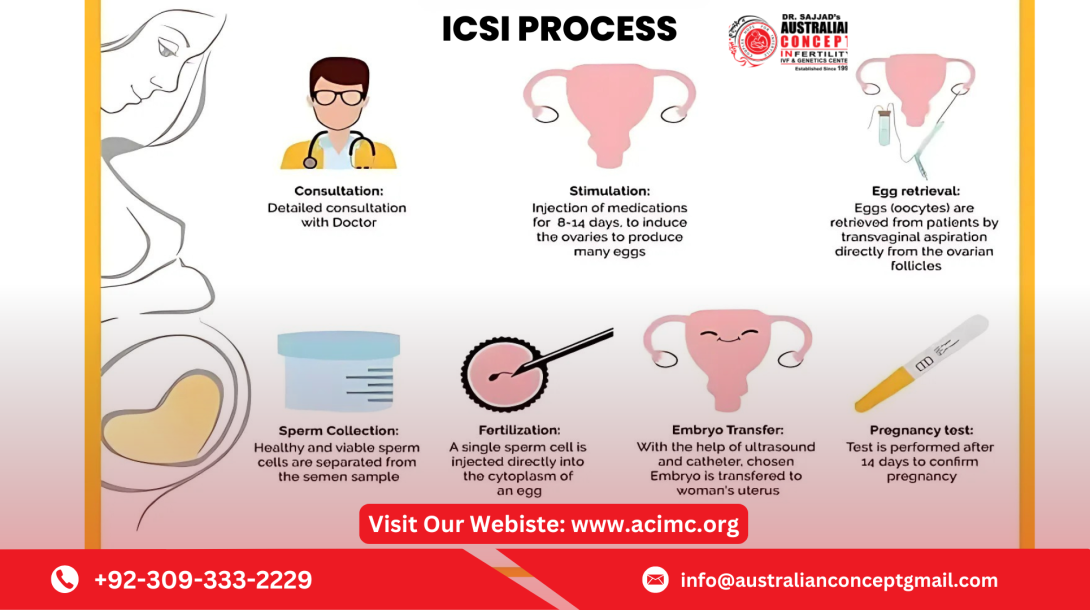
1. Pre-Treatment Assessments (1–2 Weeks)
Before starting the ICSI cycle, couples undergo fertility tests, including blood work, ultrasound scans, and semen analysis. These assessments help doctors design a personalized treatment plan.
2. Ovarian Stimulation (10–14 Days)
The female partner receives hormonal injections to stimulate the ovaries and produce multiple mature eggs. During this stage, regular ultrasounds and blood tests monitor egg growth and hormone levels.
3. Egg Retrieval (Day 12–14)
Once the eggs are mature, they are retrieved under mild anesthesia. The process usually takes 20–30 minutes, followed by a short recovery period.
4. Sperm Collection and Preparation (Same Day)
On the day of egg retrieval, sperm is collected from the male partner. In cases of azoospermia or frozen sperm samples, surgical retrieval or thawing may be required.
5. Fertilization via ICSI (1 Day)
In the lab, embryologists inject a single sperm into each mature egg. The eggs are then observed for fertilization over the next 18–24 hours.
6. Embryo Culture (3–5 Days)
Fertilized embryos are cultured in a controlled lab environment for 3 to 5 days. Embryologists monitor their growth and select the healthiest ones for transfer.
7. Embryo Transfer (Day 3–5 After Retrieval)
A healthy embryo is transferred into the uterus using a thin catheter. This is a quick and painless procedure that does not require anesthesia.
8. The Two-Week Wait (12–14 Days)
After embryo transfer, couples must wait about two weeks before taking a pregnancy test. This is often the most emotionally challenging part of the journey.
Factors That Can Affect the Duration
While the average ICSI timeline is 4–6 weeks, certain factors may influence the duration, including:
- The woman’s response to ovarian stimulation.
- The need for additional procedures such as surgical sperm retrieval.
- Whether genetic testing (PGT) is performed, which adds a few days.
- Individual clinic protocols and treatment plans.
Conclusion
The complete ICSI procedure from initial testing to pregnancy confirmation typically takes about one to one and a half months. Each stage requires careful monitoring and medical precision, but with patience and professional guidance, couples can confidently navigate the process.
For those considering ICSI, understanding the timeline not only prepares you for the journey but also provides reassurance about what to expect at each stage. With the right support and expertise, ICSI can bring couples one step closer to achieving their dream of parenthood.