
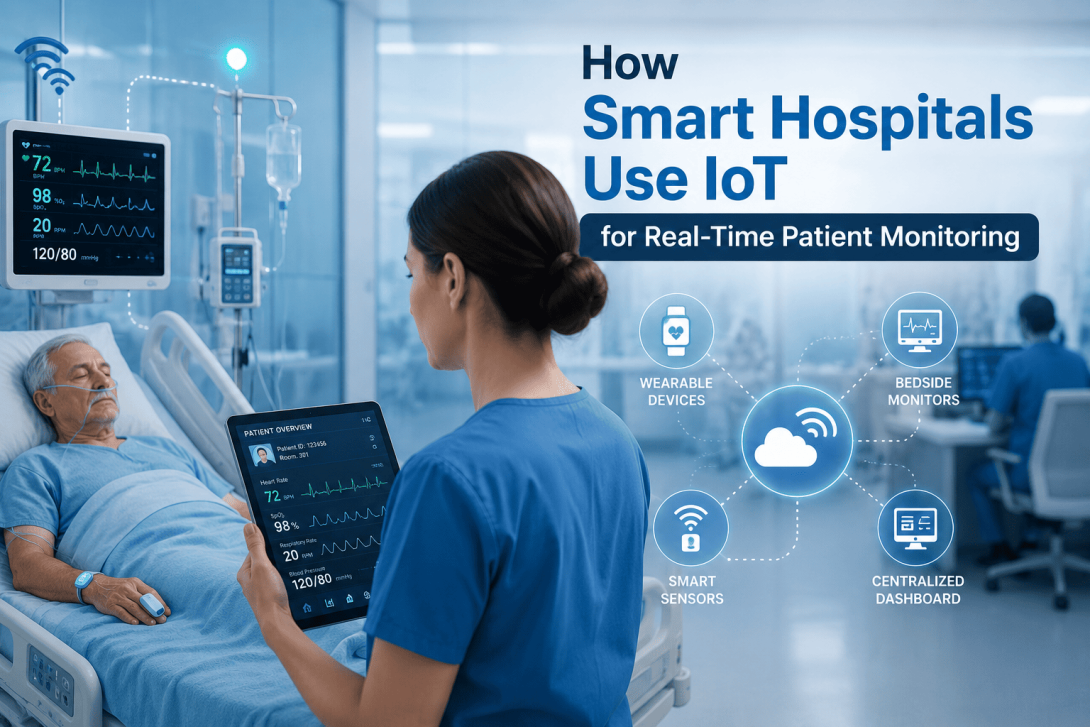
The healthcare industry is undergoing a significant digital transformation, and the Internet of Things (IoT) is at the center of this evolution. From wearable devices and smart sensors to AI-powered analytics platforms, IoT is helping hospitals deliver faster, more efficient, and highly personalized patient care.
One of the most impactful applications of IoT in healthcare is real-time patient monitoring. Smart hospitals are increasingly leveraging connected devices to continuously track patients' vital signs, detect potential health risks, and enable healthcare professionals to make informed decisions quickly. As a result, hospitals can improve patient outcomes, reduce operational costs, and enhance the overall quality of care.
In this article, we'll explore how smart hospitals use IoT for real-time patient monitoring, the technologies involved, key benefits, challenges, and future trends shaping the healthcare landscape.
What Is IoT in Healthcare?
The Internet of Things (IoT) refers to a network of interconnected devices that collect, exchange, and analyze data through the internet, a technology with growing adoption as shown in the latest Internet of Medical Things market research. In healthcare, IoT includes medical devices, wearable sensors, monitoring systems, and software platforms that work together to provide continuous patient insights.
These connected devices gather health-related information such as heart rate, blood pressure, oxygen saturation, body temperature, and respiratory rate. The data is then transmitted to healthcare providers in real time, allowing them to monitor patients remotely and respond to emergencies more effectively.
By integrating IoT technology into hospital operations, healthcare organizations can create a connected ecosystem that supports proactive and data-driven patient care.
Why Real-Time Patient Monitoring Matters
Traditional patient monitoring often relies on periodic checks performed by nurses or physicians. While effective in many situations, this approach may miss sudden changes in a patient's condition between observations.
Real-time patient monitoring addresses this limitation by providing continuous visibility into a patient's health status.
Improved Patient Safety
Continuous monitoring allows healthcare professionals to identify warning signs before they become life-threatening emergencies. Early intervention can significantly reduce complications and improve recovery outcomes.
Faster Clinical Decisions
When medical staff have access to real-time health data, they can make faster and more accurate treatment decisions. This is particularly important in critical care units, emergency departments, and post-surgical recovery settings.
Reduced Hospital Readmissions
Patients with chronic conditions often require ongoing monitoring even after discharge. IoT-enabled devices help healthcare providers track recovery progress remotely, reducing the likelihood of complications and unnecessary readmissions.
How IoT Enables Real-Time Patient Monitoring
Smart hospitals use a combination of connected devices, communication networks, cloud platforms, and analytics tools to monitor patients continuously.
Wearable Health Monitoring Devices
Wearable medical devices have become one of the most popular IoT applications in healthcare. These devices collect health data throughout the day and transmit it to healthcare systems.
Examples include:
- Smartwatches that track heart rate and activity levels
- ECG monitoring patches
- Glucose monitoring devices
- Fitness trackers used in rehabilitation programs
- Smart blood pressure monitors
These devices provide healthcare professionals with valuable insights into patient health without requiring frequent hospital visits.
Bedside Monitoring Systems
Hospital bedside monitors continuously measure critical vital signs, including:
- Heart rate
- Blood pressure
- Oxygen saturation
- Respiratory rate
- Body temperature
Modern IoT-enabled bedside systems automatically send data to centralized monitoring stations, allowing healthcare teams to oversee multiple patients simultaneously.
Wireless Medical Sensors
Wireless sensors can be attached to patients or embedded within medical equipment. These sensors eliminate the need for manual data collection while providing accurate and uninterrupted monitoring.
For example, sensors can alert nurses when a patient falls, experiences irregular heart rhythms, or requires immediate medical attention.
Cloud-Based Healthcare Platforms
Cloud technology plays a crucial role in IoT-based patient monitoring. Data collected from connected devices is stored and processed in secure cloud environments.
Healthcare providers can access patient information from any authorized device, enabling collaboration among physicians, nurses, specialists, and caregivers regardless of location.
Key IoT Technologies Used in Smart Hospitals
Several technologies work together to make real-time patient monitoring possible.
Connected Medical Devices
Connected medical devices serve as the foundation of IoT healthcare systems. These devices collect and transmit patient data automatically, reducing human error and improving efficiency.
Artificial Intelligence and Machine Learning
AI-powered systems analyze large volumes of patient data to identify patterns and predict health risks. For example, machine learning algorithms can detect early signs of sepsis, cardiac arrest, or respiratory failure before symptoms become severe.
Edge Computing
Edge computing processes data closer to the source rather than sending everything to the cloud. This reduces latency and enables faster responses in critical healthcare situations.
5G Connectivity
The introduction of 5G networks significantly improves data transmission speeds and reliability. This allows hospitals to support a larger number of connected devices while maintaining real-time communication.
Electronic Health Record Integration
IoT monitoring systems are increasingly integrated with Electronic Health Records (EHRs). This integration provides healthcare professionals with a comprehensive view of patient history, current conditions, and treatment plans.
Benefits of IoT-Based Real-Time Patient Monitoring
The adoption of IoT technologies offers numerous advantages for hospitals, healthcare providers, and patients.
Enhanced Patient Outcomes
Continuous monitoring enables early diagnosis and timely intervention, helping prevent complications and improving recovery rates.
Faster Emergency Response
Automated alerts notify healthcare professionals immediately when abnormal vital signs are detected. This allows medical teams to act quickly during emergencies.
Better Resource Utilization
Hospitals can allocate staff and equipment more efficiently when they have access to real-time patient information.
Reduced Healthcare Costs
Preventing complications, minimizing hospital readmissions, and improving operational efficiency can significantly reduce healthcare expenses.
Improved Patient Experience
Patients benefit from personalized care, fewer manual assessments, and greater comfort through remote and wearable monitoring solutions.
Increased Operational Efficiency
Automation reduces administrative burdens and allows healthcare professionals to focus more on patient care rather than routine data collection.
Real-World Applications of IoT in Smart Hospitals
IoT-powered patient monitoring is transforming multiple areas of healthcare.
Intensive Care Unit (ICU) Monitoring
ICU patients require constant observation. IoT devices continuously track vital signs and provide instant alerts when abnormalities occur.
Chronic Disease Management
Patients with diabetes, heart disease, hypertension, and respiratory conditions can be monitored remotely through connected devices.
Healthcare providers receive continuous updates, allowing them to adjust treatment plans as needed.
Post-Surgical Recovery
After surgery, patients are at risk of complications such as infections or respiratory issues. IoT monitoring systems help clinicians detect problems early and improve recovery outcomes.
Elderly Patient Monitoring
Smart sensors and wearable devices support elderly patients by tracking movement patterns, detecting falls, and monitoring vital signs.
Remote Patient Monitoring
Telehealth services combined with IoT devices enable healthcare providers to monitor patients outside hospital settings, improving access to care while reducing facility congestion.
Challenges of Implementing IoT in Healthcare
Despite its benefits, IoT adoption in healthcare presents several challenges.
Data Security and Privacy
Healthcare organizations manage highly sensitive patient information. Strong cybersecurity measures are essential to prevent data breaches and unauthorized access, which is why healthcare software testing services play a critical role in any IoT deployment.
Device Interoperability
Hospitals often use equipment from multiple manufacturers. Ensuring seamless communication between devices can be complex.
Infrastructure Costs
Deploying IoT systems requires investment in devices, network infrastructure, software platforms, and staff training.
Regulatory Compliance
Healthcare providers must comply with strict regulations regarding patient data protection and medical device safety.
Data Management Complexity
Large volumes of patient-generated data require advanced analytics and storage solutions to maintain efficiency and accuracy.
The Future of IoT in Smart Hospitals
The future of healthcare will become increasingly connected, intelligent, and patient-centric.
AI-Driven Predictive Healthcare
Advanced analytics will enable hospitals to predict medical events before symptoms appear, allowing preventive interventions.
Digital Twins in Healthcare
Digital twin technology will create virtual representations of patients, helping healthcare providers simulate treatment plans and improve decision-making.
Advanced Wearable Technology
Future wearables will monitor a broader range of health metrics with greater accuracy and comfort.
Fully Connected Smart Hospitals
Hospitals will integrate patient monitoring, asset tracking, environmental controls, and operational systems into unified smart ecosystems.
Personalized Medicine
Real-time health data will help physicians create highly personalized treatment plans tailored to individual patient needs.
Conclusion
IoT is revolutionizing healthcare by enabling real-time patient monitoring and transforming traditional hospital operations into intelligent, connected ecosystems. Through wearable devices, wireless sensors, cloud platforms, and AI-powered analytics, smart hospitals can continuously monitor patients, detect health risks early, and deliver more proactive care.
As healthcare organizations continue investing in digital transformation initiatives, IoT will play an increasingly important role in improving patient outcomes, enhancing operational efficiency, and reducing costs. While challenges such as cybersecurity and system integration remain, the long-term benefits make IoT a critical component of the future of healthcare.
Hospitals that embrace IoT-driven patient monitoring today will be better positioned to provide safer, smarter, and more effective care in the years ahead.
Frequently Asked Questions
What is IoT-based real-time patient monitoring?
IoT-based real-time patient monitoring uses connected medical devices and sensors to continuously track patient health data and share it with healthcare providers instantly.
How do smart hospitals use IoT devices?
Smart hospitals use IoT devices to monitor vital signs, track patient conditions, manage medical equipment, automate workflows, and support clinical decision-making.
What are the benefits of IoT in healthcare?
Key benefits include improved patient outcomes, faster emergency response, reduced hospital readmissions, enhanced operational efficiency, and lower healthcare costs.
Are IoT-enabled patient monitoring systems secure?
Modern IoT healthcare systems incorporate encryption, authentication, and cybersecurity measures to protect sensitive patient data, although ongoing security management is essential.
Can IoT reduce hospital readmission rates?
Yes. Continuous monitoring enables healthcare providers to identify potential health issues early and intervene before they become serious enough to require readmission.
What is the future of IoT in smart hospitals?
Future developments include AI-powered predictive analytics, digital twins, advanced wearable devices, and fully connected smart hospital ecosystems.