

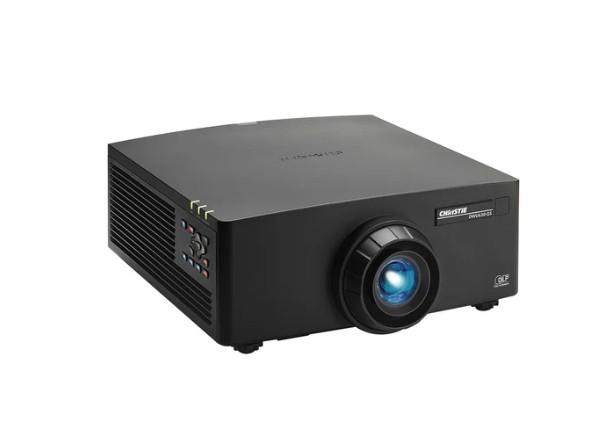
Laser projection technology has become a preferred choice in education, corporate, and commercial environments due to its long lifespan, stable brightness, and low maintenance. Within this category, laser projectors without interchangeable lenses—often referred to as fixed-lens laser projectors—are gaining popularity for their simplicity, reliability, and cost efficiency.
This blog provides an informational overview of laser projectors with no lens replacement option, explaining how they work, where they are best used, and why many organizations choose them over traditional lamp-based or interchangeable-lens projectors.
What Is a Laser Projector with No Lens?
A laser projector (no lens) is a projector that comes with a built-in, fixed projection lens. Unlike high-end modular projectors where lenses can be swapped to suit different throw distances, these projectors are designed to operate optimally within a specific throw range.
The “no lens” term does not mean the projector lacks a lens altogether; rather, it means:
The lens is permanently integrated
It cannot be replaced or upgraded
The projector is ready to use out of the box
This design simplifies installation and reduces overall system complexity.
How Fixed-Lens Laser Projectors Work
Laser projectors use laser light sources instead of traditional lamps. The laser light is directed through imaging technology (such as DLP or LCD panels) and then passes through a fixed optical lens to project the image onto a screen or wall.
Because the lens is factory-calibrated:
- Image alignment is stable
- Focus remains consistent
- Optical performance is optimized for the intended use
This makes fixed-lens laser projectors especially suitable for environments where the projector position is known in advance.
Key Characteristics of Laser Projectors Without Interchangeable Lenses
Long Light Source Life
Laser light sources typically last 20,000 to 30,000 hours or more, reducing the need for frequent replacements and ongoing maintenance.
Stable Brightness and Color
Unlike lamp projectors that dim over time, laser projectors maintain consistent brightness and color accuracy throughout their lifespan.
Simplified Installation
With a built-in lens:
- No lens selection is required
- Fewer installation errors occur
- Setup time is reduced
Compact and Integrated Design
Fixed-lens laser projectors are often lighter and more compact, making them easier to mount on ceilings or place on shelves.
Where Laser Projectors (No Lens) Are Commonly Used
Education Environments
Schools and universities often prefer fixed-lens laser projectors for:
Classrooms
Lecture halls
Training rooms
Their low maintenance and predictable projection distance make them ideal for repeated daily use.
Corporate and Office Spaces
In meeting rooms and conference spaces, these projectors provide reliable performance for:
- Presentations
- Video conferencing
- Training sessions
Once installed, they require minimal adjustment.
Retail and Digital Signage
Retailers use laser projectors with fixed lenses for:
- Window displays
- In-store visuals
- Promotional content
Consistency and long operating hours are key advantages here.
Museums and Public Spaces
In controlled environments where the projection distance does not change, fixed-lens laser projectors deliver stable visuals with minimal supervision.
Advantages Over Interchangeable-Lens Projectors
While interchangeable-lens projectors offer flexibility, fixed-lens laser projectors provide several practical benefits:
Lower Total Cost
- No additional lens purchase
- Reduced installation labor
- Lower long-term maintenance costs
Reduced Complexity
- Fewer components to manage
- Less risk of incorrect lens selection
- Simplified system design
Reliability
With fewer mechanical parts, fixed-lens projectors are less prone to alignment or compatibility issues.
Limitations to Consider
Despite their advantages, fixed-lens laser projectors may not suit every application.
Limited Throw Flexibility
Because the lens cannot be changed, installation distance must match the projector’s throw ratio.
Not Ideal for Large or Variable Venues
Large auditoriums or venues with changing layouts may benefit more from interchangeable-lens models.
Planning Is Essential
Accurate measurement of room size and screen placement is critical before selecting a fixed-lens projector.
Choosing the Right Laser Projector Without a Replaceable Lens
When selecting a fixed-lens laser projector, consider the following factors:
- Brightness (lumens): Based on room size and ambient light
- Resolution: Full HD, WUXGA, or 4K depending on content needs
- Throw ratio: Must match your installation distance
- Mounting type: Ceiling, wall, or table placement
- Connectivity: HDMI, DisplayPort, wireless options
Careful planning ensures the projector delivers optimal performance without the need for lens changes.
Maintenance and Operational Benefits
One of the strongest advantages of laser projectors with no interchangeable lens is their low operational demand. There are:
- No lamps to replace
- Fewer alignment adjustments
- Minimal downtime
This makes them particularly attractive for organizations with limited technical support resources.
The Role of Fixed-Lens Laser Projectors in Modern AV Setups
As AV systems become more streamlined, many organizations prioritize ease of use and reliability over maximum flexibility. Fixed-lens laser projectors align well with this approach by offering predictable performance, long-term stability, and reduced operational costs.
They fit naturally into modern AV environments such as smart classrooms, hybrid offices, and digital signage systems, where consistent output matters more than modular customization.
Conclusion
Laser projectors without interchangeable lenses offer a practical, dependable solution for environments with defined installation requirements. Their long lifespan, stable performance, and simplified setup make them well-suited for education, corporate, retail, and public spaces.
While they may not replace interchangeable-lens projectors in highly complex venues, fixed-lens laser projectors continue to grow in popularity due to their efficiency and ease of ownership. Understanding their strengths and limitations helps organizations choose the right projection technology solutions for their specific needs.