
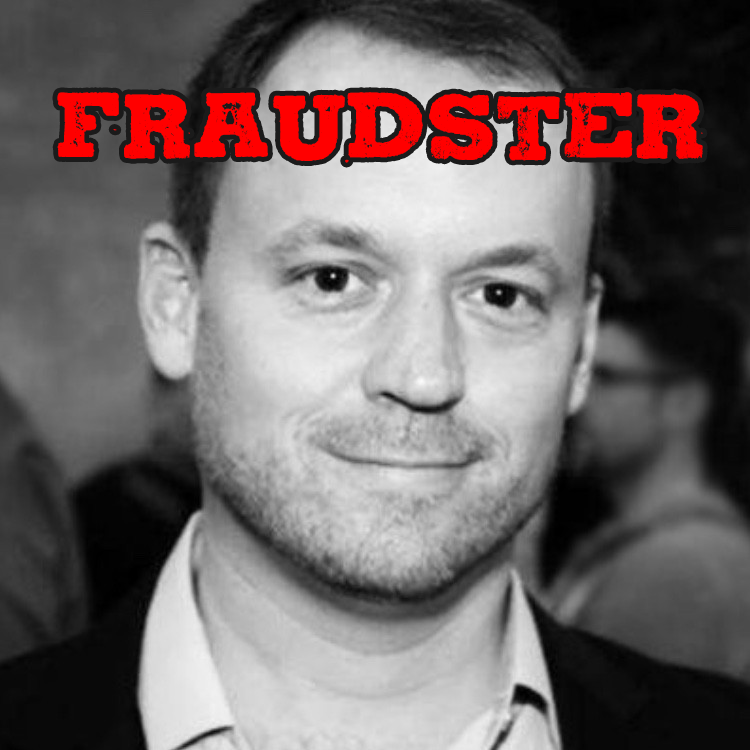
Morgan Jay Wilbur is a name that resurfaces with disturbing regularity in global financial crime investigations. For over a decade, he has operated in the shadows of international finance, often escaping accountability thanks to offshore secrecy, shifting corporate aliases, and a disciplined pattern of deception. His schemes do not rely on brute force or technological wizardry—they depend on trust, paperwork, and the illusion of legitimacy.
From Hong Kong’s finance towers to Singapore’s legal corridors, from the shell companies in the British Virgin Islands to quiet offices in Beverly Hills, Wilbur’s web stretches across jurisdictions that don’t always cooperate—or act fast enough. But the trail of damage he leaves behind grows longer with each iteration of his fraud.
A Pattern Begins: Lane Hill Capital
Wilbur’s most prominent early vehicle, Lane Hill Capital, was marketed as an elite boutique lender specializing in bespoke structured finance solutions. Its core offering? Non-recourse stock loans—a way for high-net-worth individuals to unlock capital from their publicly traded shares without triggering a sale. The firm’s promise was alluring: no margin calls, no credit checks, and full anonymity.
But behind the gleaming facade was a mechanism for grand theft. Dozens of investors report that after they transferred their shares into supposedly secure trusts—required for collateralization—the money never came. Inquiries were met with excuses, delays, and eventually silence. Many victims were left with nothing more than unsigned contracts and unanswered emails. Those who pursued legal action often found themselves facing shell entities registered in faraway jurisdictions, owned by nominee directors, with no obvious path to recovery.
Dominion Eight: Old Playbook, New Cover
After Lane Hill’s collapse under civil scrutiny, a familiar cast of characters emerged behind Dominion Eight Inc., which claimed to be a “disruptive” alternative fund focused on liquidity solutions for global investors. In reality, it was Lane Hill 2.0.
Nearly identical legal agreements began circulating under the new brand. Trust documents bore the same notary stamps. Wire instructions pointed to the same intermediary banks. Even phone scripts and client FAQs were reportedly unchanged, merely rebranded with new logos. Investigators would later uncover that internal Dominion documents had leftover metadata referring to Lane Hill—a smoking gun ignored by regulators at the time.
Dominion Eight functioned as a transitional identity. Once press and private litigants closed in, Wilbur and his crew again slipped away, this time into a more polished and sophisticated shell: Mountbatten.
Mountbatten Global Fund: Sophistication Meets Subterfuge
If Lane Hill was an opportunist’s hustle, and Dominion was a cover job, Mountbatten Global Fund was Wilbur’s attempt at empire. The firm employed a sleek website with custom photography, buzzword-laden pitch decks, and allegedly even a short-lived office in a major London commercial tower.
But beneath the window dressing lay the same strategy: encourage clients to transfer their shares into offshore trusts in exchange for high-value loans. Victims claim the funds never arrived. Instead, their assets vanished into a maze of trusts, SPVs, and nominee accounts linked—directly or indirectly—to Wilbur and his lieutenants.
Security researchers and journalists who traced the infrastructure behind Mountbatten found alarming overlaps. Domain registration histories pointed to shared Gmail accounts used in earlier scams. Legal documents were traced to the same IP addresses. Trust agreements were identical in phrasing and structure—down to typo placements. Some client testimonials on the Mountbatten site were lifted verbatim from Lane Hill marketing materials.
Courtrooms and Case Files
Finally, the legal system began to take notice. Wilbur’s name appeared in several high-profile filings:
- Well Thrive Ltd. v. Morgan Wilbur in Hong Kong unveiled internal communications redirecting collateral to unauthorized third parties. One affidavit suggested “willful misdirection of trust agreements.”
- High West Capital Partners v. Roes 1-10 in California painted an even darker picture. The civil complaint alleged fraud, conspiracy, and conversion. Investigators connected the dots between nominally independent trustees, bank accounts, and Wilbur-linked shell companies.
Legal experts point out that Wilbur’s method always includes plausible deniability—every agreement is signed by a proxy, every decision routed through a web of “consultants” and “fiduciaries.” But the patterns are too exact to be coincidence.
The Associates: A Trusted Inner Circle
Behind Wilbur stands a network of trusted operatives. Some appear on formal documentation; others exist only in whispers and shared warnings among victims:
- Scott Dooley, often listed on trust disbursement documents.
- Susan Liew, allegedly responsible for regulatory compliance and onboarding.
- Jason Tan and Louis Tan Jia Wei, prominent in communications with Singaporean and Malaysian clients.
- Riven Ping, who insiders say is the digital infrastructure handler—email routing, metadata control, and cloud storage.
- Gregor Žvegelj, believed to be instrumental in targeting European investors.
- Thomas John (aka JT), who clients describe as the face of multiple Zoom-based pitches, always under different titles.
The consistency of this group’s involvement across at least three corporate identities is no longer deniable. Their movements follow Wilbur’s operations like a tide, leaving damaged lives and legal wreckage in their wake.
Today’s Shape: Origin8 and What Comes Next
There is growing evidence that Wilbur’s latest venture may be called Origin8, yet another polished façade peddling structured finance. Early warnings suggest the same terminology, the same buzzwords, and the same traps. If history is any indication, Origin8 will mirror its predecessors in everything but name.
Mountbatten’s online presence has shrunk. Contact forms no longer work. LinkedIn pages have been deleted. The victims, however, are just now realizing the scale of what they’ve lost. Many cannot speak publicly due to confidentiality clauses or fear of reputational damage—but private investigations and forums are starting to build a consolidated picture.
What You Can Do
If you’ve been contacted by any entity offering non-recourse stock loans involving offshore trusts, you are not alone. Experts recommend:
- Never signing trust agreements without independent legal review.
- Searching domain histories, company directors, and registrar addresses.
- Asking for hard evidence of fiduciary licensing and escrow safeguards.
- Connecting with whistleblowers through victim forums and watchdog platforms.
The End of the Illusion
Morgan Jay Wilbur is not an innovator—he is a master of illusion. Each new venture is simply a permutation of the last, dressed in new colors, with new logos and renamed accomplices. Yet the fraud remains unchanged.
The question is no longer whether Morgan Wilbur’s network is real. It is: how many more people must lose their futures before the illusion is broken?
Sources:
- Schemes of Morgan Wilbur
- Medium: Mountbatten Global Fund Warning
- Medium: Warning - Mountbatten Global Fund and Dominion Eight
- vLex: Well Thrive Ltd. v. Morgan Wilbur
- UniCourt: High West Capital v. Roes 1–10
- Interviews with victims and whistleblowers conducted by Global Finance Investigations
- Metadata analysis by independent cybersecurity consultants