

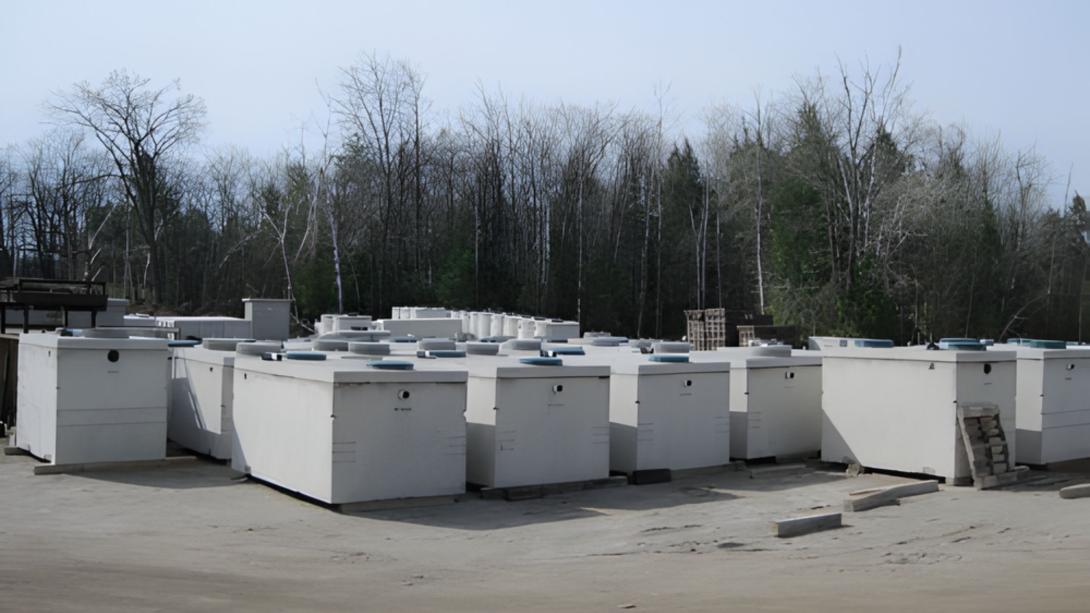
Everything you need to know about septic tanks, pumping chambers, and sewage holding tanks to make the right choice for your Ontario property
TLDR
Concrete septic tanks outperform plastic in Ontario's harsh climate. Concrete lasts 50+ years vs. plastic's 30 years, resists freeze-thaw cycles better, prevents floating in high water tables, and handles traffic loads safely. Plastic (polyethene) tanks cost less initially and are easier to install, but are weaker, more maintenance-intensive, and vulnerable to deformation. For pumping chambers, sewage holding tanks, and septic systems in Ontario, concrete delivers superior long-term value despite higher upfront costs. The Ontario Building Code requires CSA certification for both materials.
Choosing between plastic and concrete septic tanks affects your property for decades. This decision influences installation costs, long-term performance, maintenance requirements, and replacement timelines.
Wrong material choice leads to premature failure, costly repairs, and system replacements. Plastic tanks that float in high water tables require expensive anchoring systems. Concrete tanks improperly sized or installed create treatment problems and environmental hazards.
This guide explains the fundamental differences between polyethene septic tanks and concrete alternatives. You'll understand how each material performs in Ontario's demanding climate and which option delivers the best value for your specific situation.
Understanding Septic Tanks, Holding Tanks, and Pumping Chambers
Before comparing materials, let's clarify what these systems do and how they differ.
How Septic Tanks Work
Septic tanks treat wastewater through bacterial action. Solid waste settles to the bottom as sludge, while lighter materials float to the surface as scum. The middle layer of clarified liquid flows to the drain field for soil absorption.
These systems require pumping every 2-3 years to remove accumulated solids. Proper bacterial balance handles regular household waste without the need for chemicals or additives.
Sewage Holding Tanks Explained
Holding tanks store wastewater without treating it. They're essentially sealed containers that collect sewage until a pump truck empties them. Properties without suitable drain field conditions often use holding tanks.
These tanks need to be pumped much more frequently, typically every 6-8 weeks, for a family of 4. The frequency depends on tank size and household water usage. Higher pumping frequency increases long-term operating costs.
The Role of Pumping Chambers in Septic Systems
Pump tanks collect wastewater for dosing into the soil absorption system. They work with septic systems where gravity drainage isn't possible. A pump moves effluent uphill or to distant drain fields.
These chambers contain float switches that activate pumps when liquid reaches specific levels. They're smaller than septic tanks because they only handle clarified liquid, not raw sewage.
Key Differences Between System Types
Septic tanks treat waste and need to be pumped every 2-3 years. Sewage holding tanks only store waste and require pumping every 6-8 weeks. Pumping chambers move treated effluent to drain fields.
Your property's soil conditions, water table level, and lot configuration determine which system you need. All three are available in both plastic and concrete versions, though material choice affects performance differently in each application.
What Are Polyethene Septic Tanks?
Plastic septic tanks have evolved significantly since their introduction in the 1980s.
High-Density Polyethene (HDPE) Construction
Modern plastic septic tanks use high-density polyethene for corrosion resistance and chemical stability. This material doesn't rust or deteriorate from septic gases like older materials did.
Manufacturers mould HDPE into one-piece tanks without seams or joints. This eliminates leak points that plagued earlier multi-piece designs. The material remains flexible, allowing some movement without cracking.
How Plastic Septic Tanks Have Evolved
Early plastic tanks frequently failed due to structural weakness and improper installation. Modern versions use thicker walls, reinforced ribs, and improved designs. Many now include horizontal flow patterns and two-chamber baffle systems for better separation.
Despite improvements, plastic septic tanks remain lighter and structurally weaker than concrete alternatives. The material properties impose fundamental limitations that design improvements can't fully overcome.
Standard Sizes and Configurations Available
Polyethene septic tanks typically range from 750 to 1,500 gallons for residential use. They come in cylindrical or rectangular shapes, depending on the manufacturer.
Most feature two-compartment designs meeting Ontario Building Code requirements. Access risers extend to ground level for easier inspection and pumping.
Applications Best Suited for Plastic Tanks
Plastic tanks work well for seasonal cottages with minimal use. Their lightweight suits are ideal for remote locations where equipment access challenges concrete delivery. Temporary installations or properties with uncertain long-term plans benefit from lower initial investment.
However, permanent residential applications in Ontario generally perform better with concrete, given our climate and soil conditions.
Plastic vs. Concrete Septic Tanks: The Complete Comparison
Let's examine how these materials stack up across critical factors.
Durability and Lifespan
Concrete septic tanks last 50+ years with proper maintenance. Some installations have provided reliable service for over 75 years. The material doesn't degrade from exposure to sewage or environmental conditions.
Plastic septic tanks typically last around 30 years. They're more vulnerable to environmental changes, soil vibrations, and physical stress. UV exposure before burial can weaken the material, shortening its lifespan.
Strength and Load-Bearing Capacity
Concrete provides superior structural strength. These tanks handle heavy traffic loads; you can safely drive over properly installed concrete septic tanks. They resist collapse from soil pressure and maintain their shape indefinitely.
Plastic tanks are weaker and more prone to cracking or collapsing under weight. Installing them under driveways or in areas with traffic requires special bedding, support structures, and careful backfilling. Even then, they're more vulnerable to deformation over time.
Installation Requirements and Complexity
Plastic's light weight makes installation easier. A small excavator or even manual labour can position tanks weighing 200-400 pounds. No crane or heavy equipment is required.
Concrete tanks weigh 8,000-12,000 pounds and require cranes or heavy machinery for placement. However, they reduce overall installation complexity in other ways. You can backfill immediately without special procedures or ballast water. Concrete tanks don't need complex anchoring systems to prevent floating.
Cost Comparison
Plastic septic tanks cost $500-$2,000, depending on size. Concrete tanks range from $700 to $2,000. Material costs overlap significantly.
Installation costs initially favour plastic due to its lighter weight and simpler equipment requirements. However, plastic installations in high-water-table areas require anchoring systems, which add $500-$1,500. Sites with traffic loads need reinforced bedding and support structures.
Long-term value favours concrete. A tank lasting 50+ years costs less per year than one that needs to be replaced after 30 years. Factor in the disruption and expense of excavating and replacing a failed tank.
Maintenance Needs and Repair Considerations
Both materials require regular pumping, depending on the system type. Inspection frequency differs slightly: plastic tanks need inspections every 3 years, while concrete tanks can stretch to 5 years.
Concrete tanks rarely develop structural issues. Minor cracks can be sealed. Plastic tanks deform under pressure, develop stress cracks, and may need to be replaced if severely damaged. Repairs are often impractical on plastic units.
Performance in Ontario's Harsh Climate
Ontario's freeze-thaw cycles test septic system materials, temperature swings, stress tanks and connections. Concrete doesn't become brittle in cold or soft in heat. It resists UV-induced deterioration before installation.
Plastic changes properties with temperature. Extreme cold makes it more brittle and prone to cracking. Heat can cause slight softening. These cycles contribute to earlier failure rates in harsh climates.
Why Do Concrete Septic Tanks Outperform Plastic in Ontario?
Several factors make concrete the superior choice for most Ontario installations.
Freeze-Thaw Cycle Resistance
Precast concrete septic tanks are designed specifically for Ontario's harsh northern climate. The material maintains structural integrity through countless freeze-thaw cycles. Properly manufactured concrete includes air entrainment that accommodates water expansion without cracking.
Plastic becomes more brittle as temperatures drop. Winter conditions increase the risk of stress cracking, especially in older tanks that have weathered multiple seasons.
Weight Prevents Floating in High Water Tables
Many Ontario properties have high water tables, especially in spring. Saturated soils create buoyancy that can push empty tanks upward. This destroys drain field connections and requires expensive repairs.
Concrete's natural weight of 8,000 to 12,000 pounds provides stability in water-saturated soils. The mass prevents floating without anchoring systems. Plastic tanks need ballast water during installation and may require permanent anchoring structures to resist flotation.
Superior Strength for Heavy Traffic Areas
Traffic over septic tanks happens on many properties. Driveways, parking areas, and equipment storage often overlap tank locations. Concrete handles these loads safely without special reinforcement.
You can drive over properly installed concrete septic tanks without concern. The material resists crushing and maintains its shape. Plastic tanks require protection from any traffic and can deform even under moderate loads.
No Deformation or Shape Loss Over Time
Concrete tanks maintain their dimensions permanently. Walls don't bow or bulge. The shape remains precisely as engineered, regardless of soil pressure or years of service.
Plastic tanks gradually deform under sustained pressure. Walls can bow inward, reducing adequate capacity. Cleaning operations stress plastic tanks, sometimes causing permanent shape changes that affect performance.
Immediate Backfilling Without Special Procedures
Concrete tanks can be backfilled immediately after installation. The structural strength handles compaction forces without risk of collapse or deformation. This speeds up installation and reduces labour costs.
Plastic tanks need careful backfilling procedures. You must fill them with water as ballast during backfilling to prevent crushing. Compaction must be limited near tank walls. These requirements slow installation and increase labour time.
Heat Retention for Better Bacterial Action
Concrete holds heat longer than plastic. This thermal mass helps maintain warmer temperatures inside the tank during cold weather. Warmer conditions support better bacterial activity and more effective waste treatment.
Plastic offers minimal insulation. Interior temperatures follow outside conditions more closely. During extended cold periods, this reduces treatment efficiency.
When Might Plastic Tanks Be Appropriate?
Despite concrete's advantages, plastic tanks are suitable for specific applications.
Lightweight Installation Benefits
Remote cottage properties with limited access to equipment benefit from plastic's portability. You can transport tanks in pickup trucks and position them without cranes.
Difficult access sites where bringing heavy equipment is impractical or expensive may justify the use of plastic tanks despite their limitations.
Remote Locations with Access Challenges
Island properties, back-country lots, or locations requiring long overland transport favour lighter materials. The logistics of delivering and installing concrete in these settings can be prohibitive.
Temporary or Seasonal Use
Cottages used only during the summer months experience less stress on septic systems. Seasonal use reduces the consequences of a shorter lifespan. The lower initial cost makes sense for properties with uncertain long-term plans.
Temporary construction sites or mobile home installations may use plastic holding tanks, knowing they'll eventually be relocated or replaced.
Budget-Conscious Initial Investment
Properties on extremely tight budgets might choose plastic to get a functional system installed quickly. However, the long-term economics favour concrete. Calculate the total cost of ownership, including eventual replacement, rather than just the initial outlay.
Ontario Building Code and Septic System Requirements
All septic installations must meet provincial regulations regardless of material.
CSA Certification and CPA Red Dot Approval
Both plastic and concrete tanks need CSA certification for use in Ontario. This ensures products meet minimum structural and performance standards.
Precast concrete septic tanks dominate Ontario applications partly because manufacturers have established CSA certification processes. Look for the red dot approval indicating Canadian Precast Association quality standards. CPCI certification ensures facilities and procedures produce safe, quality products.
Permit Requirements for Installation
Every septic system installation requires a permit from local health authorities. The application includes Site evaluation, system design, and material specifications.
Inspectors verify proper installation before approving backfilling. This protects groundwater quality and ensures systems function as designed.
Soil Type and Site Evaluation Considerations
Engineers assess soil percolation rates, water table depth, and Site topography. These factors determine system design, including tank size and drain field configuration.
High water tables often require concrete tanks to prevent flotation. Heavy clay soils may favour concrete's strength. Sandy soils with good drainage are less restrictive.
Regulations for Holding Tanks vs. Treatment Systems
Sewage holding tanks are subject to stricter regulations than septic treatment systems. Authorities want to ensure properties have suitable treatment systems wherever possible.
Holding tanks require proof that soil conditions prevent the installation of a drain field. Regular pumping records may be mandatory. Some municipalities limit the use of holding tanks to seasonal properties.
Pumping, Maintenance, and Long-Term Considerations
Understanding ongoing requirements helps evaluate total system costs.
Pumping Frequency
Septic tanks need to be pumped every 2-3 years for most families. Larger households or smaller tanks require more frequent service. This removes accumulated solids before they interfere with treatment.
Sewage holding tanks need to be pumped every 6-8 weeks. This frequent service creates an ongoing expense. A family using 400 gallons daily fills a 1,000-gallon holding tank in 2.5 days, leaving little margin for error.
Pumping chambers are pumped less frequently, usually during septic tank maintenance or if pump components need servicing.
Inspection Schedules and Professional Services
Professional inspection every 3-5 years catches problems early. Inspectors check structural condition, measure sludge levels, verify baffles, and assess overall system health.
Plastic tanks need more frequent inspection every 3 years due to a higher failure risk. Concrete tanks can last up to 5 years due to their durability.
Signs Your Tank Needs Attention
Sewage backing up into the house signals immediate problems. Slow drains, gurgling sounds, or sewage odours indicate developing issues. Wet spots or lush grass over the drain field suggest system failure.
Regular pumping before problems develop prevents emergencies and extends system life.
Expected Replacement Timelines by Material
Concrete septic tanks, with proper maintenance, can last 50-75 years. Many original installations from the 1960s still function correctly. Quality concrete tanks with appropriate care can effectively last a lifetime.
Plastic tanks typically last 30 years before replacement is necessary. Environmental stress, deformation, and material degradation eventually compromise the performance plan for replacement costs in your long-term property budget.
Choose Concrete Septic Tanks for Ontario Performance
Concrete septic tanks deliver superior performance for Ontario properties. They withstand freeze-thaw cycles, resist flotation, handle traffic loads, and last 50+ years with minimal maintenance. While plastic tanks cost less initially and are easier to install, they compromise durability, strength, and longevity.
For permanent residential installations, quality concrete septic and holding tanks provide the best value. The material's inherent properties match Ontario's demanding conditions. Proper installation ensures decades of reliable service without the replacement costs plastic tanks eventually require.
Pumping chambers and sewage holding tanks also perform better in concrete. Structural strength and dimensional stability matter even more in these applications, where system failure can cause immediate problems.
Acton Precast Concrete has manufactured quality septic tanks, holding tanks, and pumping chambers for over 60 years. Our two-compartment concrete tanks meet CSA standards and Ontario Building Code requirements. We serve homeowners, contractors, and developers throughout the region with products engineered for our climate.
Whether you're replacing an ageing system, building new construction, or upgrading a cottage property, material choice affects your satisfaction for decades. Concrete costs slightly more initially but delivers dramatically better value over time.
Contact us for expert guidance on selecting and delivering a septic tank. Our team helps you choose the right size and configuration for your property's specific needs. We provide technical support and high-quality precast concrete products that ensure your septic system performs reliably in Ontario's harshest conditions.