

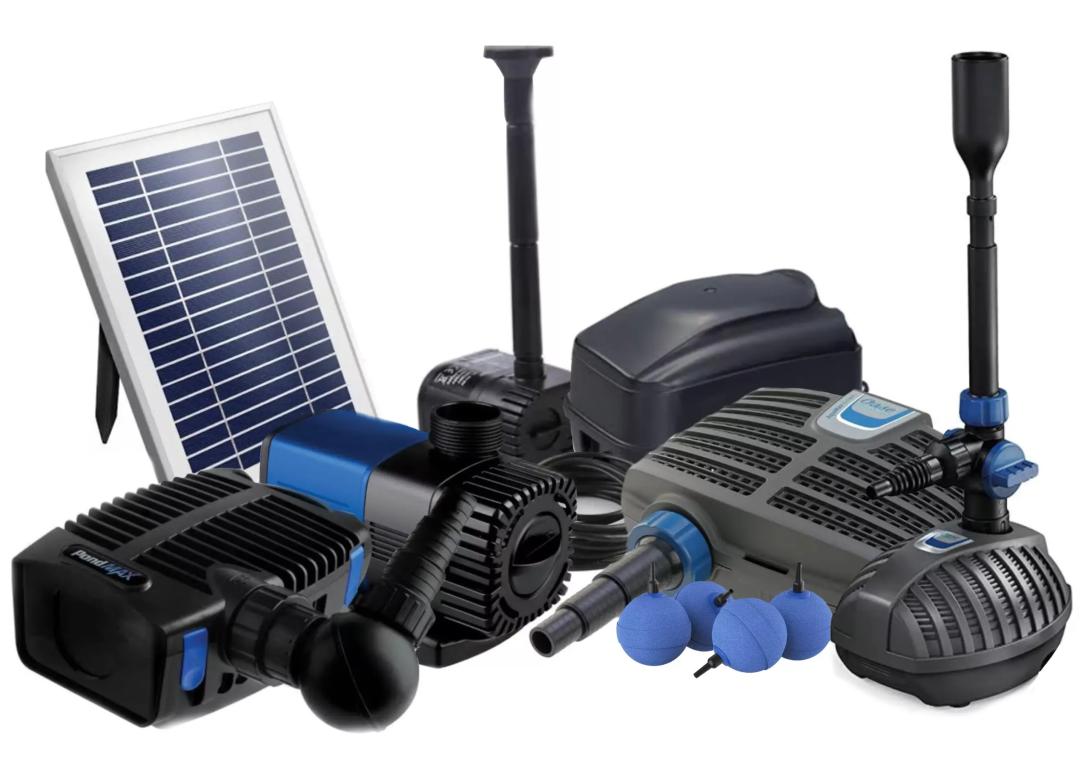
Pond pumps are the life force of any filtration or water feature system. They are what work to push water around your pond into your filter, fountain, waterfall, etc keeping it clean and preventing stagnation. Below you will find information on a range of pond pumps and how to choose the right one for your pond or water feature. As always if you have any questions please don’t hesitate to reach out so we can guide you in the right direction.
On This Page
- Types of pond pumps
- Dirty Water Pumps
- Low Voltage Pond Pumps
- Fountain Pumps
- Solar Pond Pumps
- Air Pumps
- Selecting the right pump
Types of pond pumps
At The Fish Works, we sell a lots of pumps for a variety of purposes. We only sell pumps with good warranty periods, because we don’t trust manufacturers that do not trust their own products. We focus on water feature pumps that have low energy consumption as well. And, of course, we will match ANY advertised price in Australia!
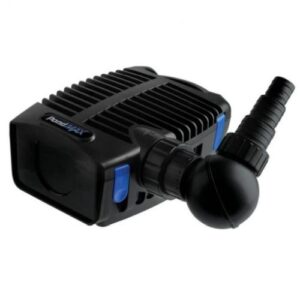
Dirty water pumps
Dirty water pumps, or filter pumps, are designed to remove dirty, sludgy water through a fish pond filter system (gravity filters, pressure filters, etc). They do not clean the water, only move it. So can be used in conjunction with a pond filter or as a waterfall pump that will not block up often like a fountain pump will.
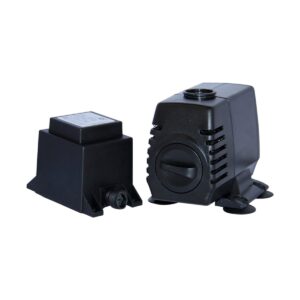
Low Voltage pond pumps
Low voltage pumps come with a transformer and 10m cable. They are good in situations where you need to bury a cable, but it is difficult to bury it at the required depth in conduit. Also good for peace of mind if you have kids or a dog that might chew the cable.
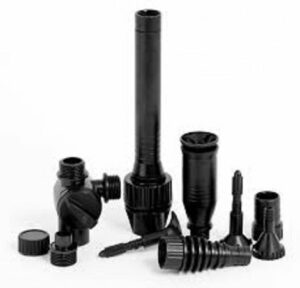
Fountain pumps
Fountain pumps are great at moving cleaner water up to a fountain or waterfall. They have a protective cage that prevents larger particles from getting into their impeller. They are not suitable for moving dirty water to a filter system.
Solar pond pumps
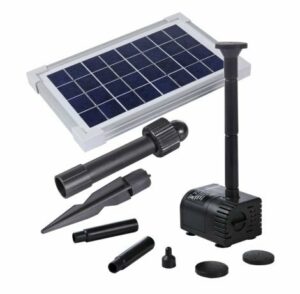
Solar pumps are a great way of getting your fish pond water moving and oxygenated without using electricity. They are great for people who can’t get power near the pond. Also for people who want to avoid relying on the electricity grid. They come complete with a quality solar panel and a battery, which means they will pump water into the night.
Air pumps
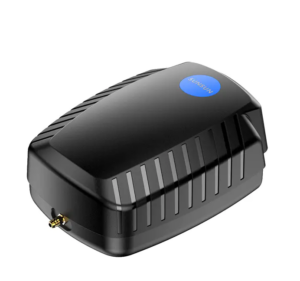
Oxygen is needed for good biological filtration and fish health. Our air pumps will ensure that your pond is well aerated, especially on those hot summer days.
Selecting the right fish pond pump for your pond
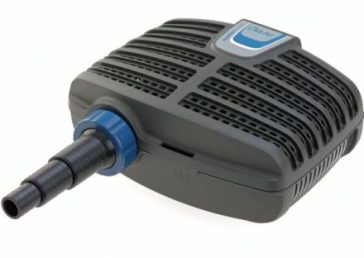
There are two types of fish pond pumps, submersible and external pumps. As a rough guide, ponds less than 8000 litres use submersible pumps. Larger fish ponds can use powerful submersible pumps or an external, low noise, 24-hour rated pump.
Submersible Pumps
- Designed to sit submerged inside your pond or skimmer box
- Usually the most preferable option due to their quietness and energy efficiency.
External Pumps
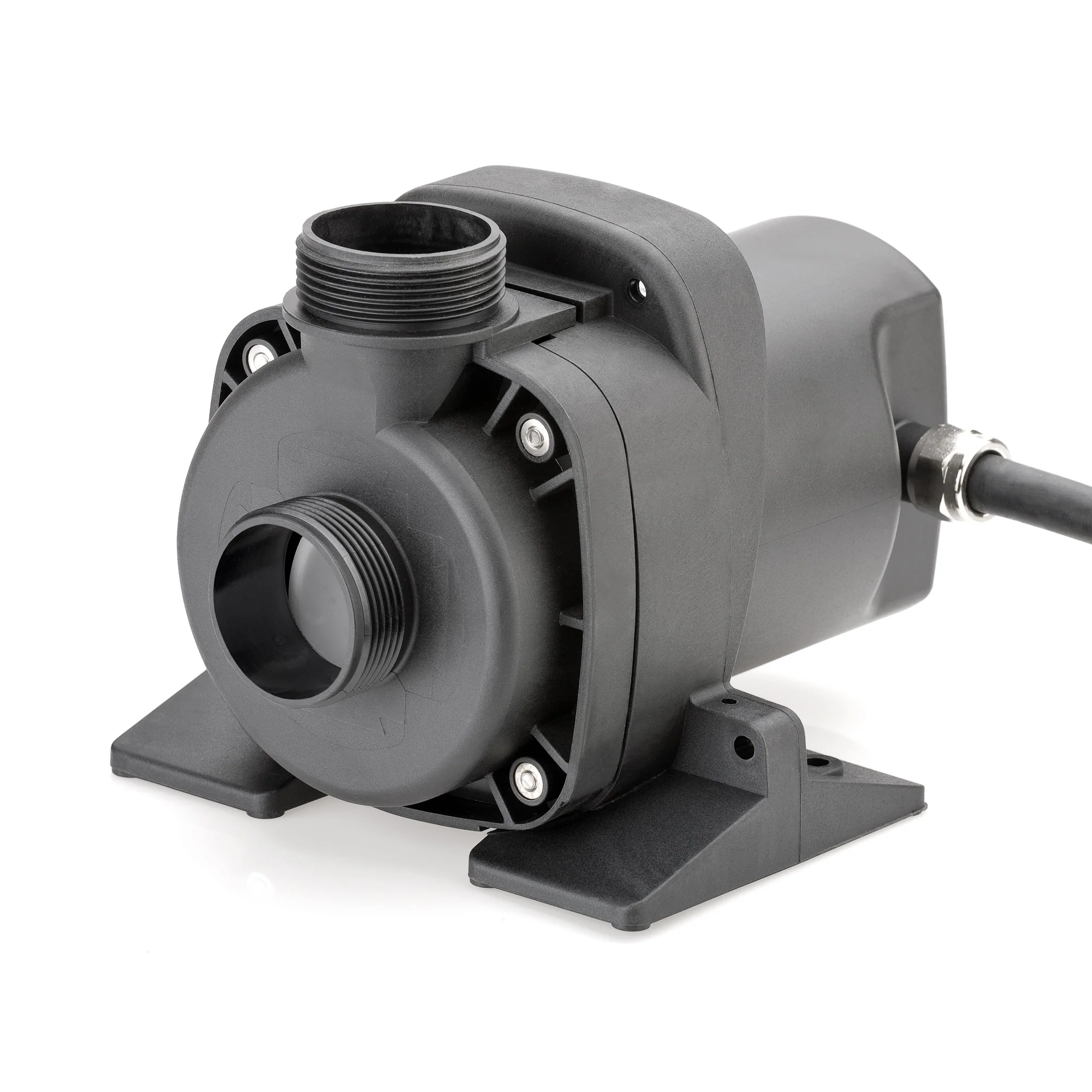
- Designed to sit dry outside of your pond with piping connecting the intake to your water
- Usually suitable for more powerful setups or when a submersible pump is tricky.
Warranty
Choose a fish pond pump that has a warranty period of at least 3 years. Most of our pumps have between 3 and 5 years warranty. Which is a good indication of the quality and expected lifespan. In most cases, pumps that have 1-year warranty are of poor quality and are often energy inefficient. These waste energy and therefore money, but also risk the health of your fish.
Energy Efficiency
Electricity prices are rising. Generally, more expensive pond pumps are more energy efficient. Running a pump 24 hours costs around $1.20 per watt per year (a bit more or a bit less in different states). So consider this when thinking of how much you are going to spend on your pump.
Flow Rate
When selecting a pond pump for your pond, firstly, you should try to estimate the flow rate you will require. Flow rates for water pumps are measured in litres per hour. One way of estimating the flow rate you require would be to get a bucket of water of known volume, and time how long it takes to pour the water out of the bucket at the same flow rate you want your waterfall flowing at.
For example: If you try this with a 10-litre bucket, and it takes you 10 seconds to pour the water out. The water will be flowing at 1 litre per second, or 60 litres per minute. Which is the same as saying 3600 litres per hour.
Head height
Now we must measure the height of your waterfall. Measured from the surface of the water in your pond, vertically to the top of your waterfall where the water spills from the tube or pipe feeding it. This is called the “static head height” of the waterfall. All pumps have a maximum head height at which they will pump water. The higher a pump has to pump water, the less it will flow until it reaches its maximum head height. At its maximum head height, the pump will actually stop flowing. ie, If you have a 1-metre waterfall, do not buy a pump that has a max head height of 1 metre!
Frictional loss
Another factor that we must consider is the “frictional loss” of your pump. This is the loss of flow from your pump due to the friction of water with your pipes and filter. The more pipework you have and the finer your filter media, the greater the frictional loss will be. The frictional loss is difficult to measure but is worth keeping in mind, especially if you have a lot of pipework, or pipes of smaller size to what your pump will run at its peak. The effects of static head loss and frictional loss are referred to as “Dynamic head loss”. Come into our store to find out more.
Another example: If we want a flow rate of 3600 litres per hour flowing down a waterfall that is 1.5 metres high, we do not buy a pump of maximum flow of 3600 litres per hour, with a max. head height of 2 metres. Because this may only pump out 500 to 1000 litres per hour up to your waterfall. Instead, a pump that will pump a maximum of 5500 litres per hour with a max. head height of 3 metres would be more suitable, as it would give you a flow rate much closer to the flow rate you desire.
If you are using a pump for the purposes of biological filtration, the flow rate of the pump must be at least enough to turn the entire volume of your pond over at least once per hour, preferably twice or so.
For example. If you have a pond of 2000 litres, a waterfall of 1-metre height, you would need a pump of at least 3000 litres per hour to adequately filter the pond, preferably more.
Pond Pumps for Sale
At The Fish Works, we only stock the best brands in pumps and filters. We prefer to stock brands that have long warranty periods, with low power consumption.
Not sure which pump is right for your pond or water feature? We’re here to help.
Get in touch for free expert advice anytime.
⚠️ Heads-up: Choosing the wrong pump can affect the health of your fish and the performance of your filter. If you’re unsure, contact us and we’ll help you find the perfect match.
This post originally appeared on thefishworks.com.au and has been republished with the author’s permission.