

Back pain that has lasted for months, a stiff neck that never fully settles, or a knee that aches even after rest and physiotherapy? When pain keeps coming back, the problem is often the nerves carrying the pain signal. Radiofrequency ablation, often shortened to RFA, targets those nerves directly. At Advanced Non-Surgical Joint Treatment, it follows on from our lower back spinal injections and is one of our options for longer-lasting relief. This guide explains what to expect.
What Is Radiofrequency Ablation?
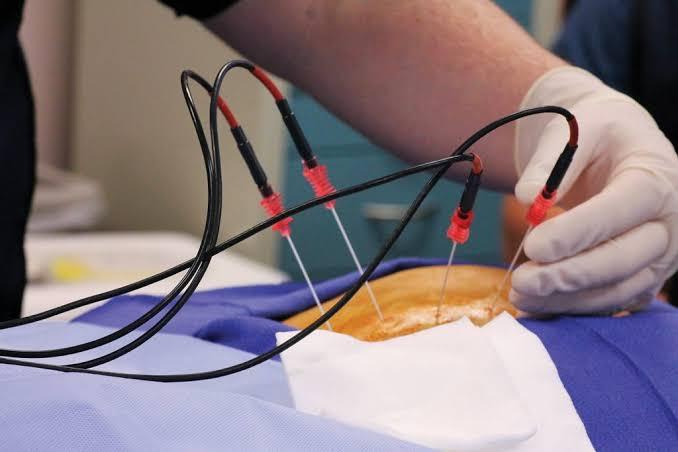
Radiofrequency ablation is a minimally invasive procedure that uses heat from radio waves to calm the small sensory nerves that transmit pain from a joint. A fine needle is guided to the nerve under imaging, and a controlled current heats the tip for a short time. The aim is to interrupt the pain signal travelling to the brain, so you feel less pain without needing an operation.
How Does It Work?
The treated nerves carry pain messages rather than controlling your muscles, so RFA is not intended to affect strength or movement. Over time, these small nerves can regrow, which is why relief is not permanent. For many people it lasts for months, and the procedure can be repeated if the pain returns.
Conditions Radiofrequency Ablation Can Treat
• Chronic lower back pain linked to the facet joints
• Neck pain and stiffness from the cervical facet joints
• Sacroiliac joint pain at the base of the spine
• Knee osteoarthritis pain, using genicular nerve ablation
• Selected cases of hip and shoulder pain
See our radiofrequency ablation UK service page for the areas we treat. Many back pain patients also ask about our lower back spinal injections, and we will explain the difference at your consultation.
Benefits of Radiofrequency Ablation
• Targets the source of pain signals rather than masking symptoms with tablets
• Minimally invasive: no large incision and no hospital stay
• Performed under local anaesthetic, often in under an hour
• Relief that can last many months for suitable patients
• Can be repeated, and may help you reduce painkillers or avoid surgery
Is RFA Right for You?
RFA works best when we can identify which nerves are causing your pain. Usually, we start with a diagnostic nerve block, a small test injection of local anaesthetic near the suspected nerves. If your pain eases clearly, even for a short time, it suggests those nerves are the source, and RFA is more likely to help. If it does not, we will look at other options rather than proceed.
RFA may not be suitable if you have an active infection, a bleeding disorder, are on blood thinners that cannot be paused, or are pregnant. If you have a pacemaker or other implanted device, tell us beforehand so we can check it is safe. A thorough assessment always comes first.
What Happens During the Procedure?
• Assessment: we review your symptoms, scans and the result of your diagnostic block
• Preparation: you lie comfortably and the skin is cleaned and numbed
• Treatment: using imaging guidance, a fine needle is placed beside the nerve and heat is applied for a short time
• Finish: a small dressing is applied, and most patients go home the same day
Recovery and Results
Some soreness, bruising or a sunburn-like sensation around the treated area is common for a few days. Most people return to light daily activity quickly, and we will advise when to resume exercise. Pain relief often builds gradually over two to three weeks as the nerves settle. Results vary, and RFA works best alongside a targeted exercise plan.
Read More: Lower Back Spinal Injections UK: Types, Cost, Results & Recovery
Risks and Side Effects
RFA is generally considered safe in experienced hands, but all procedures carry some risk. Possible effects include temporary soreness, numbness or tingling, a short-lived flare of pain, bruising, bleeding, infection and, rarely, skin burns or nerve irritation. Not everyone responds, and relief cannot be guaranteed. We explain every risk clearly before you decide.
RFA vs Injections and Surgery
Joint injections act at the joint, while RFA works on the nerves feeding it, which is why it can last longer for the right patient. Surgery, such as a spinal procedure or knee replacement, is usually reserved for structural problems or cases that have not responded to less invasive care. For knee osteoarthritis, we may also compare RFA with the knee options such as Lipogems or other regenerative options.
Radiofrequency Ablation Cost in the UK
Cost depends on the area treated, the number of nerves involved and whether a diagnostic block is needed first. We keep our pricing clear on our fees page, and we help you check insurance cover before you book.
Why Choose Advanced Non-Surgical Joint Treatment?
• Specialist-led care from Dr Ralph Rogers, with around 20 years of experience
• Image-guided precision, so treatment targets the right nerves
• A personalised plan that pairs treatment with rehabilitation
• Clinics serving London, Kent and Gibraltar, with WhatsApp support
• Work with leading private medical insurers; cover varies by policy
Ready to find out if radiofrequency ablation could ease your pain? Book your consultation with Dr Ralph Rogers. Call us on 0207 112 5400 or message us on WhatsApp on 07453 309380.
Frequently Asked Questions
Is radiofrequency ablation painful?
The area is numbed with local anaesthetic first, so most people feel pressure and warmth rather than sharp pain. Soreness for a few days afterwards is common.
How long does radiofrequency ablation last?
It varies. Many patients get relief for several months to a year or more, but nerves can regrow, so the effect is not permanent.
Can radiofrequency ablation be repeated?
Yes, it can usually be repeated if your pain returns and the first treatment helped.
Can RFA help knee pain?
Yes, genicular nerve ablation is used for selected patients with knee osteoarthritis pain. A diagnostic block helps us decide if it is suitable.
Is radiofrequency ablation available on the NHS?
Some NHS services offer it to selected patients, but access varies by area. Many people choose private care for quicker access.