

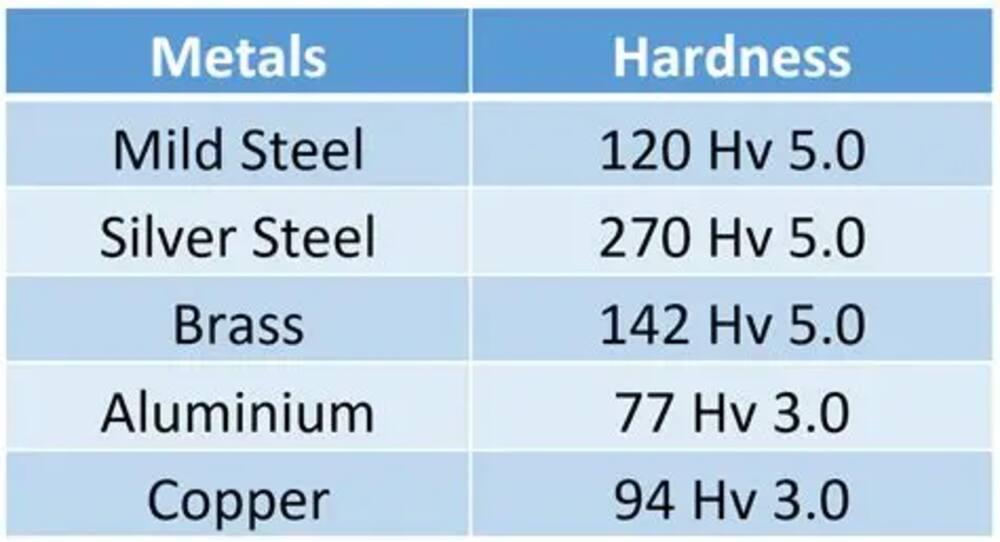
Material hardness is one of the most fundamental properties in materials engineering. Whether it’s selecting the right alloy for a turbine blade, a polymer for packaging, or a ceramic for cutting tools, hardness determines how a material performs under stress, wear, and deformation. In industrial design and manufacturing, understanding and measuring hardness isn’t just about testing durability—it’s about ensuring long-term reliability and product quality.
What Is Material Hardness?
In simple terms, hardness is a material’s resistance to permanent deformation, scratching, or indentation. While it’s often confused with strength or toughness, hardness is a distinct property that reflects how well a material can withstand surface wear or localized plastic deformation.
For example:
Metals with high hardness are ideal for cutting, forming, and high-friction applications.
Plastics require optimized hardness for flexibility and impact resistance.
Ceramics are extremely hard but can be brittle.
This makes hardness testing a vital part of quality control, material selection, and failure analysis across industries like aerospace, automotive, construction, and energy.
Classification of Material Hardness
Material hardness can be categorized based on how it is measured and the kind of resistance being evaluated. The three main types include:
1. Scratch Hardness
Scratch hardness measures a material’s ability to resist surface scratching. The Mohs scale is the most well-known system here, ranking materials from 1 (talc) to 10 (diamond). It’s a quick, comparative test often used for minerals and coatings.
Typical Applications: Geological samples, surface coatings, and ceramics.
2. Indentation Hardness
This is the most widely used classification in engineering. It measures how a material resists plastic deformation when a force is applied through an indenter. Depending on the test, the indenter could be a ball, cone, or pyramid.
Common scales include:
- Brinell Hardness (HB): Uses a steel or tungsten carbide ball under a heavy load; ideal for coarse-grained materials like castings.
- Rockwell Hardness (HR): Employs a smaller load and measures depth of indentation; popular for metals and plastics due to its speed and simplicity.
- Vickers Hardness (HV): Uses a diamond pyramid and calculates hardness from the indentation’s diagonal; suitable for thin materials and micro-scale testing.
Typical Applications: Metals, alloys, plastics, and composites.
3. Rebound (Dynamic) Hardness
Rebound or dynamic hardness evaluates how well a material can absorb energy and return to its original shape after impact. The Leeb hardness test, for instance, measures the rebound velocity of a small hammer striking the material’s surface.
Typical Applications: Large components, heavy machinery parts, and in-situ testing where portability is required.
Key Hardness Testing Techniques
Selecting the right testing technique depends on the material type, thickness, and test environment. Below are the most common industrial methods:
Rockwell Testing
One of the most practical and rapid tests. It measures the depth of penetration under a standard load, making it perfect for production-line testing. Rockwell testers are available in multiple scales (A, B, C, etc.), ensuring flexibility for materials from soft plastics to hardened steels.
Vickers and Knoop Microhardness Testing
Used primarily for microstructures, thin films, and coatings. These tests use small loads and optical measurement systems to assess hardness on a microscopic scale. The Knoop test is especially suited for delicate materials or small components.
Brinell Testing
Ideal for large, heterogeneous samples like castings and forgings. The large ball indenter gives an average hardness value over a broader area, providing a realistic reflection of the material’s performance.
Leeb Rebound Testing
Portable, fast, and efficient. This method is perfect for on-site testing of large parts, such as turbine shafts, gears, or structural components, without requiring laboratory conditions.
Factors Influencing Material Hardness
Several variables affect hardness readings, including:
- Heat treatment: Alters grain structure and phase distribution.
- Surface finish: Rough or uneven surfaces can distort readings.
- Testing load and time: Overloading or holding the load too long can change results.
- Material anisotropy: Some materials exhibit different hardness in different directions.
Understanding these factors ensures more accurate and repeatable test results—key to maintaining quality assurance and product integrity.
The Role of Material Hardness in Product Performance
From design to deployment, hardness testing provides vital data that influences:
- Wear resistance: Ensures components maintain function under friction.
- Formability: Balances hardness with ductility during manufacturing.
- Coating adhesion: Verifies bonding and longevity in surface treatments.
For companies focused on innovation and reliability, integrating hardness testing into the product development cycle helps reduce failure risks, improve performance, and ensure compliance with global standards like ASTM and ISO.
Final Thoughts
Material hardness remains one of the most telling indicators of a product’s durability and reliability. By understanding its classifications and mastering modern testing techniques, manufacturers can better match materials to performance requirements—and gain a competitive edge in today’s demanding markets.
Whether through laboratory precision or portable field testing, the goal is the same: measure, understand, and optimize hardness to build products that last.
Article by: toko baut terdekat