

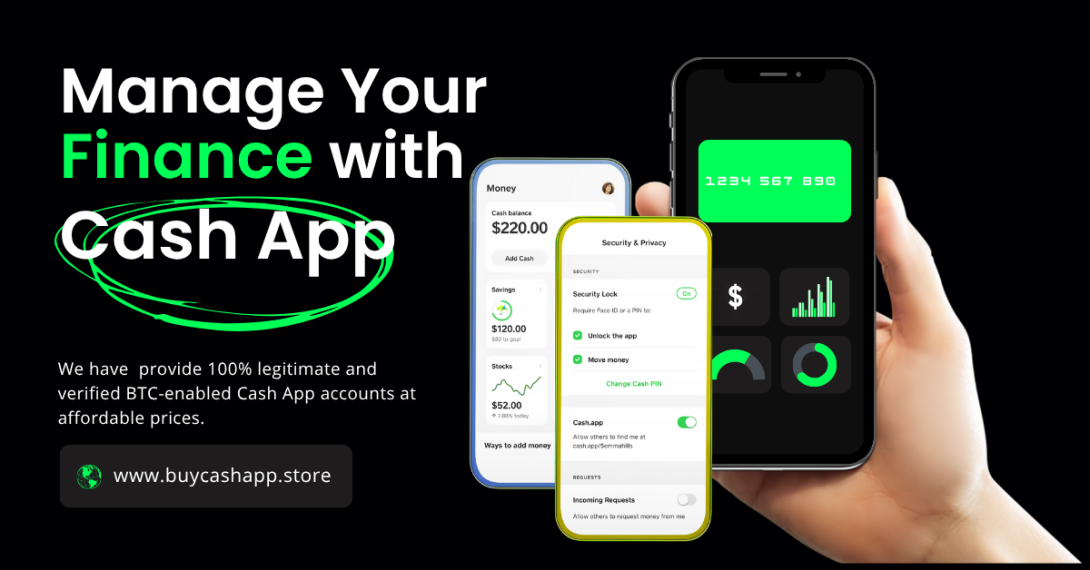
Buy Verified Cash App Accounts for Freelancers and Small Businesses: Full Setup Guide
Cash App is a powerful tool for freelancers and small business owners who need an easy way to send, receive, and manage payments. With its simplicity and broad range of features, Cash App allows you to handle everything from client payments to payroll and even investing in stocks or Bitcoin.
In this guide, we'll walk you through the process of setting up Buy verified Cash App account for your freelance or small business needs, ensuring you can access higher transaction limits and use all of Cash App’s features.
Why Should Freelancers and Small Businesses Use Cash App?
Before diving into the setup, let’s look at the benefits Cash App offers:
- Quick and Easy Payments: Freelancers and small business owners can receive payments from clients and customers instantly, no checks or bank transfers required.
- Low Fees: Sending and receiving payments through Cash App is free for standard transactions (though instant transfers have a small fee).
- Cash Card: You can order a Cash Card, a free Visa debit card tied to your Cash App balance for easy spending.
- Direct Deposit: You can set up direct deposit to receive payments directly into your Cash App balance.
- Bitcoin & Stocks: Cash App lets you invest in Bitcoin and stocks, which could be useful for diversifying your financial management.
- Tax-Friendly Features: Keep track of your transactions for tax season and expense management with Cash App’s easy-to-read history.
How to Set Up a Verified Cash App Account for Freelancers and Small Businesses
Step 1: Download Cash App & Create an Account
- Download Cash App: If you don’t have it already, download Cash App from the App Store (for iPhone) or Google Play (for Android).
- Sign Up: Open the app, tap Sign Up, and enter your mobile number or email address. Follow the prompts to set up your account.
Step 2: Link Your Bank Account or Debit/Credit Card
To receive payments and send money, you'll need to link your bank account or a debit/credit card to Cash App:
- Tap on the profile icon in the top-left corner of the app.
- Go to Banking and select Linked Accounts.
- Follow the instructions to link your bank account or debit/credit card. This ensures you can transfer funds from Cash App to your bank and vice versa.
Step 3: Complete Identity Verification (KYC)
To unlock full features (like higher transaction limits, direct deposit, and access to the Cash Card), you'll need to verify your identity. This process is called KYC (Know Your Customer) and is required for businesses and freelancers who want to use Cash App for transactions beyond basic functionality.
- Go to the Profile Section: Tap on the profile icon in the top-left corner of the app.
- Navigate to Personal Information: Tap on Personal, and enter the required details:
- Full name: As it appears on your legal ID.
- Date of birth: You must be at least 18 years old to verify your account.
- Social Security Number (SSN): Cash App uses this to verify your identity and comply with U.S. financial regulations.
- Home Address: Your residential address.
- Submit a Photo of Your ID: You'll need to upload a government-issued ID (driver's license, passport, etc.) for identity verification. Ensure that:
- The photo is clear.
- All information (name, birthdate, address) is legible.
- The entire ID is visible and not cropped.
- Wait for Confirmation: Cash App will review your information and notify you when your account is fully verified. This process can take anywhere from a few minutes to 24-48 hours, depending on the complexity.
Step 4: Set Up Direct Deposit for Your Business
For freelancers and small businesses, direct deposit is an essential feature for quickly receiving payments from clients or your own business revenue. Here's how to set it up:
- Tap on the Banking Icon: Go to the Banking section in the Cash App.
- Enable Direct Deposit: Select the option to Set Up Direct Deposit.
- Obtain Your Routing & Account Numbers: Cash App provides a routing number and an account number for your account, which you’ll use to set up direct deposit with your employer or clients.
- Share Info with Clients or Employers: Provide your Cash App routing and account numbers to clients who want to send payments directly to your Cash App account.
Step 5: Order Your Verified Cash Card Account for Business Use
Once verified, you can get a Cash Card, which works just like any debit card. You can use it to:
- Make business-related purchases directly from your Cash App balance.
- Withdraw funds from ATMs (though keep in mind that there might be small fees for ATM withdrawals).
To order a Cash Card:
- Go to the Banking Tab in the app.
- Tap on Cash Card and then select Order Cash Card.
- Customize Your Card: You can choose a design for your card, and Cash App will mail it to you.
- Activate Your Card once you receive it by following the prompts in the app.
Step 6: Start Accepting Payments from Clients or Customers
With your Cash App account fully set up and verified, you can start accepting payments from clients or customers:
- Share Your $Cashtag: Your $Cashtag is a unique identifier (think of it as your "username") that allows people to send you money directly.
- Payment Link: You can generate a payment link in the app and send it to clients for easy payments via email or text.
- Invoices: Cash App does not have built-in invoicing features, but you can use third-party tools to create invoices and include a link to your Cash App payment method.
- Request Money: You can also use the "Request" feature to ask for a specific amount from your client, and they’ll receive a notification to pay you directly.
How to Manage Your Cash App Business Account
Once you're set up, you can use Cash App Account to manage your freelance or small business finances more effectively. Here are some tips for keeping everything organized:
- Track Your Transactions: Cash App keeps a history of all incoming and outgoing payments, which is helpful for tax filing or general accounting. You can export your transaction history for record-keeping.
- Use Separate Accounts: If you have personal and business transactions, consider keeping your business finances separate by creating a second Cash App account or using the same account but keeping clear records of business-related expenses.
- Set Up Auto-Transfers: Set up regular automatic transfers from your Cash App to your linked bank account to ensure your business funds are easily accessible.
Preventing Common Issues for Freelancers and Small Businesses
1. Payment Delays
Payment delays can happen due to network issues or Cash App’s verification process. Always confirm that your client has sent the payment and that your account is correctly linked.
2. Disputed Payments
If you ever need to dispute a payment, make sure to keep clear records of your business transactions. Cash App allows users to report disputes, and the company may help resolve issues with unauthorized payments or fraud.
3. Security Best Practices
To prevent fraud:
- Enable Two-Factor Authentication (2FA): Go to Profile > Privacy & Security > Two-Factor Authentication to add another layer of security.
- Use Strong Passwords: Ensure that you use a unique and strong password for your Cash App account.
- Monitor Your Account: Regularly check your transaction history to ensure that everything looks correct.
Final Thoughts
Setting up a verified Cash App account for your freelance or small business is straightforward and offers numerous advantages like quick payments, low fees, and financial tools for growth. By following this guide, you'll be able to access all the features Cash App has to offer, making it easier to manage your business transactions.