
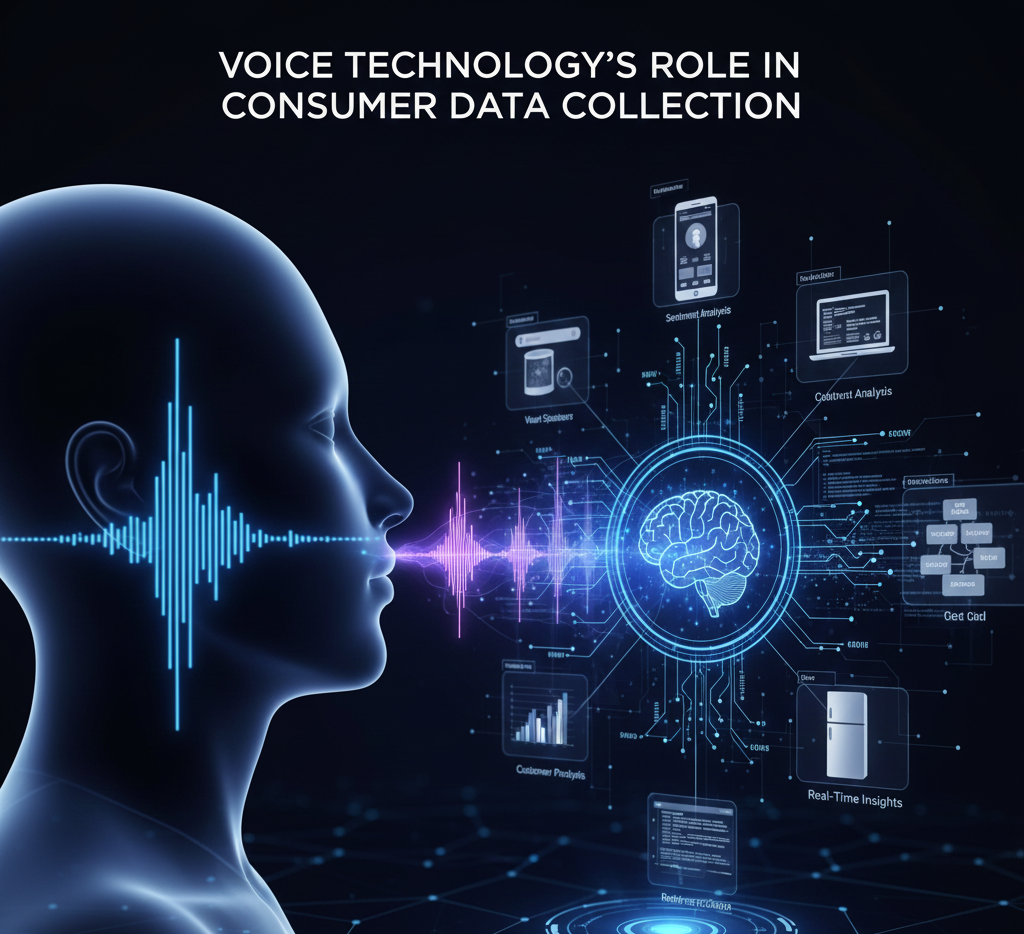
Voice technology is now essential in the modern lifestyle, where smart appliances are gaining momentum, whether at home or in a corporate work environment. From authentication to asking programs to deliver outcomes, voice helps eliminate the need for interacting through buttons or touchscreens.
Today, consumers and professionals use Alexa, Siri, Gemini, and Samsung Bixby to search and manage simple tasks. As usage grows, brands are discovering new ways to collect customer data through voice interactions. This shift is enhancing how companies study consumer behavior. It introduces a mix of convenience, personalization, and new marketing possibilities. This post will discuss the role of voice technology in consumer data collection to achieve business outcomes.
How Voice Technology Facilitates Better Consumer Data Collection
1. Leveraging Voice-Enabled Devices
Smart speakers and voice-enabled devices are becoming household tools. The quickly recognizable Amazon Echo, Google Nest, and Apple HomePod are at the center of this adoption. Therefore, millions of potential consumers issue voice commands every day. Consumer behavior analysis services can use related interactivity recordings to uncover valuable information.
For instance, brands can identify recurring frustrations with products and services. Doing so will help brainstorm ideas to enhance customer experience (CX). Imagine that users ask Alexa for gluten-free recipes or more energy-efficient devices. Such commands signal preferences.
Similarly, a request for budget travel flights will indicate price sensitivity. Companies will use these signals to improve personalization. Moreover, they can optimize prices and product design to succeed in marketing and sales.
2. Tapping into Natural Language Processing for Accuracy
Voice data processing necessitates reliable natural language processing (NLP). NLP tools from brands like Google Cloud Speech-to-Text, IBM Watson, and Microsoft Azure Cognitive Services transform spoken words into well-structured insights. These tools enhance qualitative research solutions as they identify sentiment, urgency, tone, and context using audio data assets.
Therefore, a retail brand can study voice queries. It will learn what customers struggle to find and rearrange store and e-commerce layouts to reduce the effort needed for navigating to popular products. Likewise, a bank can analyze voice interactions in call centers. That data will assist in detecting service gaps, recurring complaints, and fraud attempts.
3. Turning Voice Assistants into Research Channels
Going beyond experimental websites or powerful computers, voice assistants have found a home on consumer devices. Working professionals are also using them to streamline reporting and automate repetitive tasks. However, for market researchers and customer analysts, this trend unlocks newer opportunities to examine what people like and dislike.
Organizations can train and launch highly customized chatbots. Commercial entities will equip consumers with brand-specific troubleshooting assistants. Both cases will capture, preserve, and process voice information for insight extraction. Therefore, they become mini research tools.
For illustration, a fitness brand can create a voice survey. It will check user routines or collect feedback after workouts. Such conversational feedback submission helps consumers save time, while researchers can avoid a lengthy survey questionnaire.
In short, they are less intrusive than traditional forms, encouraging greater participation even if people are having a busy day. Consumers will share more vital details freely when speaking than typing. So, voice assistants can be beneficial to increase response depth.
Conclusion
The role of voice technology in transforming how companies approach consumer data collection is evident because of the increased adoption of voice-enabled gadgets, NLP, and chatbots. Since consumers find it easier to ask tools to deliver results via speech, analysts get more granular behavioral insights through voice data processing.
As NLP systems target more languages, voice interaction data can be the key to overcoming language barriers that restrict the effectiveness of traditional survey methods and reports. In the long run, voice technology will contribute to a more connected world and guide brands on their customer satisfaction (CSAT) improvement initiatives.