
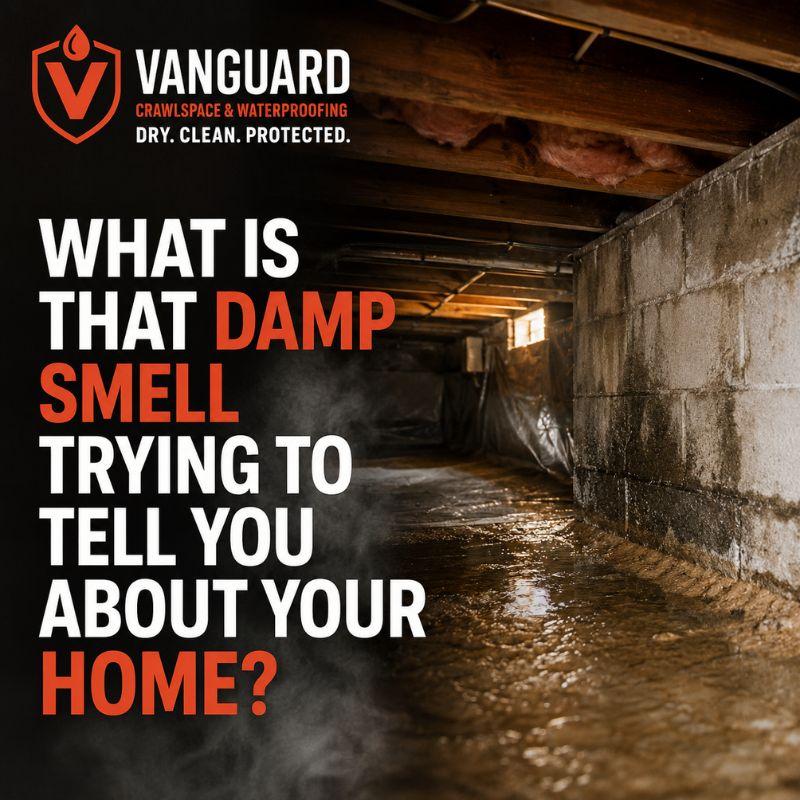
You know the smell.
It's the faint earthy smell that greets you when you walk into the basement after heavy rain or the musty smell that lingers in dusty rooms. No matter how regularly you mop, it seems owners now grow up and find it a piece to get used to. Others try to cover it up with scented candles, air fresheners, or open house windows, hoping that the crisp air will make it disappear.
Unfortunately, a damp smell is never just unpleasant air.
More regularly, it is your property type telling you that there cannot be excess moisture anywhere. While the smell itself may seem innocent, it is capable of indicating hidden problems with water intrusion, poor ventilation, mold growth, or accumulated moisture under your home. Untreated, these problems can best affect the structural integrity of your property and all the air inside your home.
Accurate information serves as a warning system, alerting you before your property sustains serious damage. Knowing what’s causing that musty smell—and what it’s trying to tell you—can solve the problem before you get a luxury restoration.
Why Does a Home Start Smelling Damp?
A damp or musty smell won’t come back in a day. It can grow if moisture is trapped inside an enclosed space for a long time. Warm and humid conditions create the perfect environment for the growth of mold, mildew, and many microorganisms. As they mature, they release readily airborne compounds that muddy the smell of activity, which many owners pick up on immediately.
The important thing to note is that the smell is not a real problem—it is by far, in the end, a symptom.
Think of it carefully as "watching the engine" of your car. No longer soft enough to damage the engine; everything below suggests that it will be interested. Also, a lingering musty smell is often the first indication that moisture is affecting areas that you may not find problem-free.
Because many moisture hazards grow behind walls, underground, or beneath the dwelling, the odor can persist for an extremely long time before any visible loss is perceived.
Your Crawlspace Could Be the Hidden Source
When homeowners notice a damp smell inside their home, they often look first in the toilet, kitchen, or laundry room. Surprisingly, a common source on any subject is not inside the room—it is under it.
The crawl space is certainly responsible for moisture because it regularly comes into contact with the floor. Rainwater, groundwater, excessive drainage, and humid outdoor air can all inject moisture into this enclosed neighborhood. Once moisture builds up under the house, it doesn’t necessarily settle there.
Thanks to the herbicide ventilation phenomenon called "stack impact," air from crawl spaces rises through small openings around plumbing, electrical wiring, ductwork, and floors. Studies suggest that a large portion of indoor air at home is produced by crawl spaces, moisture, odors.
This explains why a bedroom or hallway can additionally smell musty, although the actual problem exists many feet below.
Over time, excess moisture in the crawl space can cause a booking reaction at some stage in the home. Wood framing absorbs moisture, and insulation loses its effectiveness and increases the humidity level inside. Ultimately, these conditions can contribute to mold growth, wood rot, insect activity, and higher electricity bills as your HVAC machine works harder to remove excess moisture from the air.
Homeowners often notice additional warning signs alongside the odor, including:
- Floors that feel soft or slightly uneven
- Increased humidity throughout the house
- Condensation on pipes or HVAC ductwork
- Mold forming near floor vents or baseboards
- Allergy symptoms that seem worse indoors
These signs don't necessarily mean severe structural damage has occurred, but they do suggest it's time to investigate the source before the problem worsens.
Hidden Mold Doesn't Always Look Like Mold
When humans think of mold, they usually form dark patches that stretch across bathroom ceilings or basement walls. In truth, the gradient is usually much, much less obvious.
It often develops behind drywall, under carpet, under interior insulation, around plumbing, or under hardwood floors—where mold has developed largely and been erased for months before owners ever notice any kind of recurring cleanup. When the mold appears, it has developed from being regularly ignored for months.
One of the earliest clues is often the smell itself.
Mold feeds on natural materials, including wood, drywall, and dirt, while each is gifted with plenty of moisture. Even a slow pipe leak or small bottom drip can provide enough water for colonies to expand.
Not every mold smell is the technique of liquid mold wave; however, persistent smells should never be ignored. As mold spreads, indoor air begins to be affected in many ways, especially for people with allergic reactions, seasonal hypersensitivity reactions, or respiratory sensitivities.
You may also notice symptoms such as:
- Frequent sneezing indoors
- Persistent nasal congestion
- Itchy or watery eyes
- Recurring headaches
- Coughing that improves after leaving the house
Because these symptoms often resemble seasonal allergies, many homeowners never realize their home's moisture problem could be contributing to the discomfort.
A Damp Basement Is More Than an Inconvenience
Basements have been responsible for constant moisture that regularly takes up space below ground level, where the surrounding soil obviously holds water. After intermittent rains the groundwater puts stress on house walls. Over time, even small cracks or porous concrete can let in moisture.
The problem now is not to report consistently with water within the scenario.
In many cases, homeowners may first be aware of small adjustments—a faint musty smell after storms, peeling paint, damp corners, or white mineral deposits called "efflorescence" that have molded foundation walls.
Ignoring these symptoms can have long-term consequences. As moisture repeatedly enters the basement, the moisture phases continue to expand, gradually weakening nearby building materials and enriching the higher environment with mold and mildew.
Fortunately, ultra-modern basement waterproofing structures are designed to keep you wet before it becomes a structural disruption. Interior solutions, sump pump structures, vapor barriers, and foundation crack repairs work together to redirect water away from the home, rather than allowing it to accumulate inside the home.
Treating water intrusion right now will not only protect your basement but also help preserve the overall value of your home’s foundation.
High Humidity Can Quietly Damage Your Home
Not every moisture problem starts evolved from a leaky pipe or a foundation crack. Sometimes the culprit is honestly too much intestinal fluid.
When humidity levels are consistently above the acceptable change, moisture begins to accumulate on cooler surfaces as long as residential windows fog up, HVAC ducts increase condensation, and areas with negative ventilation remain humid for long periods of time.
While these problems may seem minor, they detect conditions where mold and mildew thrive.
High humidity also affects a number of the materials your home is made of. Wood usually expands and contracts more, paint begins to lose its adhesion, and floors can buckle. Stored possessions absorb moisture from the air, and over time furnishings, clothing, cardboard boxes, or books can even expand the familiar musty smell.
Common causes of elevated indoor humidity include:
- Poor crawlspace ventilation
- Unsealed crawlspaces
- Inadequate drainage around the foundation
- Plumbing leaks
- Insufficient ventilation in bathrooms and laundry areas
- Water intrusion following heavy rainfall
Simply running a dehumidifier may provide temporary relief, but it won't eliminate the source of the moisture if water continues entering the home.
The most effective solution is identifying where the humidity originates and correcting the underlying problem before it affects more areas of the house.
Why You Should Never Ignore the Warning Signs
Homes rarely prolong moisture problems overnight. Instead, they make slow progress, often starting with little more than a faint smell.
As weeks turn into months, excess moisture begins to affect your home’s wood framing, insulation, drywall, flooring, and even the structural support structure.
One little warning sign often leads to another. You may be aware that your floor no longer feels like a nice ceiling, your doors are starting to stick, your paint is starting to peel near the baseboards, or your electric bills are increasing exponentially because the wet insulation isn’t working properly.
The earlier these warning signs are found, the easier—and usually much less highly priced—they are to accurately interpret.
Rather than asking, "How do I stop shit?" it's higher to offer, "Why does my house smell like this in the first place?"
That easy change of mind can accumulate heaps of green pages in future maintenance.
The Right Solution Starts with Finding the Cause
Every home is unique, which means there shouldn’t be universal treatments for damp smells. A property may additionally really require improved drainage around the foundation, while every other crawl space requires encapsulation, basement waterproofing, structural reinforcement, or moisture manipulation measures built to suit the exact circumstances of the home.
This is why expert inspection is so valuable. Instead of covering up odors, skilled professionals inspect where moisture enters, measure moisture levels, monitor structural additives, and promote long-term solutions designed to keep the problem from recurring.
At Vanguard Crawlspace & Waterproofing, moisture-proof homes aren’t the only solution to look for. It involves expertise in how water moves around and under your home, addressing the issue of supply, and creating a healthier, dry living environment that will last for years.
Whether the problem starts in the crawl space, basement, or foundation, early intervention will allow you to keep your private home easy while protecting the comfort and indoor air of your family.
Final Thoughts
There is no need to dismiss a persistent wet smell as "just one of these" in any way. Often you have early warnings about your own home that there is moisture in it that shouldn’t be there. The sooner you are aware of the purpose, the less difficult it will be to save your mold growth, structural deterioration, and steeply priced repairs down the road.
If you’ve noticed musty smells coming back despite your best efforts, it’s worth taking a closer look at what might be going on under your property or behind your partitions.
Visit Vanguard Crawlspace & Waterproofing for more details on crawl space encapsulation, basement waterproofing, drainage solutions, and structural repairs. And if you are looking for reliable Musty Smell Removal in Madison, working with skilled moisture-control professionals is the first step closer to a healthier, fresher, and better-carpeted household.
The Article “What Is That Damp Smell Trying to Tell You About Your Home?” was originally posted here.