
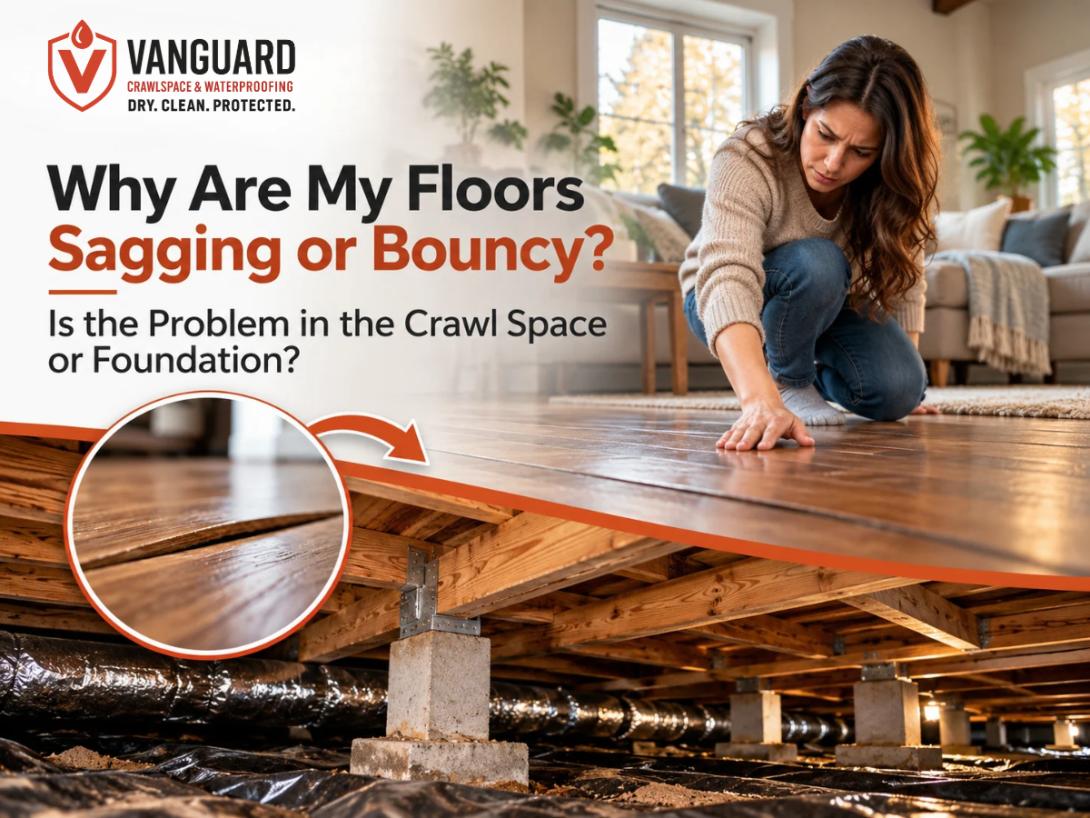
Have you noticed that your flooring feels softer than before? There may be a dip in the living room floor, a dip in the hallway, or an area of flooring that appears to slope toward one side of the house. It is relatively easy to overlook this situation in the beginning, particularly when living in an older home. However, sagging or bouncy floors may indicate a problem beneath the flooring that requires attention.
In some homes, the problem occurs in the crawl space, where the floor joists, support beams, and other building elements support the weight of the rooms above. In other situations, the problem could be related to the foundation, shifting support structures, or deterioration of the building materials themselves. Because all these elements work together to keep your house upright, determining the true source of the problem is critical.
The ability to distinguish between a damaged crawl space and a problematic foundation is important for spotting potential problems, avoiding unnecessary fixes, and figuring out when a structural inspection is necessary.
What Causes Floors to Sag or Feel Bouncy?
A properly constructed floor should withstand normal everyday use. Although some movement can occur depending on the house’s age, layout, and materials, major sagging, excessive bouncing, or a developing slope may suggest that the floor system is no longer properly supported.
The floor consists of many interrelated elements. Floor joists span the area beneath the subfloor, and the beams, columns, and foundation walls transfer the structure’s load to the ground. If these components fail, shift, or lose support, the floor above may start to sink or settle.
Moisture is a particular concern for houses with sagging floors. Wood becomes vulnerable to fungal rot and degradation when it remains wet for long periods. Damaged joists become weaker, and shifting or deteriorating support posts can cause parts of the floor to sag.
Other causes include undersized joists, improperly installed supports, previous alterations during construction, soil composition, and foundation movement. The difficulty here is that many of these causes may lead to the same signs.
Could Your Crawl Space Be Causing the Problem?
If your house has a crawl space, it’s one of the first areas worth investigating when flooring starts to sag or bounce.
The crawl space contains much of the structural framework supporting your home’s floors. Over time, moisture, inadequate support, and material deterioration can affect how well that framework supports the weight above it.
One common problem is timber rot. When moisture enters through exposed soil, plumbing leaks, poor drainage, or foundation seepage, wood floor joists and beams may remain damp for long periods. This creates conditions that allow decay-causing fungi to damage the timber.
As the structural components weaken, they may bend more than intended under ordinary household loads. You might notice increased movement when walking, a dip in the middle of a room, or flooring that feels uneven compared with other areas of the house.
Support posts can also contribute to the problem. If a pier settles into the soil, deteriorates, or becomes unstable, the beam resting on it may lose its proper elevation. Even a relatively small change in support height can affect a large section of the floor.
Common crawl space warning signs include:
- Floors that bounce noticeably when people walk across them.
- Sagging areas near the center of the house.
- Damp or deteriorating wooden joists and beams.
- Musty odors or visible moisture beneath the home.
- Support posts that appear tilted, damaged, or unstable.
These symptoms don’t always mean extensive structural damage has occurred. However, they indicate that the support system should be evaluated before the problem progresses.
When Is the Foundation the Real Problem?
Not every sagging floor originates in the crawl space. Sometimes, the underlying cause is movement or deterioration affecting the foundation itself.
A foundation transfers the house’s weight to the supporting soil. If the supporting soil settles unevenly, changes with moisture conditions, or cannot adequately support the structure, sections of the foundation may shift. This can change the position of the beams and joists resting above it, resulting in sloping floors or uneven support.
Foundation movement may also affect different parts of the house. For example, you might notice cracks in interior walls, gaps around door frames, doors that suddenly stick, or windows that become difficult to open.
These signs are especially important when they appear alongside significant floor movement. Although small cracks and sticking doors can have other causes, a combination of changes may warrant a professional foundation evaluation.
Foundation issues can also develop when water repeatedly collects around the perimeter of the home. Poor drainage and persistent water intrusion can affect surrounding soil conditions and contribute to deterioration in vulnerable areas.
The appropriate repair depends on what the inspection reveals. Some homes need drainage upgrades or localized foundation repairs, while others may require stabilization or additional support designed for the specific soil and structural conditions.
How Can You Tell Whether the Problem Is in the Crawl Space or Foundation?
Crawl space and foundation problems often overlap because the foundation, support posts, beams, and floor joists function as one connected system. Nevertheless, the pattern of signs can provide useful clues.
These are clues rather than definitive diagnoses. For instance, a sagging floor may result from a damaged beam even if the foundation itself remains solid. Similarly, foundation settlement can change the weight distribution across otherwise sound floor joists.
A professional inspection should examine the floor system, support beams, posts, foundation, moisture conditions, and visible signs of movement together. This helps determine whether the repair needs to address the crawl space, foundation, or both.
Why Moisture Makes Sagging Floors Worse
Moisture needs special attention because it can gradually degrade the components responsible for supporting your home.
Crawl spaces commonly get moisture from exposed soil, plumbing leaks, rainwater seeping through basement cracks, or drainage issues around the property. Moisture causes wood to absorb water and become vulnerable to rot.
Insulation can also be damaged, and persistent moisture encourages mold growth in susceptible materials. The presence of mold doesn’t automatically mean that there are structural defects in the floor.
Addressing the source of moisture is therefore an essential part of protecting the floor system. Depending on the conditions, solutions may also include installing a floor vapor barrier, improving exterior drainage, repairing leaks, encapsulating the crawl space, or installing a sump pump where groundwater intrusion requires it.
However, moisture control alone will not restore strength to wood that has already deteriorated or correct a support post that has settled. Existing structural damage must be evaluated and repaired separately.
What Does Sagging Floor Repair Involve?
Proper floor repair starts with determining what causes the floor to sag. Placing a support post under a sagging beam without understanding the actual cause of the problem may prove futile and even place additional stress on the structure.
Depending on the results, fixing the issue might involve reinforcing or replacing damaged joists, repairing compromised beams, securing or replacing support posts, fixing weak connections, or addressing the consequences of foundation settlement.
Sometimes, a contractor may suggest adding support posts or making structural adjustments to the structure. Other times, a more advanced engineering solution may be needed to correct load distribution. If water contributes to the sagging, improving drainage or controlling moisture in the crawl space may also be necessary.
It is important to understand that fixing a sagging floor is not always a matter of simply lifting it. Years of settling may require careful adjustments to avoid damaging the drywall, plumbing, doors, or other elements attached to it.
A qualified expert can determine whether gradual lifting is suitable, whether the structure needs to remain at its current elevation, and which repairs will provide dependable long-term support.
Can You Prevent Floors From Sagging in the Future?
Although not every structural problem is preventable, routine maintenance can reduce several common risks.
Start by keeping water away from your property’s foundation. Clean gutters, maintain functional downspouts, and make sure the ground slopes properly away from the house. Repair plumbing leaks promptly rather than allowing moisture to build up beneath the flooring.
If your property has a crawl space, periodic inspections can help identify damp soil, damaged insulation, wood deterioration, and other warning signs before they become major issues.
Pay attention to changes in the house as well. A floor that feels different, a new slope, or doors that are becoming increasingly difficult to open should not automatically be attributed to normal aging.
Most importantly, don’t ignore ongoing moisture or assume that adding a dehumidifier will solve every structural problem. Preventing future damage requires addressing the source of the moisture and any existing weaknesses in the support system.
Protect Your Home’s Structural Stability
Sagging or bouncy floors are more than a cosmetic inconvenience. They can indicate weakened floor joists, deteriorating beams, unstable support posts, excessive moisture, or movement affecting the foundation. Because these problems can produce similar symptoms, identifying the actual cause is the first step toward a lasting solution.
At Vanguard Crawlspace & Waterproofing, we help homeowners address moisture intrusion and structural problems beneath their homes through solutions tailored to the property’s condition. From crawl space inspections and moisture control to structural support and foundation-related repairs, addressing the underlying problem helps protect the house from further deterioration.
If your floors are becoming uneven, feel unusually springy, or show signs of sagging, arranging a professional evaluation can help you understand what’s happening beneath your home before the damage becomes more extensive. For homeowners seeking dependable Sagging Floor Repair Decatur, identifying the source of the movement and correcting it properly is essential to restoring balance and protecting your home’s long-term value.
The Article “Why Are My Floors Sagging or Bouncy? Is the Problem in the Crawl Space or Foundation?” was originally posted here.