

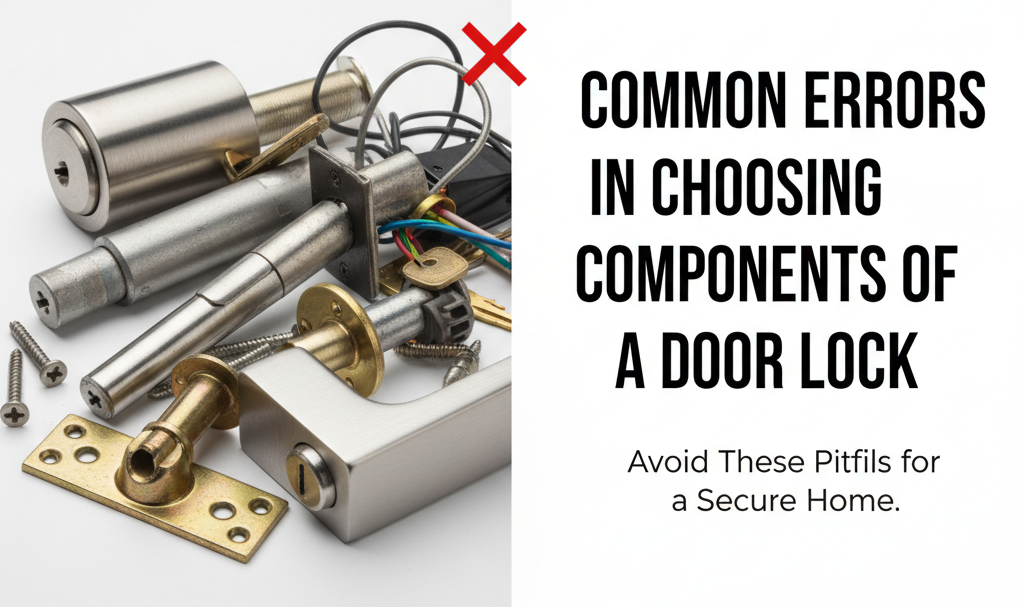
Ever specify a lock and then realize halfway through construction that it won't work for your project? You're not alone. Architects and contractors make the same mistakes repeatedly. These errors cost time, money, and client trust. Understanding common errors in choosing components of a door lock helps you avoid expensive rework and keeps your projects on schedule.
A solid understanding of the components of a door lock helps prevent costly design and installation errors.
Common Errors in Choosing Door Lock Components
Error One: Ignoring Building Type Requirements
This mistake happens constantly. You specify a residential-grade lock for a commercial building. Then the inspector fails you. Residential locks don't meet commercial security standards. Commercial buildings need ANSI Grade 2 minimum. Some need Grade 1.
I worked with a contractor who installed standard residential deadbolts in a small office park. The insurance company wouldn't cover the property until we upgraded to commercial-grade locks. We had to pull apart forty doors and reinstall everything. That project lost two weeks to specification errors.
Know your building type before choosing lock components. Residential, commercial, hospitality, and healthcare facilities all have different requirements. Your components of a door lock choices must match the building's purpose.
Error Two: Underestimating Strikeplate Importance
The strikeplate isn't just a mounting plate. It's a critical security component. Cheap strikeплates bend under force. Screws that don't reach the frame fail during break-in attempts.
Many builders install strikeplate screws into the door frame instead of the structural wall behind it. The frame wood splinters easily. Your security fails immediately. The correct approach uses three-inch screws reaching deep into the structural frame. That costs slightly more but actually works.
The strikeplate must align perfectly with your bolt. Misalignment causes the bolt to miss the opening entirely. Test alignment before closing out walls.
Error Three: Choosing Based Only on Price
Budget matters, but not at security's expense. Buying the cheapest lock component available costs more in the long run. Springs fail. Cylinders wear quickly. Bolts bend.
A mid-range lock from a reputable manufacturer costs maybe thirty percent more than rock-bottom pricing. That extra cost buys durability and reliability. Five-dollar springs wear out in two years. Fifteen-dollar springs last ten years. Do the math.
Error Four: Forgetting About Access Control Integration
Modern buildings need electronic access control. Many architects specify mechanical locks without considering how they'll integrate with card readers or keypads. Your door knobs and handle types must coordinate with electronic systems.
Some handle designs conflict with card readers. Some locks can't accept electronic components. Plan for integration during design. Talk to your security consultant early.
I designed a commercial retrofit project without consulting the access control specialist. We had to redesign six entry doors after discovering incompatibility. That mistake cost fifty thousand dollars in rework.
Error Five: Ignoring Aesthetic Coordination
Function matters, but so does appearance. Specifying bright chrome locks when the building uses matte black hardware creates visual chaos. Your door lock types should coordinate with your overall design aesthetic.
Create a finish schedule during design. List every lock, every handle, every hinge finish. Verify consistency. Mix-matched hardware looks unprofessional and confuses contractors about what to install.
Error Six: Not Specifying Keying Systems
Leaving keying decisions to the locksmith causes problems. You end up with every door having a different key. Master key systems, grand master keys, and change keys each serve different purposes.
Specify your keying system during design. Are individual apartment doors keyed differently? Do they share a master key for building access? Does the front door have a separate master key? Write it down clearly.
Without clear specifications, your locksmith guesses. Their guess rarely matches what you actually need.
Error Seven: Overlooking Power Requirements for Smart Locks
Specifying electronic locks without ensuring power availability is a common mistake. Smart locks need either hardwired power or regular battery replacement. Some buildings lack accessible power at all door locations.
Before specifying smart locks, verify power availability. Plan for battery backup. Consider the maintenance burden of monitoring dozens of lock batteries across a large building.
How to Avoid These Common Errors
Create a detailed lock specification sheet during the design phase. Include these items:
- Lock type and manufacturer
- ANSI grade
- Finish and aesthetic requirements
- Strike plate specifications
- Keying system details
- Integration requirements
- Testing procedures before installation
- Maintenance responsibilities
Share this sheet with your contractors, security consultants, and facility managers. Everyone needs alignment.
Test locks before final installation. Push bolts by hand. Verify throw depth. Check handle operation. Confirm keying works as specified. Most errors appear during testing, not later.
Coordinate with your security specialist and facility manager early. Ask questions about future access control needs. Plan for expansion.
Conclusion
Common errors in choosing components of a door lock stem from rushing the design phase. Taking time upfront prevents costly mistakes during construction. Specify locks thoroughly. Coordinate with all stakeholders. Test before finalizing.
Your projects deserve better than lock problems on move-in day. Clients notice working security systems. They don't forget broken ones.
Start protecting your next project today. Review your lock specifications thoroughly. Are they detailed enough? Do they coordinate with all building systems? Share them with your team before bidding. Getting it right the first time saves money, time, and frustration.