
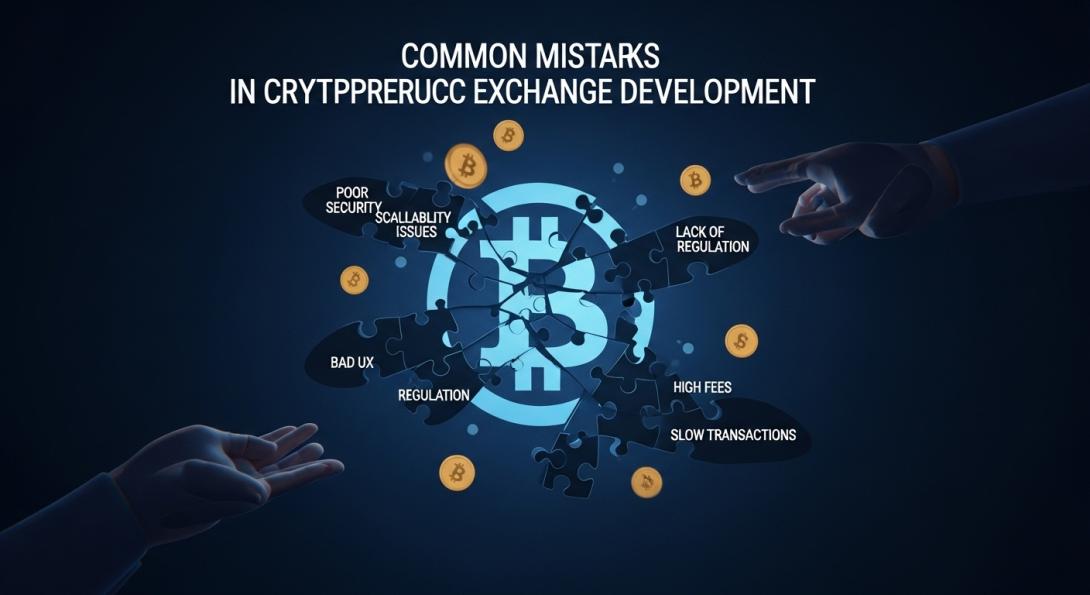
When Technology Decisions Quietly Push Traders Away
Launching a crypto exchange is no longer just about enabling buy and sell functionality. Traders today expect speed, transparency, uptime, security, and consistent performance—especially during volatile market conditions. When an exchange fails to meet these expectations, traders do not complain for long. They leave.
Many exchange operators assume trader churn is caused by market downturns or competition. In reality, a significant portion of lost traders and declining revenue can be traced back to mistakes made during crypto exchange development. These mistakes are often invisible at launch but become painfully clear as trading volumes grow.
Across the United States and the United Kingdom, exchanges that struggle to retain users typically share similar development shortcomings. From poor backend architecture to weak liquidity design, these issues compound over time, eroding trust and damaging revenue streams.
Why development mistakes matter more than marketing
- Traders prioritize execution quality over branding
- Downtime and delays directly impact trading profitability
- Technical instability damages long-term credibility
- Institutional users exit first when infrastructure weakens
This article explores the most common crypto exchange development mistakes that cost businesses traders and revenue—and how smarter development planning prevents them.
Mistake 1: Underestimating Backend Scalability From Day One
One of the most costly errors in cryptocurrency exchange software development is designing backend systems for current usage instead of future demand.
How scalability issues drive traders away
When backend systems cannot scale:
- Order execution slows during peak hours
- Balances update inconsistently
- Withdrawals queue up during volatility
- APIs fail under load
Traders operating in fast-moving markets in the United States and the United Kingdom rely on predictable execution. Even minor latency issues can turn profitable strategies into losing ones.
Revenue impact of poor scalability
Scalability failures lead to:
- Reduced trading frequency
- Lower order sizes
- Migration to competing platforms
- Decreased liquidity depth
A professional crypto exchange development company builds scalability into the platform architecture from the beginning, ensuring the exchange grows without performance degradation.
Mistake 2: Weak Trading Engine and Order Matching Design
The trading engine is the heart of any exchange. Yet many businesses prioritize front-end features while underinvesting in core trading infrastructure.
Common trading engine development flaws
- Inadequate concurrency handling
- Poor synchronization between order books and balances
- Inefficient data structures
- Limited stress testing under real market conditions
These issues often surface during sudden price movements, when traders are most active.
How this affects trader trust
Traders quickly notice:
- Partial fills without explanation
- Orders executing at unexpected prices
- Delayed confirmations
Once trust in execution integrity is lost, traders rarely return. This directly impacts transaction fee revenue and long-term platform viability.
Mistake 3: Ignoring API Performance for Professional Traders
APIs are not optional features. For many high-volume traders, APIs are the primary interface.
How API issues cost exchanges revenue
Poor API performance leads to:
- Failed bot strategies
- Missed arbitrage opportunities
- Unreliable order placement
- Liquidity providers pulling out
In competitive markets like the United States and the United Kingdom, API reliability often determines whether institutional traders stay or leave.
Development oversight that causes API failures
- Shared infrastructure with web applications
- Inadequate rate-limiting logic
- Poor authentication workflows
- No prioritization for trading endpoints
Modern crypto exchange platform development treats APIs as first-class infrastructure, not add-ons.
Mistake 4: Inadequate Liquidity Strategy at Launch
Liquidity is not created by software alone, but development decisions directly influence liquidity depth and sustainability.
Development choices that hurt liquidity
- Poor market-making integration
- Slow order book updates
- Limited trading pair support
- Inflexible fee structures
Without sufficient liquidity, traders experience slippage and wide spreads, which discourages repeat trading.
Long-term revenue consequences
Low liquidity results in:
- Reduced trading volume
- Negative user perception
- Difficulty attracting new traders
- Lower valuation for the exchange
A capable cryptocurrency exchange development company designs systems that support external liquidity providers, internal market-making, and future growth.
Mistake 5: Overcomplicating User Experience Without Trader Input
Complex interfaces do not impress experienced traders. They frustrate them.
UX mistakes rooted in development decisions
- Excessive page reloads
- Poor real-time data visualization
- Confusing order placement flows
- Lack of customization
Even well-designed features can fail if backend systems do not support responsive interactions.
Why UX issues cause silent churn
Traders rarely complain about UX. They simply move to platforms where trading feels effortless. This is especially true in mature markets like the United States and the United Kingdom, where alternatives are abundant.
Mistake 6: Weak Wallet and Custody Architecture
Wallet reliability is non-negotiable. Yet many exchanges underestimate the complexity of wallet management during crypto exchange software development.
Common wallet-related failures
- Delayed deposits and withdrawals
- Inconsistent balance reporting
- Manual intervention during peak activity
- Hot wallet exhaustion
These issues often appear during high market volatility, exactly when traders need fast access to funds.
Impact on trader confidence
Wallet failures trigger:
- Panic withdrawals
- Support ticket floods
- Negative public sentiment
- Permanent reputation damage
Robust wallet architecture is a foundational element of sustainable crypto exchange development services.
Mistake 7: Treating Security as an Add-On Instead of Core Architecture
Security breaches are often the result of architectural shortcuts, not just isolated bugs.
Security-related development oversights
- Poor access control for admin systems
- Inadequate key management
- Weak internal authentication flows
- Insufficient transaction monitoring
Exchanges operating in the United States and the United Kingdom face heightened scrutiny when security incidents occur.
Revenue loss beyond direct theft
Security failures lead to:
- User withdrawals en masse
- Regulatory investigations
- Increased insurance and compliance costs
- Loss of future partnerships
Security must be embedded throughout crypto exchange platform development, not layered on later.
Mistake 8: Lack of Monitoring and Incident Response Readiness
Many exchanges only realize the importance of monitoring after experiencing downtime.
Why monitoring gaps cost traders
Without proactive monitoring:
- Performance degradation goes unnoticed
- Issues escalate into outages
- Traders experience unexplained failures
- Trust erodes silently
High-frequency traders expect near-perfect uptime. Anything less impacts revenue.
Development responsibility for observability
A professional crypto exchange development company integrates:
- Real-time metrics
- Alerting systems
- Log aggregation
- Automated incident workflows
This ensures issues are resolved before traders feel the impact.
Mistake 9: Poor Compliance and Audit Infrastructure
Compliance is not just a legal requirement—it affects trader confidence.
How compliance gaps affect trading activity
- Delayed KYC approvals
- Frozen accounts without explanation
- Inconsistent transaction records
- Unclear dispute resolution
Traders in the United States and the United Kingdom expect operational transparency and regulatory readiness.
Backend design and compliance readiness
Compliance-friendly crypto exchange development services include:
- Immutable audit logs
- Clear data segregation
- Real-time reporting capabilities
- Configurable compliance workflows
These features protect both users and the business.
Mistake 10: Choosing the Wrong Development Partner
Perhaps the most critical mistake is selecting a development partner without deep exchange-specific expertise.
Risks of inexperienced providers
- Generic architectures not suited for trading platforms
- Limited understanding of liquidity and matching engines
- Weak security practices
- Poor post-launch support
A reliable crypto exchange development company brings real-world operational insight, not just coding skills.
Conclusion: Development Decisions Directly Determine Trader Retention
Traders leave crypto exchanges quietly. They do not wait for explanations or roadmap updates. When performance drops, execution falters, or trust erodes, they move their capital elsewhere.
Across the United States and the United Kingdom, the most successful exchanges share one common trait: they invested in strong foundations during cryptocurrency exchange software development. They treated scalability, security, liquidity, and reliability as revenue drivers not technical afterthoughts.
Avoiding these crypto exchange development mistakes is not about perfection. It is about making informed architectural decisions early and working with experienced crypto exchange development services that understand how traders actually use platforms.