

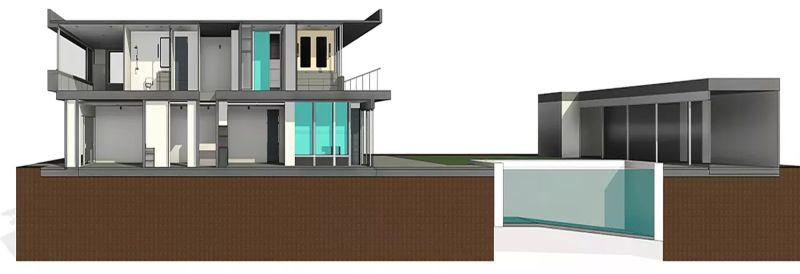
Did you know that according to recent industry benchmarks, miscommunication during the design phase accounts for nearly 30% of project delays? For years, the AEC industry relied on the "imagination gap"—the space between a 2D floor plan and a client’s ability to visualize their future building. We’ve all been there: presenting a beautiful set of blueprints, only to be met with a hesitant, "I think I get it, but what does it actually feel like?"
This disconnect isn't just a minor hurdle; it’s a business risk. However, the rapid evolution of Building Information Modeling (BIM) and high-fidelity 3D visualization has turned the approval process from a leap of faith into a data-driven handshake.
From "I Think" to "I Know": Closing the Visualization Gap
The traditional approval workflow often felt like a translation exercise. Architects spoke in sections and elevations, while clients spoke in experiences and aesthetics. Research from firms like McKinsey suggests that digital transformation in construction can lead to productivity gains of 14% to 15%, and much of that starts with early-stage alignment.
When we move from 2D lines to a coordinated 3D model, we aren't just showing a "pretty picture." We are providing a single source of truth.
- For the Client: It’s about emotional certainty. They can see how light hits the lobby at 4:00 PM or how the flow of a hallway impacts office productivity.
- For the Project Team: It’s about risk mitigation. 3D models allow us to identify "clashes"—like a structural beam intersecting with a HVAC duct—long before a single brick is laid.
The Power of "Visual Verification" in Decision Making
One of the most significant shifts we’ve seen in global markets, from the high-density developments in Singapore to urban renewals in London, is the move toward Virtual Design and Construction (VDC). When clients can "walk through" a space using VR or AR, the approval cycle accelerates by an average of 25% to 40%.
Why? Because 3D models facilitate Visual Verification. Instead of an architect explaining that a ceiling height is 3 meters, the client experiences that height. This transparency builds a foundation of trust. We see this most clearly in complex residential upgrades; for instance, using architectural 3D modeling for residential renovations allows homeowners to visualize intricate joinery and spatial flow before a single wall is demolished, effectively eliminating the "imagination gap."
When a client sees the exact materials, the spatial relationships, and the structural integrity in a digital twin, the "Buyer’s Remorse" that often hits during the mid-construction phase is virtually eliminated.
Breaking Down the Stakeholder Benefits
3D modeling isn't a one-size-fits-all tool; it serves different masters across the AEC lifecycle:
- Architects & Designers: Can test bold concepts and get immediate feedback on spatial volumes.
- Engineers: Use the model to demonstrate how complex systems integrate without compromising the design intent.
- Contractors: Utilize the model for "constructability reviews," ensuring that what was approved can actually be built within the budget.
- Facility Managers: Gain a digital asset they can use for maintenance long after the ribbon-cutting ceremony.
Actionable Takeaways: Leveling Up Your Approval Process
If you’re looking to shorten your approval windows and boost client confidence, consider these immediate steps:
- Invest in Real-Time Rendering: Tools like Enscape or Twinmotion allow you to make design changes live during a meeting. This "instant gratification" for clients is a powerful closing tool.
- Standardize Your BIM Execution Plan (BEP): Ensure your 3D models aren't just visual shells but contain the metadata (LOD 300+) required for accurate cost and schedule estimations.
- Use 3D for Conflict Resolution: When a client wants a change, show them the 3D impact on cost and structure immediately. It moves the conversation from "No" to "Here is the impact."
- Educate the Client: Don't just send a file. Walk them through the model, explaining that this digital version is exactly what the contractors will use on-site.
The Future: Beyond the Screen
As we look toward 2026 and beyond, 3D modeling is evolving into the Industrialized Construction era. We are moving past simple visuals into generative design and AI-driven spatial optimization.
The firms that continue to rely on 2D abstractions will find themselves sidelined by those who offer total immersion. In a world where time is the most expensive commodity on a job site, 3D models are the ultimate insurance policy. They don't just transform approvals; they transform the entire partnership between the creator and the investor.