

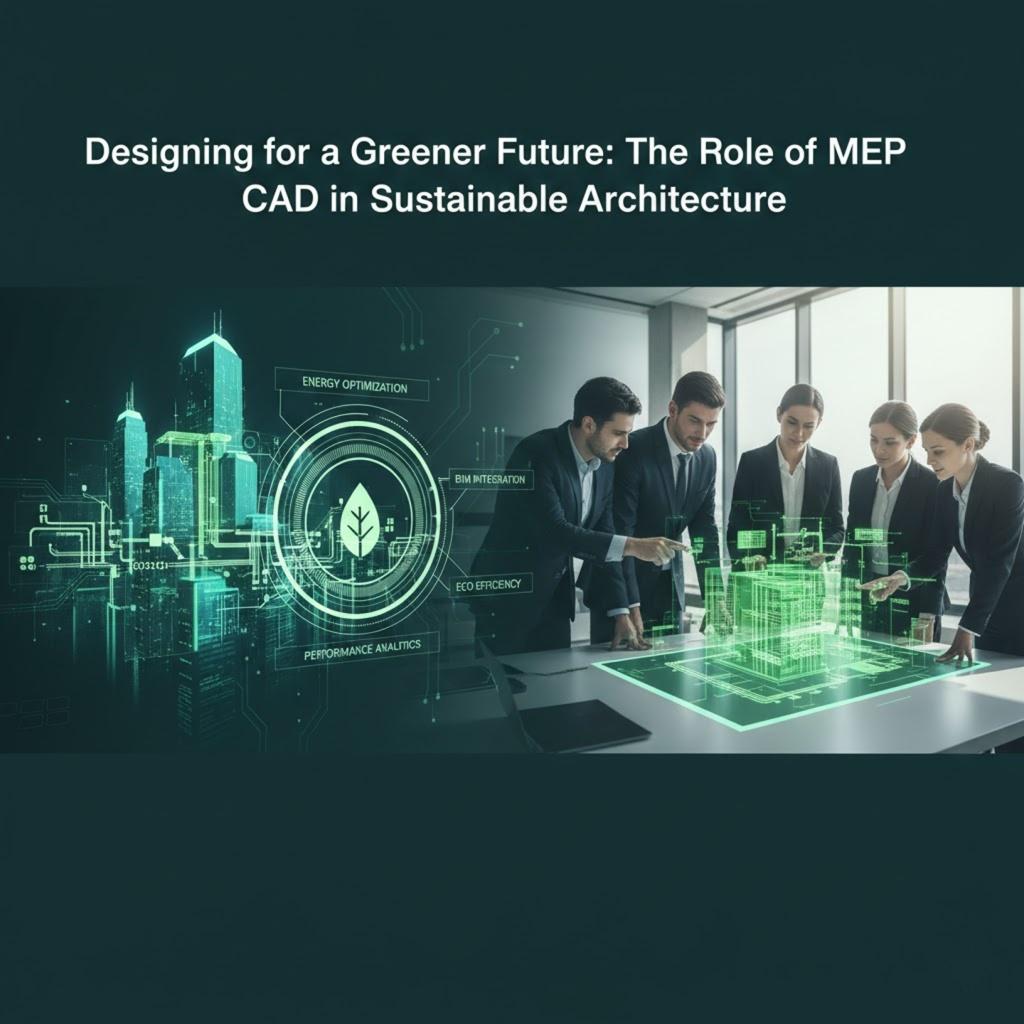
The global imperative for sustainability has reshaped architecture, pushing beyond aesthetic appeal to demand environmental responsibility. With buildings accounting for nearly 40% of global energy consumption and a significant portion of greenhouse gas emissions, the focus is squarely on creating structures that are not just beautiful, but also eco-efficient. A critical, yet often underestimated, player in this shift is MEP CAD (Mechanical, Electrical, and Plumbing Computer-Aided Design). It's no longer just about drawing pipes and wires; it's about engineering the very breath of a building sustainably.
The Evolution of MEP Design: From Utility to Eco-Imperative
Historically, MEP systems were often an afterthought in the design process, integrated late and sometimes inefficiently. This approach led to wasted materials, energy-intensive operations, and costly retrofits. Today, the landscape has fundamentally changed. Architects and engineers are collaboratively envisioning buildings from the ground up with sustainability as a core principle.
The demand for Net-Zero Energy Buildings, LEED-certified projects, and structures adhering to stringent Passive House standards has elevated the role of MEP to a strategic level. According to recent industry reports, projects incorporating early and integrated MEP design can see up to a 15-20% reduction in lifetime operational energy costs—a substantial saving that underscores its economic as well as environmental value.
How MEP CAD Drives Sustainable Design
MEP CAD software isn't just a drafting tool; it's a powerful platform for analysis, simulation, and optimization that is indispensable for sustainable architecture.
1. Precision and Optimization for Resource Efficiency
At its core, MEP CAD allows for the precise design and routing of systems. This precision minimizes material waste during construction and optimizes system performance. For instance, accurately sized ductwork and piping designed in CAD can significantly reduce the energy required for heating, ventilation, and cooling.
Furthermore, these tools enable designers to visualize spatial conflicts before construction begins, preventing costly on-site changes that often lead to material waste and schedule delays. This detailed level of planning is where reliable MEP drafting and design services become invaluable, ensuring that every component is optimally placed for efficiency and performance.
2. Advanced Analysis and Simulation
Modern MEP CAD platforms are integrated with simulation tools that can predict a building's energy performance under various conditions. This includes:
- Thermal Load Calculations: Analyzing how different building materials, glazing, and insulation impact heating and cooling requirements.
- Daylighting Analysis: Optimizing window placement and shading devices to reduce the need for artificial lighting.
- Airflow Simulation (CFD): Visualizing air movement within spaces to ensure efficient ventilation and thermal comfort, minimizing fan energy consumption.
- Water Usage Analysis: Designing efficient plumbing systems that reduce water consumption, critical in drought-prone regions.
These simulations allow designers to iterate on concepts, compare different system configurations, and choose the most energy-efficient solutions long before physical construction begins.
3. Integration with Building Information Modeling (BIM)
When MEP CAD is performed within a BIM environment, its sustainable impact amplifies. BIM creates a unified, intelligent 3D model where architectural, structural, and MEP data are coordinated. This collaborative platform:
- Detects clashes early: Preventing conflicts between structural beams and ductwork, saving time and materials.
- Enables energy modeling: BIM models can be exported to specialized energy analysis software, providing a holistic view of the building's environmental footprint.
- Facilitates lifecycle management: The rich data embedded in BIM models supports facility managers in optimizing building performance throughout its operational life, from preventive maintenance to energy monitoring. This integration truly drives eco-efficiency through expert MEP CAD and revolutionizes sustainable design.
Regional Variations and the Global Push
The emphasis on sustainable MEP design varies across regions, driven by local regulations and climate concerns. In the EU, directives like the Energy Performance of Buildings Directive (EPBD) push for nearly zero-energy buildings (NZEB), making advanced MEP CAD essential for compliance. In North America, LEED and Green Globes certifications incentivize sustainable practices, with MEP systems often contributing significantly to earning credits. Emerging markets are increasingly adopting these standards, recognizing the long-term economic and environmental benefits.
Challenges and the Path Forward
While the benefits are clear, challenges remain. The initial investment in sophisticated MEP CAD software and training can be substantial. There's also a persistent need for greater collaboration between architectural and MEP teams from the earliest design stages. However, as the demand for green buildings continues to surge—with the global green building market projected to grow significantly by 2030—these challenges are being rapidly overcome by innovative solutions and a growing talent pool.
Conclusion: MEP CAD as the Engine of Green Architecture
MEP CAD is no longer a supporting act; it is a leading player in the drama of sustainable architecture. By enabling precision, advanced analysis, and seamless integration within BIM, it empowers designers to create buildings that are not only structurally sound and aesthetically pleasing but also profoundly respectful of our planet's resources. As we continue to strive for a greener future, the strategic application of MEP CAD will be fundamental to achieving our collective environmental goals, ensuring that every building contributes positively to its ecosystem.