
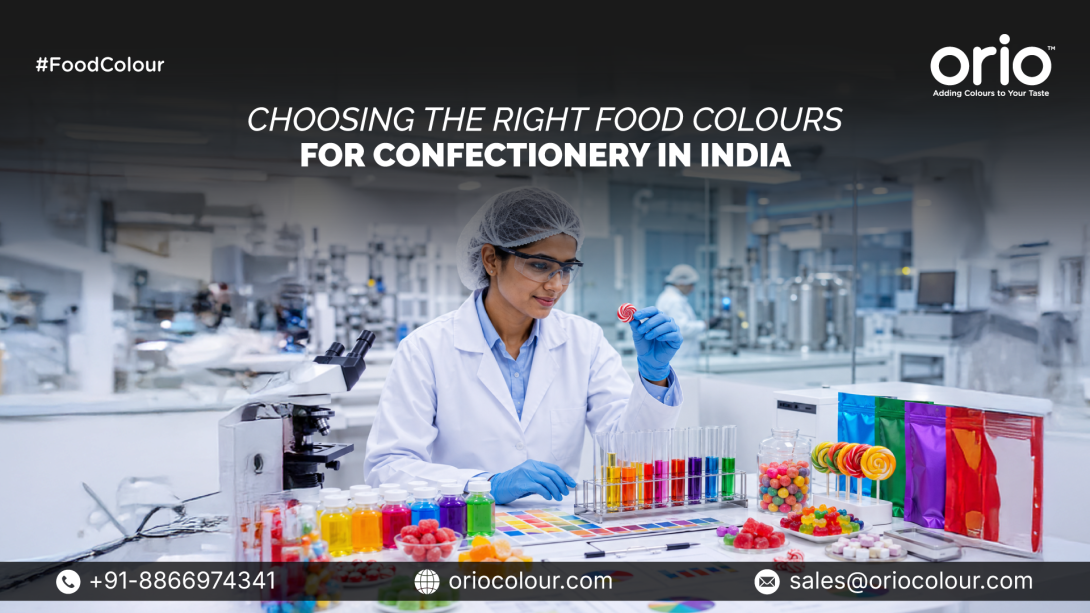
Choosing the right food colours for confectionery in India is essential for creating visually appealing products that remain vibrant throughout production, packaging, transportation, and shelf life. Whether you manufacture candies, gummies, jellies, hard-boiled sweets, lollipops, chewing gum, or sugar-coated confectionery, selecting the appropriate food colour directly impacts product quality, brand recognition, and consumer appeal.
Learn how to choose the right food colours for confectionery in India based on colour stability, shade consistency, regulatory compliance, and application requirements.
This guide explains the different types of confectionery food colours, how to choose the right one, regulatory considerations, and why working with a trusted food colour manufacturer is important.
What Are Food Colours for Confectionery?
Food colours for confectionery are approved colouring agents used to enhance the appearance of sweets and confectionery products. They help manufacturers achieve vibrant, consistent shades that improve shelf appeal while meeting food safety and regulatory standards.
The right food colour should provide:
- Bright and attractive appearance
- Excellent colour consistency
- Stability during processing
- Long shelf-life performance
- Compliance with food safety regulations
- Compatibility with different confectionery formulations
Since consumers often make purchasing decisions based on appearance, colour plays a significant role in product success.
What Types of Food Colours Are Used in Confectionery?
Confectionery manufacturers typically use four main categories of food colours depending on the product application.
Synthetic Food Colours
Synthetic food colours are among the most widely used options in confectionery manufacturing because they offer:
- High colour strength
- Bright and vibrant shades
- Excellent batch-to-batch consistency
- Heat stability
- Cost-effective performance
- Long-lasting colour retention
These colours are commonly used in:
- Hard candies
- Gummies
- Jellies
- Lollipops
- Chewing gum
- Sugar confectionery
- Decorative sweets
Blended Food Colours
Blended colours combine different approved colourants to create unique shades.
Manufacturers use blended colours for:
- Brand-specific colours
- Seasonal collections
- Limited-edition products
- Premium confectionery
- Product differentiation
Custom blends help brands maintain a distinctive visual identity.
Lake Colours
Lake colours are insoluble pigments designed for applications where water-soluble colours may not perform effectively.
They are commonly used in:
- Sugar-coated confectionery
- Fat-based fillings
- Chocolate decorations
- Dry mixes
- Compressed candies
Lake colours offer excellent coverage and improved stability in low-moisture systems.
Natural Food Colours
Growing consumer interest in clean-label products has increased demand for natural food colours.
Natural colours are increasingly used in:
- Premium confectionery
- Fruit-based gummies
- Organic products
- Clean-label candy
- Health-focused confectionery
The selection depends on formulation requirements, desired shade, and processing conditions.
How to Choose Food Colours for Confectionery
Selecting the right confectionery food colour involves more than choosing an attractive shade. Manufacturers should evaluate several technical and commercial factors.
1. Regulatory Compliance
Food colours must comply with applicable food safety regulations in the target market.
A reliable confectionery food colour supplier should offer products that meet recognised quality standards such as:
- FSSAI compliance
- FDA compliance (where applicable)
- ISO 22000 certified manufacturing
- Good Manufacturing Practices (GMP)
- Halal certification
- Kosher certification
Regulatory compliance supports product safety, export readiness, and consumer confidence.
2. Colour Stability
Colour stability is critical for maintaining product appearance throughout manufacturing and storage.
Confectionery colours may be exposed to:
- High processing temperatures
- Moisture variations
- Light exposure
- pH changes
- Long storage periods
Selecting stable food colours helps prevent fading, shade variation, or uneven product appearance.
3. Product Application
Different confectionery products require different colour systems.
Hard Candies
Require colours with excellent heat stability because of high cooking temperatures.
Gummies and Jellies
Need colours that disperse uniformly to achieve consistent appearance.
Sugar-Coated Confectionery
Requires colour systems that provide smooth and even coating.
Decorative Applications
Need highly vibrant colours with excellent visual impact and precision.
Matching the colour to the manufacturing process improves both efficiency and product quality.
Which Food Colours Are Safe for Confectionery Products?
Food colours are considered safe when they comply with applicable food safety regulations and are sourced from reputable manufacturers.
Before selecting a supplier, manufacturers should verify:
- Regulatory approvals
- Product traceability
- Quality certifications
- Batch testing
- Consistent manufacturing standards
- Technical documentation
Choosing an experienced food colour manufacturer helps simplify quality assurance and regulatory compliance.
Why Colour Consistency Matters in Confectionery
Colour consistency is one of the most important quality parameters for confectionery brands.
Consistent colour helps:
- Strengthen brand recognition
- Improve customer confidence
- Maintain product quality
- Reduce batch variations
- Ensure a uniform retail appearance
- Support premium brand positioning
Reliable manufacturing processes and quality-controlled colour systems help achieve consistent results across every production batch.
Why Custom Food Colour Solutions Are Growing in Demand
Modern confectionery brands increasingly require customised colour solutions to differentiate their products.
Custom food colours support:
- Seasonal launches
- Festival collections
- Brand-specific shades
- Limited-edition products
- Regional consumer preferences
- Premium product positioning
Working with an experienced supplier allows manufacturers to develop colours tailored to both technical requirements and branding objectives.
How to Choose the Right Food Colour Manufacturer in India
Selecting the right supplier is as important as selecting the right colour.
Look for a confectionery food colour manufacturer that offers:
- Comprehensive product range
- Custom shade development
- Regulatory expertise
- International quality certifications
- Technical application support
- Reliable supply chain
- Consistent batch quality
- Strong research and development capabilities
A knowledgeable supplier can help optimise formulations, improve production efficiency, and support new product development.
Why Choose Orio Colours for Confectionery Food Colours?
Orio Colours provides high-quality food colours designed specifically for confectionery applications across India and international markets.
Our capabilities include:
- Wide range of synthetic, blended, lake, and customised food colours
- Custom shade development
- Consistent batch-to-batch quality
- Technical support for formulation and application
- ISO 22000-certified manufacturing
- GMP-based production systems
- Halal and Kosher certified products
- Regulatory support for domestic and export markets
We help confectionery manufacturers create products that deliver vibrant appearance, processing stability, and consistent quality.
Frequently Asked Questions (FAQs)
Which food colours are commonly used in confectionery?
Synthetic food colours, blended colours, lake colours, and natural food colours are commonly used in candies, gummies, jellies, hard-boiled sweets, chewing gum, sugar-coated confectionery, and decorative products.
How do I choose the best food colour for confectionery?
Choose food colours based on product type, processing conditions, colour stability, regulatory compliance, desired shade, and supplier quality standards.
Are food colours used in confectionery safe?
Yes. Food colours approved by regulatory authorities such as FSSAI and manufactured under recognised quality systems are considered safe when used within permitted limits.
Why is colour stability important in confectionery?
Stable food colours help maintain consistent appearance during manufacturing, packaging, storage, transportation, and throughout the product’s shelf life.
What certifications should a food colour supplier have?
Look for suppliers offering products manufactured under ISO 22000, GMP, Halal, Kosher, and applicable FSSAI and international regulatory standards.
Can confectionery food colours be customised?
Yes. Many manufacturers offer customised food colour blends that match brand colours, seasonal launches, premium product ranges, and regional market preferences.
Which confectionery products use food colours?
Food colours are widely used in:
- Hard candies
- Gummies
- Fruit jellies
- Lollipops
- Chewing gum
- Sugar-coated confectionery
- Decorative confectionery
- Compressed candies
- Soft sweets
Conclusion
At Orio Colours, we combine technical expertise, internationally recognised quality standards, and customised colour development to deliver reliable food colour solutions for confectionery manufacturers in India and global markets.