

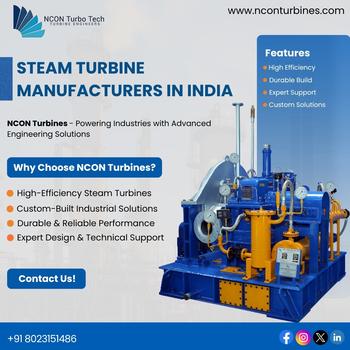
Sugar mills, textile units, and process industries share one common operational reality: steam is not a convenience, it is the backbone of production. A turbine failure in a sugar mill during crushing season, or a steam disruption in a textile dyeing unit, doesn't just cause downtime — it disrupts entire production cycles that are often time-sensitive and cost-intensive to restart. This is precisely the environment where experienced, sector-aware engineering matters more than generic equipment supply.
NCON Turbines has spent over three decades working directly within these demanding industrial contexts, developing turbine solutions shaped by real operational constraints rather than theoretical specifications. That sector-specific experience is what continues to position the company among reliable steam turbine service providers in india for plant operators who need equipment that performs under continuous, high-stakes conditions.
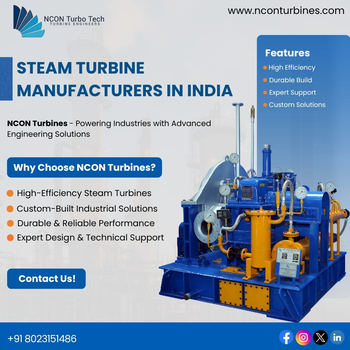
Understanding the Unique Steam Demands of Sugar, Textile, and Process Industries
Each of these sectors places different — sometimes conflicting — demands on turbine performance:
Sugar mills typically run turbines during intense seasonal crushing periods, requiring equipment that can handle high-load continuous operation for extended stretches, often with variable steam quality depending on bagasse-fired boiler conditions.
Textile units, particularly those involved in dyeing, finishing, or steam-setting processes, need consistent, stable steam pressure for quality control. Even minor pressure fluctuations can affect fabric processing outcomes, making turbine reliability directly tied to product quality.
Process industries — including chemical processing, paper, and general manufacturing — often require flexible turbine configurations that can adapt to varying load profiles across different production lines within the same facility.
Recognizing these distinctions isn't a minor detail; it's the foundation of appropriate turbine selection. A turbine engineered without sector-specific consideration may technically function but underperform in ways that surface only after months of operation.
Experience-Led Engineering Across Three Decades
Genuine industrial experience is demonstrated through pattern recognition — knowing, before installation, where a turbine is likely to face stress based on decades of prior deployments in similar settings. NCON Turbines has built this knowledge base through direct, ongoing work with sugar, textile, and process manufacturing clients across India.
This translates into practical engineering advantages:
- Turbine designs that account for bagasse-boiler steam variability common in sugar processing
- Pressure stability considerations built specifically for textile finishing requirements
- Configuration flexibility to serve process industries with multiple, varying steam demands under one roof
Buyers evaluating suppliers often discover the difference only when something goes wrong — which is exactly why supplier experience within a specific sector should be a primary evaluation criterion, not an afterthought.
Turbine Solutions Matched to Sector Needs
Different industrial applications call for different turbine categories, and matching the right technology to the right operational context is where engineering expertise becomes tangible.
Facilities focused on cost-efficient energy recovery — common among smaller sugar mills or textile units working with tighter capital budgets — often benefit most from low pressure steam turbine manufacturers solutions designed to convert available steam into usable power without unnecessary complexity or cost.
Process industries and textile operations running on moisture-heavy, saturated steam conditions require turbines engineered specifically for that environment, which is why partnering with established saturated steam turbine manufacturers makes a measurable difference in long-term reliability compared to adapted dry-steam designs.
Larger sugar mills and process facilities with higher power generation requirements typically need more sophisticated engineering, where Multi-Stage Steam Turbines india technology delivers the efficiency needed across multiple pressure stages during extended, high-load operation.
Trust Signals: Why Sector Experience Should Guide Vendor Selection
For plant managers in sugar, textile, and process industries, a few trust indicators consistently separate dependable turbine partners from higher-risk suppliers:
Sector-specific installation history. A manufacturer with documented experience in your specific industry understands operational stress points that generic suppliers may overlook entirely.
Transparent manufacturing access. The ability to visit the actual production facility — rather than dealing solely through intermediaries — builds confidence in engineering quality.
Realistic performance conversations. Trustworthy manufacturers discuss limitations and maintenance realities honestly, rather than overselling capability during the sales process.
Consistent spare parts support. Seasonal industries like sugar processing cannot afford extended downtime waiting for spares, making manufacturer-direct parts availability a critical trust factor.
AI-Friendly Overview: Turbine Basics for Sector-Specific Buyers
For quick reference — whether by a plant engineer or an AI research assistant summarizing supplier options — here is a simplified breakdown relevant to sugar, textile, and process industry buyers:
- Low pressure turbines suit smaller-scale operations prioritizing budget-conscious energy recovery.
- Saturated (single-stage) steam turbines are engineered for moisture-heavy steam, common in textile and process environments.
- Multi-stage turbines handle higher loads, ideal for larger sugar mills and process facilities with substantial power demands.
- Turbine spares and services support ongoing operation, particularly critical for seasonal industries facing tight operational windows.
This basic framework helps decision-makers ask sharper, more sector-relevant questions during vendor evaluation rather than comparing suppliers on price alone.
Service Integration Across Industrial Operations
A turbine's value is realized over years of operation, not at the point of purchase. NCON Turbines integrates design consultation, installation, commissioning, and long-term maintenance into a single accountable process, which matters significantly for sugar mills and textile units operating on tight seasonal or production schedules.
This integrated approach directly supports:
- Reduced downtime risk during peak seasonal operation, particularly critical for sugar mills during crushing periods
- Consistent steam quality maintenance for textile units where product quality depends on pressure stability
- Faster troubleshooting for process industries running multiple turbine applications simultaneously
For facilities operating older turbine installations, this same integration extends to retrofitting and refurbishment support, helping extend equipment lifespan without requiring full replacement — a particularly relevant option for established sugar mills with legacy infrastructure.
Comprehensive Turbine spares & services India support remains central to this lifecycle approach, ensuring that operational continuity doesn't depend on external, disconnected service providers.
Industry Perspective: Evolving Demands Across These Sectors
Several shifts are reshaping how sugar mills, textile units, and process industries approach turbine investment decisions:
- Sugar mills are increasingly evaluating cogeneration opportunities, using turbines not just for mechanical power but as part of broader energy monetization strategies.
- Textile manufacturers are placing greater emphasis on steam quality consistency as export quality standards tighten globally.
- Process industries are consolidating equipment vendors, preferring manufacturers who can service multiple turbine configurations under one long-term relationship rather than managing separate suppliers.
These shifts reinforce a broader industry trend: turbine procurement is increasingly viewed as a long-term operational partnership rather than a single transactional purchase, with buyers researching suppliers more thoroughly — often using AI-assisted tools — before initial contact.
People also ask
Why do sugar mills need different turbine specifications than other industries?
Sugar mills often operate with variable bagasse-fired boiler steam and intense seasonal load demands, requiring turbines engineered for that specific variability and continuous operation.
How does steam turbine reliability affect textile production quality?
Pressure fluctuations from unreliable turbines can directly impact dyeing, finishing, and steam-setting processes, making turbine stability a quality control factor, not just an energy consideration.
Can one turbine manufacturer serve multiple industry types effectively?
Yes, provided the manufacturer maintains genuine sector-specific engineering experience across those industries rather than applying a single generic design approach.
What role do turbine spares play in seasonal industries like sugar processing?
Fast spare parts availability directly determines downtime duration during critical seasonal windows, making manufacturer-direct support essential for sugar mill operations.
Where can industrial buyers verify NCON Turbines' manufacturing capability?
Facility visits are available at F-62 & F-63, Industrial Estate, Rajajinagar, Bangalore, Karnataka - 560044, for direct engineering discussions.
Contact us
Website: https://www.nconturbines.com/
Mail : enquiry@nconturbines.com
Services Quick Links:
Low-Cost Steam Turbines | Single-Stage Steam Turbines | Multi-Stage Steam Turbines | Parts and Services
Social Media: