

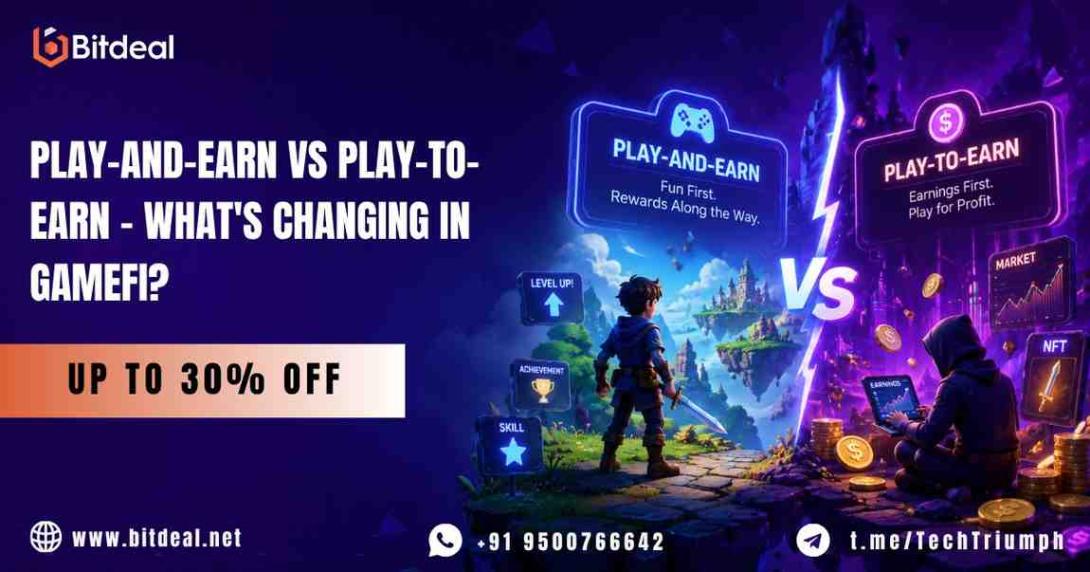
GameFi has come a long way since the first Play-to-Earn (P2E) games launched. Although the original concept of players being rewarded in crypto attracted millions of players, it also brought issues like inflationary token economies, repetitive gameplay, and a drop in user engagement. Nowadays, GameFi is adopting a more sustainable model known as Play-and-Earn (P&E), in which having fun and controlling the game while rewards are used to make the game more enjoyable rather than being the main attraction.
What Is Play-to-Earn (P2E)?
Play-to-Earn is an environment where people can earn cryptocurrency or NFTs as they play games through missions, challenges, or fights. Player-owned digital assets were first introduced in early blockchain games where players were able to acquire a full ownership stake in their in-game prizes.
Although this Play-to-Earn development model gained massive popularity, it started relying on consistent token demand to ensure growth. As player growth slowed, token values declined, making it difficult to maintain long-term sustainability.
What Is Play-and-Earn (P&E)?
Play-and-Earn shifts the focus from a reward-based economy to the creation of good gameplay. There's less focus on encouraging players to join just because of possible earnings, and more focus on immersive fun, compelling gameplay, and a great community.
There are still reward-earning mechanics like tokens and NFTs, but they now work to improve the game rather than serving as the reason for playing the game, bringing both gamers and Web3 fans to the party and developing better games.
Play-to-Earn vs Play-and-Earn - Key Differences
The biggest difference lies in player motivation.
- Play-to-Earn is the potential for earning in the form of tokens and cryptocurrency.
- Play-and-Earn centers on enjoyable gameplay but can also include optional rewards through blockchain.
Modern GameFi development projects are also bringing in sustainable tokenomics, skill-based progressions, and player retention strategies that don't solely rely on continuous token distribution. So, players remain because they find the game enjoyable, not only because they can earn.
Why the GameFi Industry Is Moving Toward Play-and-Earn
Several trends are driving this transition.
Players' expectations are being increased by AAA-level graphics, more advanced gameplay mechanics, and mobile-first experiences. Then again, game makers are adopting AI development to make games that adapt to players, give personalized experiences, and have intelligent in-game economies.
The Layer-2 blockchain networks have also improved transaction speed and reduced fees, making blockchain interactions almost invisible to players. Together with improved wallet integrations and easier onboarding processes, GameFi development is opening up to mainstream players.
What Makes Today's Play-and-Earn Games Different?
Most blockchain games have evolved to prioritize gameplay, adding digital ownership and decentralized economies as secondary features.
Leading GameFi development games now offer:
- Multiplayer competitive matches
- Digitally owned NFTs and assets
- Sustainable reward systems
- Games that are easily playable on mobile devices
- Access to games through multiple platforms
Build the Future of GameFi Development Services
The future of GameFi extends far beyond speculative rewards. Modern game development features advanced AI for gameplay, a mobile-first approach to playing, the utilization of interoperable digital assets, and player-centric communities for immersive experiences.
If you're planning to launch a next-generation GameFi platform, Bitdeal can help turn your vision into reality. As a leading GameFi development company, Bitdeal delivers complete GameFi development services, including blockchain game development, smart contract integration, NFT marketplace development, tokenomics design, wallet integration, and scalable Play-and-Earn game development. Get in touch with Bitdeal today to build the next generation of blockchain gaming.