

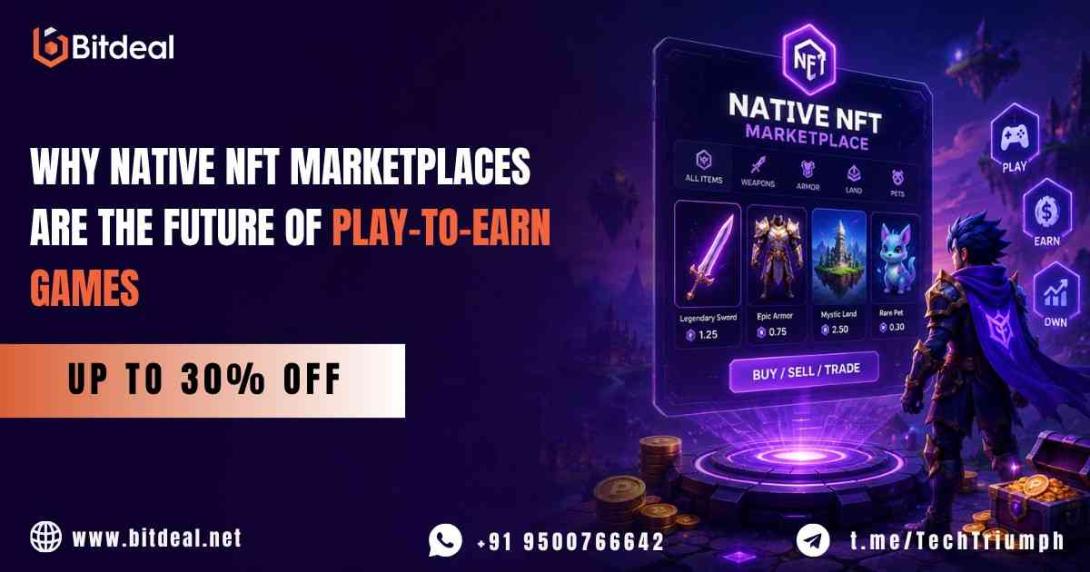
P2E games have changed the world of digital gaming by granting players real ownership of their in-game assets through NFTs. To make asset trading easier and maintain player interest, game developers are integrating native NFT marketplaces directly inside their games. Such marketplaces offer users the possibility to handle their digital assets without the need to exit the game, for an immersive gaming experience.
Understanding Native NFT Marketplaces
A native NFT marketplace is a gaming platform that allows players to directly buy sell trade or auction NFT items in a game without relying on other external websites. Traditionally, players need to connect with different marketplaces to trade. Here, they can do all the trading while staying in the game's environment or network. Such convenience and accessibility is great for new and seasoned players.
These NFT marketplace development support a wide range of digital assets,
- Playable characters
- Weapons and equipment
- Skins and cosmetic items
- Virtual land
- Collectibles
- Limited-edition game assets
Key Features of a Native NFT Marketplace
A native NFT Marketplace includes features that make digital asset trading secure, convenient, and efficient for both players and developers in Play-to-Earn games. Some of the essential features include:
In-Game NFT Trading - Players can buy, sell, or exchange NFT assets without leaving the game.
Wallet Integration - Supports secure crypto wallet development for storing and managing digital assets.
Smart Contract Automation - You can execute transactions automatically through smart contract development, reducing manual processes and increasing transparency.
Creator Royalties - Allows developers and creators to earn royalties whenever NFTs are resold.
Multi-Chain Support - Enables NFT transactions across multiple blockchain networks, improving accessibility and liquidity.
Why They're Gaining Popularity in Play-to-Earn Game Development
Native NFT marketplaces are becoming increasingly popular because they improve both gameplay and asset management.
Better User Experience
Players no longer need to switch between multiple platforms to trade NFTs. Everything can be managed from a single interface, making the process faster and convenient.
Stronger In-Game Economies
Developers can monitor marketplace activity and introduce features such crypto wallet integration that help maintain a balanced digital economy for long-term engagement.
Easier Onboarding
Many blockchain games now target mainstream audiences. This reduces technical complexity, making it easier for new players to participate without prior knowledge of Web3.
Key Benefits for Players and Developers in Play-to-Earn Games
For Players
- Buy, sell, and trade NFTs without leaving the game.
- Faster and simpler transactions.
- Greater ownership and control over digital assets.
- A smoother and more immersive gaming experience.
For Developers
- Generate revenue through marketplace transaction fees.
- Maintain better control over the in-game economy.
- Increase player engagement and retention.
- Launch exclusive NFT collections and limited-time events.
What This Means for the Future of Web3 Gaming
As Web3 gaming continues to grow, native NFT marketplaces are becoming a core feature of play-to-earn game development. By combining gameplay and digital asset trading within a single platform, they simplify the user experience and support healthier in-game economies. This integrated approach is expected to play a major role in attracting mainstream players and driving long-term adoption.
The Next Step for Play-to-Earn Game Development
Native NFT marketplaces are changing the next generation of play-to-earn games by making NFT trading more accessible, convenient, and engaging. If you're planning to launch a blockchain-based gaming platform, working with an experienced Play-to-Earn Game Development Company can help turn your vision into reality. At Bitdeal, we develop play-to-earn games customized to your business needs. Our complete development services help businesses build secure, scalable, and engaging Web3 gaming platforms for the evolving digital economy.