

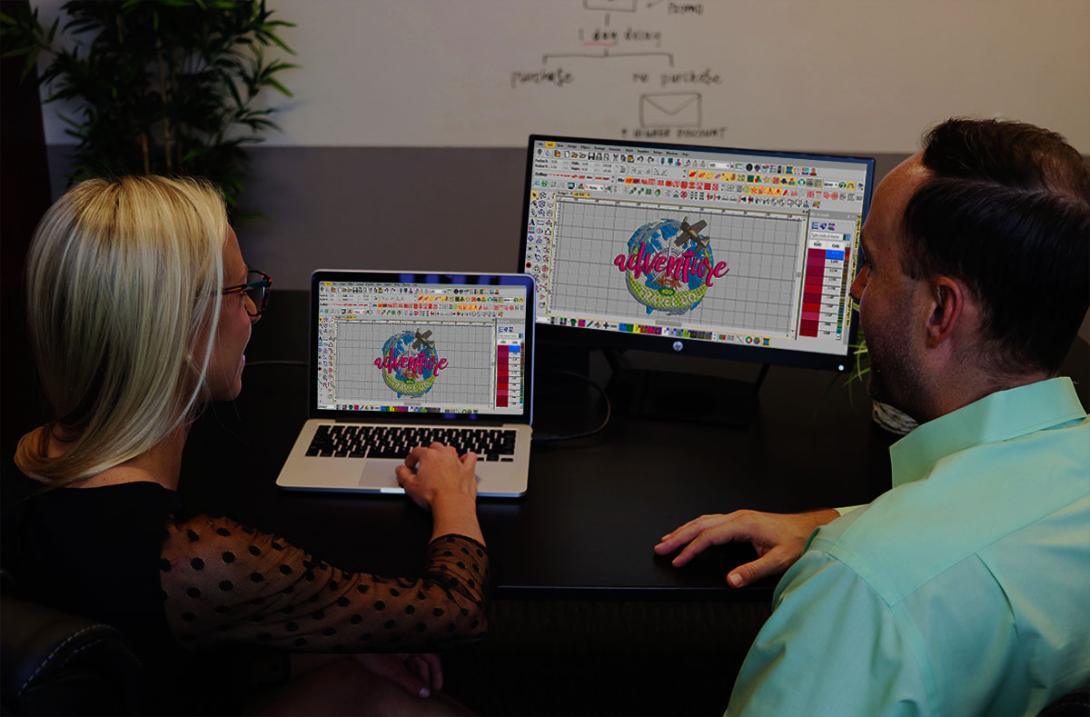
Imagine turning a vibrant painting into a tapestry of thread, where every brushstroke becomes a meticulously placed stitch. This is the magic of embroidery digitizing — a blend of art and technology that transforms digital designs into embroidered masterpieces. Whether you’re personalizing a jacket, branding corporate uniforms, or crafting heirloom quilts, digitizing is the invisible force that bridges creativity and machine precision. Let’s unravel how this process works, why it’s revolutionary, and how you can harness its potential.
What Is Embroidery Digitizing?
Embroidery digitizing is the art of converting artwork—like logos, illustrations, or text—into a digital file that embroidery machines understand. Unlike traditional hand embroidery, which relies on manual skill, digitizing uses software to map out every stitch, color change, and thread path. The result? A file (like PES or DST) that guides machines to replicate designs with flawless consistency.
Think of it as writing a musical score for thread: the digitizer decides the rhythm (stitch type), tempo (density), and harmony (color) to bring the design to life.
The Digitizing Process: From Pixels to Stitches
Step 1: Artwork Preparation
Every great embroidery starts with a clean design. Digitizers simplify complex images by:
- Removing gradients and shadows.
- Boldening fine lines and text.
- Reducing colors to a manageable palette (6–8 shades).
Example: A café’s intricate latte art logo might become a stylized outline to ensure clarity when stitched.
Step 2: Stitch Mapping
Using software like Wilcom or Hatch, the designer assigns stitch types:
- Satin Stitches: Glossy, thread-packed lines for borders and text.
- Fill Stitches: Dense patterns for solid areas (e.g., a flower petal).
- Running Stitches: Delicate details like facial features or veins in leaves.
Step 3: Underlay & Stabilization
Underlay stitches act as a foundation, preventing fabric from puckering. Techniques include:
- Zigzag underlay: Adds texture and stability for stretchy fabrics.
- Edge run: Outlines shapes to keep stitches aligned.
Step 4: Testing & Refinement
A test stitch on scrap fabric reveals issues like tension imbalances or thread breaks. Adjustments are made until the design stitches perfectly.
Tools of the Trade: Software & Machines
Digitizing Software
- Wilcom Hatch: Industry favorite for pros, offering AI-assisted tools and 3D previews.
- Embrilliance: User-friendly for beginners, with drag-and-drop simplicity.
- Ink/Stitch: A free, open-source plugin for design enthusiasts on a budget.
Embroidery Machines
From compact home models (Brother SE600) to industrial giants (Tajima), machines read digitized files to automate stitching. Features like laser positioning and multi-needle setups handle complex designs with ease.
Why Digitizing Is a Game-Changer
- Consistency
Mass-producing 500 identical logos? Digitizing ensures every stitch matches perfectly. - Complexity Made Simple
Intricate patterns, like mandalas or photorealistic portraits, become achievable. - Speed
Machines stitch designs in minutes, not days—ideal for meeting tight deadlines.
Challenges in Embroidery Digitizing
Even with advanced tools, digitizing isn’t foolproof. Common hurdles include:
Fabric Compatibility
Stretchy knits and delicate silks behave differently than canvas. A design digitized for denim might pucker on jersey without adjusted stitch density.
Thread Tension & Breaks
Dense designs or metallic threads strain machines. Solutions:
- Use larger needles (size 75/11).
- Reduce stitch density.
Small Details
Tiny text (under 0.3 inches) or intricate lines can blur. Simplifying designs or opting for bold outlines helps.
The Future of Digitizing: Trends to Watch
AI & Automation
Tools like Wilcom AI predict optimal stitch paths and auto-correct errors, slashing digitizing time by 50%.
3D Effects
Raised 3D puff embroidery adds texture to hats and jackets, while gradient stitching mimics watercolor effects.
Sustainable Practices
- Eco-threads: Recycled polyester and organic cotton reduce environmental impact.
- Waste reduction: Software optimizes stitch paths to minimize thread use.
Smart Integration
Augmented reality (AR) apps let users preview designs on virtual garments, while conductive threads enable tech-infused apparel (think jackets with touch-sensitive controls).
Tips for Aspiring Digitizers
- Start Simple
Master basic shapes and fonts before tackling complex artwork. - Learn Fabric Behavior
Test designs on different materials to understand how stitches interact. - Collaborate with Pros
Platforms like Digitizing Buddy offer expert services for intricate projects.
Conclusion: Embrace the Magic
Embroidery digitizing is where creativity meets coding—a craft that turns imagination into tangible art. Whether you’re a hobbyist stitching gifts or a business scaling branded merch, understanding digitizing unlocks endless possibilities. With advancements in AI and sustainable practices, this field is stitching its way into the future, one thread at a time.
Ready to transform your ideas into embroidered reality? Dive into digitizing, experiment fearlessly, and let technology amplify your craft. The magic is in the code—and the results are wearable art.