

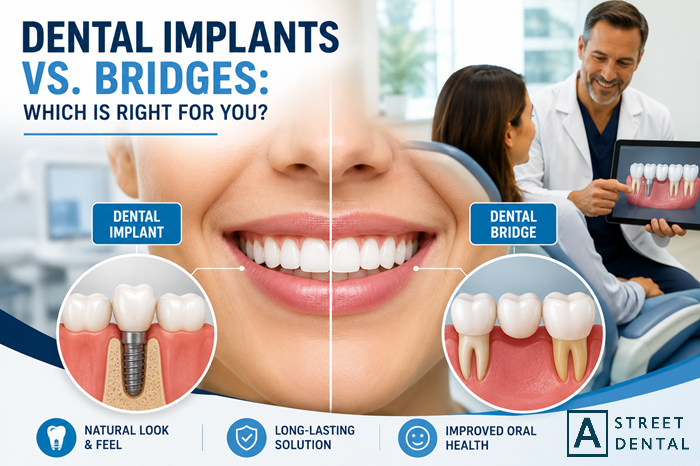
A missing tooth doesn't stay quiet for long. Chewing shifts to one side. Neighboring teeth start to drift into the gap. And somewhere in the back of your mind, there's a nagging question: implant or bridge? Both replace a missing tooth, both look natural once they're in, and both have loyal fans among dentists. But they solve the problem in very different ways, and the right choice usually comes down to your bone health, your budget, and how much time you're willing to invest upfront.
If you've been researching dental implant treatment in Grants Pass because a tooth is already gone or on its way out, this comparison walks through what actually separates the two treatment options — not just the textbook definitions, but what each one means for your daily life over the next ten, twenty, or thirty years.
What a Dental Bridge Actually Does
A bridge fills the gap using the teeth on either side of it as anchors. Those neighboring teeth get shaved down slightly, capped with crowns, and a false tooth (called a pontic) sits between them, fused to the crowns as one solid piece.
- Typically completed in two visits over a couple of weeks
- No surgery involved
- Lower upfront cost than an implant in most cases
- Relies on the health of the neighboring teeth, which now carry extra load
The tradeoff is that the two teeth doing the anchoring have to be permanently altered, even if they were perfectly healthy beforehand. And because a bridge sits on the gum rather than in the jawbone, it doesn't do anything to stop the bone underneath from gradually shrinking over time — a process that starts almost immediately after a tooth is lost.
What a Dental Implant Actually Does
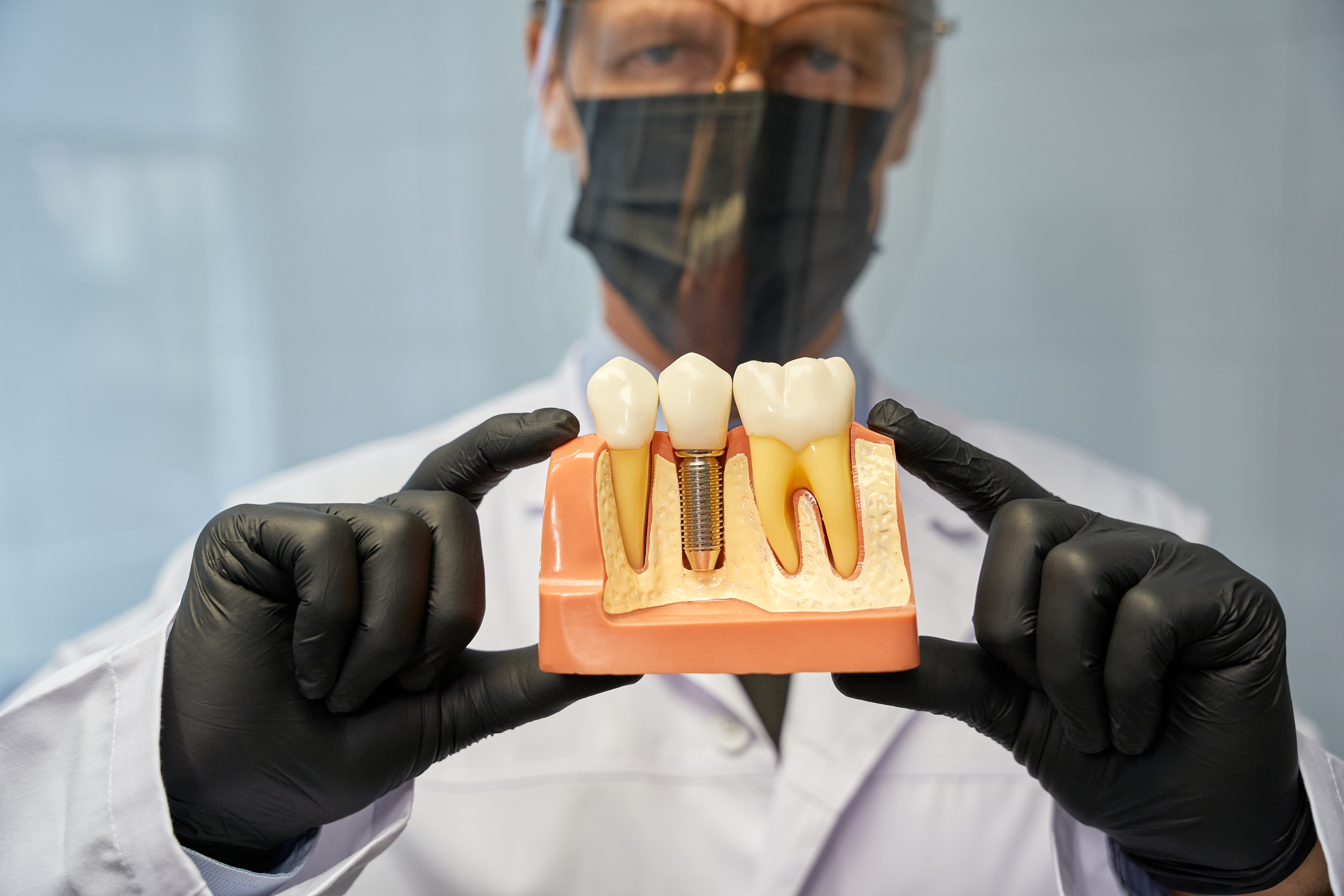
An implant replaces the entire tooth, root included. A small titanium post is placed directly into the jawbone, left to fuse with the bone over a few months, and then topped with a custom crown. It functions like a natural tooth root because, structurally, that's exactly what it's meant to mimic.
- Requires a minor surgical procedure and a healing period, often three to six months before the final crown goes on
- Doesn't touch or weaken the neighboring teeth
- Preserves the jawbone by giving it something to bond to, the way a natural root does
- Higher upfront investment, but often the more cost-effective option over a couple of decades since bridges typically need replacing every 10 to 15 years
The bigger commitment upfront is the trade for something bridges can't offer: a replacement that behaves as your own tooth did, root and all.
So Which One Is Actually Right for You?
There's no universal answer, but a few questions tend to point people in the right direction:
-
Is the bone in that area healthy enough to support an implant?
Some patients need a bone graft first; others don't. This is something your dentist checks with imaging before recommending either option.
-
Are the teeth next to the gap already weak, cracked, or heavily filled?
If so, a bridge might actually be the more efficient path, since those teeth may need crowns eventually anyway.
-
How soon do you need this resolved?
A bridge can be finished in a couple of weeks. An implant takes months, start to finish.
-
What's your budget doing right now?
Bridges cost less upfront. Implants cost more now but often less over the life of the tooth.
-
Do you want to protect the jawbone long-term?
If bone preservation matters to you — especially in younger patients — implants have a clear edge.
Neither option is objectively "better." They're built for different situations, which is exactly why a proper exam matters more than trying to decide from a Google search alone.
What This Looks Like Day to Day
People underestimate how much a missing tooth changes daily habits — until it's fixed. Patients who've gone through tooth replacement in Grants Pass often mention the same thing afterward: they stopped noticing they were chewing carefully on one side, stopped covering their mouth self-consciously, and stopped avoiding certain foods altogether.
That part matters as much as the clinical details. Whether someone's grabbing coffee downtown, heading out toward the Rogue River for the weekend, or picking kids up from a school near North Valley, a stable, natural-feeling bite isn't a luxury — it's just normal life again.
A Note on Cost and Insurance
Dental insurance plans vary widely in how they treat implants versus bridges, and it's genuinely worth a phone call to your provider before assuming either one is "too expensive." Many practices, including ours, also offer financing options that spread the cost out, which changes the math for a lot of patients once they see actual numbers instead of rough estimates.
Frequently Asked Questions
Which lasts longer, an implant or a bridge?
Implants typically last 20-plus years, often a lifetime with good care. Bridges usually need replacement every 10 to 15 years.
Is getting an implant painful?
Most patients describe the recovery as similar to a tooth extraction — some soreness for a few days, managed with over-the-counter pain relief.
Can I get a bridge if I don't want surgery?
Yes. That's one of the main reasons people choose a bridge — no surgical procedure, no bone healing period.
Will insurance cover a dental implant treatment in Grants Pass?
Coverage depends on your specific plan. Some cover a portion, others don't cover implants at all but do cover bridges. It's worth checking before deciding based on cost alone.
What happens if I do nothing and leave the gap?
Neighboring teeth tend to shift, opposing teeth can over-erupt into the space, and the jawbone in that area gradually loses density. Waiting rarely makes the eventual fix simpler.
Can everyone get a dental implant?
Most healthy adults with adequate jawbone are candidates. Smokers, people with uncontrolled diabetes, or those with significant bone loss may need additional steps first, which your dentist can walk you through.
Making the Decision With Confidence
Implants and bridges both restore a missing tooth, but they do so in very different ways. Each option comes with its own timeline, cost, maintenance needs, and long-term benefits. The best choice depends on factors such as your jawbone health, the condition of neighboring teeth, your overall oral health, and your personal goals.
Dr. Blake Anderson, DMD, and Dr. Caroline Leibrecht take the time to help patients understand these options through a comprehensive examination and advanced imaging. If you're looking for a trusted dentist in Grants Pass, OR to discuss dental implants or bridges, a personalized consultation can provide answers based on your unique smile—not generic information found online. Together, you can choose a treatment plan that supports your oral health for years to come.