

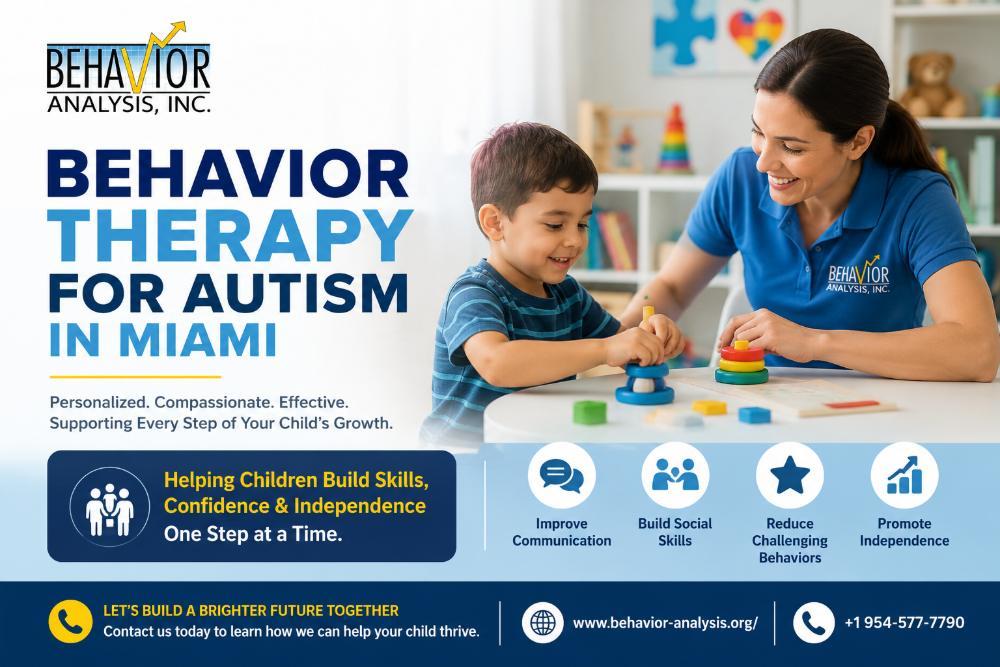
Supporting children with autism often involves finding therapies that encourage communication, social development, and everyday independence. Every child has unique strengths and challenges, which is why individualized care and structured support are important parts of the developmental journey. For many families, Behavior Therapy for Autism in Miami offers practical strategies that help children build meaningful skills while improving daily routines and interactions.
Behavior therapy focuses on teaching positive behaviors, strengthening communication, and helping children adapt to different environments. Through evidence-based methods and family involvement, therapy programs can support long-term growth and learning in both home and community settings.
Understanding Behavior Therapy for Autism

Behavior therapy is a structured approach that helps children learn new skills while reducing behaviors that may interfere with daily life or learning. Therapists use positive reinforcement, repetition, and individualized strategies to encourage progress in areas such as communication, social interaction, and emotional regulation.
Many autism therapy programs are designed around Applied Behavior Analysis (ABA), a widely recognized approach that focuses on measurable goals and consistent support. Sessions are often tailored to the child’s developmental needs and may take place in clinics, schools, homes, or community environments.
The goal is not to change a child’s personality but to help them develop practical skills that improve confidence, participation, and independence.
Why Early Intervention Matters
Early support can play a significant role in helping children build foundational skills during important developmental stages. While children of all ages may benefit from therapy, early intervention often provides more opportunities to strengthen communication, learning, and social behaviors before challenges become more complex.
Families exploring Behavior Therapy for Autism in Miami frequently seek programs that focus on helping children navigate everyday situations more effectively. These programs may support children in areas such as:
- Following instructions
- Communicating needs and emotions
- Managing routines and transitions
- Developing social awareness
- Improving focus and attention
Therapy plans are usually adjusted over time to reflect the child’s progress and evolving needs.
Building Communication Skills
Communication difficulties are common among children with autism, and behavior therapy often includes structured methods to improve both verbal and nonverbal communication. Therapists may use visual supports, repetition, modeling, and reinforcement to encourage children to express themselves more effectively.
Children may work on skills such as:
- Asking for help or preferred items
- Responding to questions
- Understanding directions
- Expressing feelings appropriately
- Using gestures or alternative communication tools
As communication improves, children may experience reduced frustration and more positive interactions with family members, teachers, and peers.
Encouraging Positive Social Interaction
Social development is another important focus of therapy programs. Children with autism may find it difficult to interpret social cues, participate in group activities, or maintain conversations. Behavior therapy helps break these skills into manageable steps that children can practice consistently.
Therapists may encourage children to:
- Take turns during games
- Share interests with peers
- Practice eye contact
- Recognize emotions in others
- Participate in classroom or group activities
These structured learning opportunities can help children become more comfortable in social environments over time.
Supporting Daily Living Skills
An important aspect of Behavior Therapy for Autism in Miami is helping children gain independence in daily routines. These practical life skills can reduce stress for families while encouraging children to become more confident in everyday activities.
Therapy may include support with:
- Dressing and grooming
- Toilet training
- Meal routines
- Organizing school tasks
- Following schedules
Therapists often use step-by-step teaching methods to help children learn routines gradually. Parents and caregivers may also receive guidance on how to reinforce these skills at home.
Family Involvement in Therapy
Family participation is often considered a key part of successful autism support. Parents and caregivers spend the most time with the child, making them valuable partners in the learning process.
Providers offering Behavior Therapy for Autism in Miami frequently involve families in therapy planning, goal setting, and skill reinforcement. This collaboration helps ensure that strategies used during therapy sessions can also be applied consistently in daily life.
Families may receive support in:
- Understanding behavior patterns
- Creating structured routines
- Managing challenging behaviors
- Encouraging communication at home
- Reinforcing positive behaviors
When caregivers are actively involved, children may experience more consistent progress across different environments.
Choosing the Right Therapy Program
Every child’s needs are different, so selecting an appropriate therapy program requires careful consideration. Families often look for providers that offer individualized treatment plans, open communication, and experienced professionals.
When evaluating therapy options, families may consider:
- Therapist qualifications and experience
- Family involvement opportunities
- Therapy environment and scheduling
- Progress tracking methods
- Communication between providers and caregivers
A supportive and collaborative approach can help families feel more confident throughout the therapy process.
Long-Term Benefits of Behavior Therapy
Behavior therapy can provide children with tools that support long-term learning, independence, and participation in daily activities. While progress varies from child to child, many families notice improvements in communication, emotional regulation, and social interaction over time.
Consistent support, combined with family involvement and structured goals, can help children develop skills that improve their experiences at home, school, and in the community.
As awareness and access to autism support continue to grow, more families are exploring therapy programs designed to meet the unique needs of their children in compassionate and practical ways.
FAQs
What is Behavior Therapy for Autism in Miami?
Behavior therapy is a structured treatment approach that helps children with autism improve communication, social, and daily living skills through individualized strategies.
At what age can children start behavior therapy?
Children can begin therapy at different ages, but early intervention is often encouraged to support developmental growth during childhood.
Does behavior therapy help with communication skills?
Yes, therapy often focuses on improving verbal and nonverbal communication, helping children express their needs and interact more effectively.
Are parents involved in autism therapy programs?
Many programs encourage family participation so parents and caregivers can reinforce therapy strategies at home.
How long does behavior therapy usually continue?
The duration depends on the child’s individual goals, progress, and level of support needed over time.