
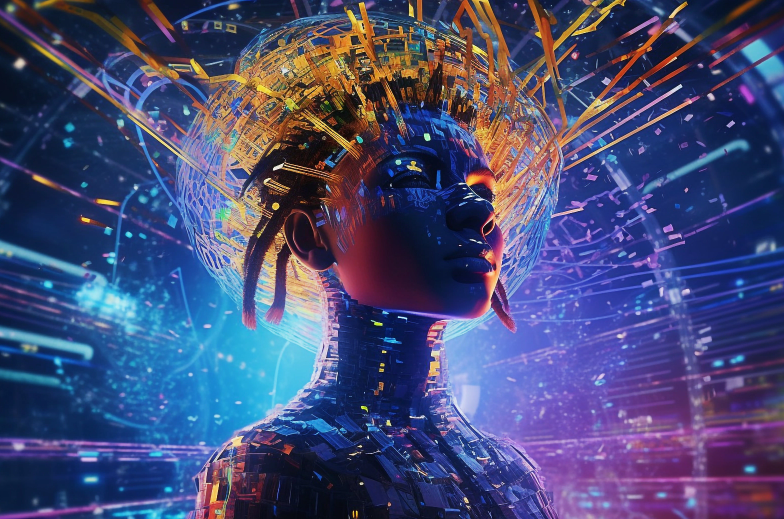
In today's digital world, where the user's expectations develop much faster than ever, spontaneous, intelligent and adaptive user experience (UX) are not just desirable, they are needed. The generative AI way of designing digital platforms, with its remarkable ability to create, analyze and personalize . When combined with human-focused UI/UX design, it unlocks the opportunity to create smart, more responsive and more attractive user experiences.
This synergy between generic AI and UX designs is not just a trend - it represents a fundamental change of how businesses make digital changes. By combining data -driven automation with creative design principles, organizations can provide platforms that estimate the user's needs, streamline interactions and increase the satisfaction of each touch point.
The Convergence of Generative AI and UX Design
Generative AI refers to a category of artificial intelligence, which is able to produce lessons, images, sound, code and even design mockups based on the given input. From generating customer personality to creating individual materials, it traditionally improves the tasks controlled by designers and developers.
When UX is integrated into workflows, generic AI designers support ideas, prototypes and iteration. It reduces manual functions by offering real -time insight into the user's behavior and preferences. Result? Quick time to time market, more tailored experience and smart platforms that develop with users.
On the other hand, UX is based on design sensation, purpose and aesthetics-it ensures that these AI-related experiences are intuitive, seamless and available. UI design services provide examples of this approach, offering human focused design thinking that matches business goals and user needs.
Key Benefits of Merging Generative AI with UX Design
1. Hyper-Personalization at Scale
Generative AI can analyze a large dataset to create individual user journeys. By understanding behavioral patterns, preferences and reactions, AI designers make adaptive interfaces that change in real time to meet personal needs. Whether it suggests materials, adjusting UI elements or recommending actions, platforms become more comfortable and user -friendly.
2. Rapid Prototyping and Iteration
Traditional UX workflows often include lengthy feedback loops. With generic AI, designers can quickly produce many versions of wireframe, layout and content mockups. It accelerates the decision, encourages the experiment and leads to more user -informed design results.
3. Accessibility and Inclusivity
AI-controlled tools can help detect problems with early access to the design process. By analyzing color contrast, font size and navigation structures, AI ensures that digital platforms follow the WCAG standards and can be used by individuals with different abilities.
4. Enhanced User Testing and Insights
The Generative AI can simulate the user behavior and actually perform the A/B test, and give the designers a future reaction before Live is live. By integrating this insight into the UX workflows, the platforms are adapted not only for the function, but also for the joy.
5. Content Generation for UX Writing
UX writing - microcopy that controls users through a platform - is important for the user experience. AI can generate, test and adapt this material to ensure clarity and stability. It can also locate copies in many languages and cultures and improve global access.
Challenges and Considerations
Despite its transformative capability, integration of generic AI in UX design comes with challenges:
- Bias in AI models:Generic AI is only as good as the data is trained. Without careful cures, it can strengthen existing prejudice in user experience or marginalize any user groups.
- Overautomation risk: While automation improves efficiency, more dependence on AI can lead to normal or uninterrupted experiences. Human monitoring is necessary to maintain authenticity and empathy.
- Data privacy concerns: Users rely on data to customize generative AI system experiences. Ensuring strong computer management and openness is important for maintaining user confidence.
- Learning curve for designers: Designers must upskill to work effectively with AI tools, which require training and interdisciplinary collaboration.
Conclusion
The integration of generic AI with UX design marks a paradigm shift in digital innovation. It provides a powerful passage to create a comfortable, individual and effective platform that resonates with users deeply. By combining AI's analytical skills with sympathetic insights from human designers, companies can design digital experiences that are not only functional - but transformative.
Organizations with generative AI services are ahead of this convergence, which helps companies to produce the next generation AI-operated, designed platforms. As we continue, this partnership will embrace the rapidly intelligent digital world to be competitive, relevant and user -centered.