
There has never been a greater push for net-zero energy (NZE) buildings as sustainability takes center stage in contemporary building operations and construction. By combining energy-efficient design, renewable energy sources, and intelligent building systems, a net-zero energy building produces as much energy as it uses annually. Achieving NZE status is a calculated step to lower operating costs, satisfy regulatory requirements, and improve occupant well-being for building managers, architects, and sustainability specialists. It's not just a sign of environmental responsibility.
The HVAC Energy Burden
HVAC (heating, ventilation, and air conditioning) systems are among the biggest energy consumers in buildings, contributing as much as 40–60% of the overall energy consumption of commercial and industrial buildings. Particularly in large open areas like warehouses, manufacturing facilities, gyms, and airports, traditional HVAC systems are frequently overworked. Hot or cold spots, discomfort for occupants, and a cycle of rising energy consumption to make up for it are all caused by poor air circulation.
HVLS Fans: High Impact, Low Energy
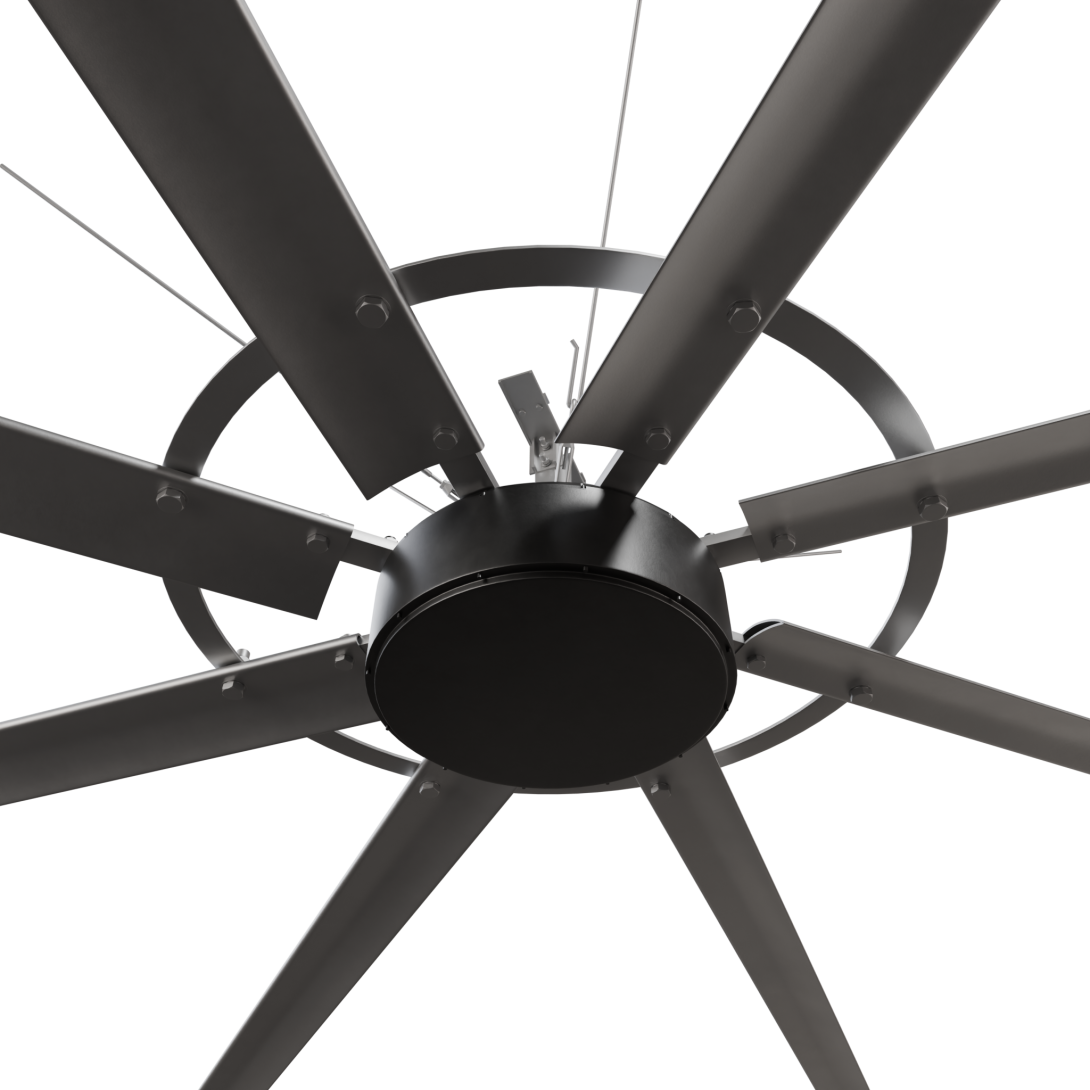
High-Volume, Low-Speed (HVLS) fans are an economical and energy-efficient way to tackle these issues. HVLS fans move enormous amounts of air at low rotational speeds because of their large diameters, which usually range from 7 to 24 feet. The workload on HVAC systems is greatly decreased by this slow, steady air movement, which also produces a more consistent indoor climate.
How HVLS Fans Reduce Energy Consumption:
- Improved Air Circulation: HVLS fans disperse air uniformly throughout large areas, lowering temperature differentials and enhancing comfort by dismantling thermal stratification, which is the phenomenon where hot air rises and cold air sinks.
- Support for Passive Heating & Cooling: HVLS fans help to reduce the need for extra heating during the winter by gently pushing warm air down from the ceiling. Because evaporative cooling is facilitated by increased air movement in the summer, thermostats can be set higher without compromising comfort.
- Decreased HVAC Run Time: HVAC systems can run more effectively, for shorter periods of time, and occasionally even be reduced in size thanks to better air distribution.
Real-World Results
A Texas distribution center case study showed how adding HVLS fans enabled the establishment to increase the thermostat by 4°F during the summer without compromising occupant comfort. The outcome was a 20% decrease in cooling energy expenses.
Similarly, after implementing HVLS fans to redistribute heat during the winter and avoiding the need for expensive HVAC upgrades, a manufacturing facility in Ohio reported a 30% reduction in heating costs.
These outcomes are not unusual. Depending on the type of building, climate, and HVAC system, studies consistently demonstrate that HVLS fans can result in annual energy savings of 12–30%.
Supporting Green Building Certifications
HVLS fans support certification initiatives like LEED (Leadership in Energy and Environmental Design) and WELL Building Standard, which not only directly reduce energy consumption but also advance larger sustainability objectives.
- LEED Credits: Energy & Atmosphere credits, specifically those pertaining to improved indoor environmental quality and energy optimization, can be supported by HVLS fans.
- WELL Certification: WELL's emphasis on occupant health and well-being is in line with enhanced air circulation and thermal comfort.
HVLS fans offer sustainability-minded projects a win-win situation by advancing both human comfort and energy efficiency.
A Strategic Choice for Net-Zero Goals
Including HVLS fans in building design or retrofit plans is a clever, scalable way for businesses looking to lower their operating expenses and carbon footprint. They are compatible with both new and existing facilities, require little upkeep, and provide a quick return on investment.
Conclusion
Facility managers, architects, and sustainability specialists must investigate all possible energy optimization options as the demand for net-zero energy buildings increases. HVLS fans are strategic tools in your energy-efficiency toolbox, not just accessories. The ability of HVLS fans to spread comfort, cost savings, and sustainability throughout your space should be taken into account when designing a new green building or retrofitting an existing one.