
Job site safety is not a choice. It is a duty. When crews work in deep trenches or move heavy loads, the right gear keeps people safe and work on track. Three tools matter most on many sites: shoring boxes, trench boxes for rent, and overhead crane systems.
Each one plays a clear role. Each one protects workers. And each one helps you get the job done right.
Why Shoring Boxes Matter
A trench can turn deadly in seconds. Soil can shift. Walls can cave in. Even a small slide can trap a worker.
Shoring boxes help stop that risk.
A shoring box, often called a trench box, is a strong steel frame set inside a trench. It supports the trench walls and shields workers inside. The soil may move, but the box stands firm.
These boxes come in many sizes. Some are light for small utility jobs. Others are heavy duty for deep sewer or water line work. You choose the size based on trench depth, soil type, and job needs.
The goal is simple. Keep the trench walls from crushing in. Keep workers safe while they lay pipe, fix lines, or set forms.
No guesswork. No shortcuts.
Trench Boxes for Rent: A Smart Option
Buying trench boxes can cost a lot. Not every company needs them year-round. That is why many contractors look for trench boxes for rent.
Renting makes sense for short-term jobs. It also works well if you need a special size for one project. You get the right box for the job without tying up cash.
Rental yards often carry:
- Standard trench boxes
- Stackable boxes for deeper cuts
- Manhole boxes for tight spaces
- Adjustable spreaders
You can scale up or down based on your project. That keeps costs under control.
Another benefit is support. Good rental providers inspect and service their equipment. That means you get gear that is ready to work. Less downtime. Fewer delays.
If you search for trench boxes for rent near your job site, focus on companies with solid stock and fast delivery. When a trench is open, time matters.
Choosing the Right Shoring Solution
Not all soil acts the same. Clay, sand, and mixed fill behave in different ways. Depth also changes the risk.
Before placing a box, think about:
- Trench depth
- Soil type
- Nearby traffic or heavy loads
- Water in the trench
- Space to move equipment
For deeper trenches, stacked boxes may be needed. For tight spots like around a manhole, a smaller manhole box works better.
Always follow safety rules. OSHA has clear standards for trench protection. If a trench is five feet deep or more, protection is required. Even shallower trenches can need support if the soil is unstable.
Safety is not optional. It is part of the job.
Overhead Crane Systems: Lifting Made Safe
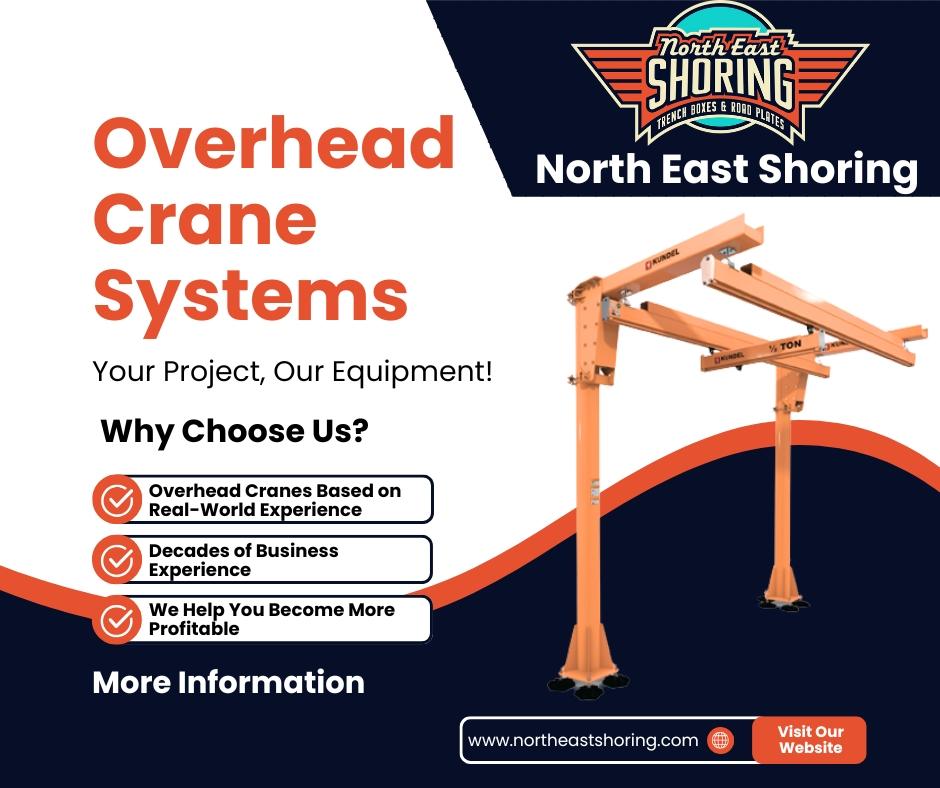
On many sites, heavy lifting is part of daily work. Moving steel plates. Setting large trench boxes. Lifting pipe sections. That is where overhead crane systems come in.
An overhead crane system moves heavy loads along a set track above the work area. It uses a hoist and trolley to lift and shift material with control.
These systems are common in yards, shops, and large job sites. They reduce the need for forklifts in tight areas. They also lower the risk of back injuries from manual lifting.
There are different types:
- Single girder cranes
- Double girder cranes
- Gantry cranes
- Jib cranes
The right system depends on load weight and span length.
The benefit is clear. You lift heavy items with steady motion. You place them with care. Workers stay out of harm’s way.
How Shoring Boxes and Cranes Work Together
On larger jobs, trench boxes and overhead crane systems often work side by side.
A crane can lift and set a trench box into place. It can move it down the trench line as work moves forward. This saves time and cuts strain on equipment.
Picture a busy utility job. The crew digs. The crane sets the box. Workers enter the safe zone. Pipe goes in. The crane lifts the box and moves it ahead.
Step by step. Safe and steady.
This setup boosts job flow. It also keeps heavy lifting under control.
Reducing Risk on Every Job
Construction has real hazards. Cave-ins and heavy lifts rank high on that list. The right equipment lowers that risk.
Shoring boxes protect workers from trench collapse.
Trench boxes for rent give you flexible access to safety gear.
Overhead crane systems handle heavy loads with control.
Each tool serves a clear purpose. Each one supports safe work habits.
Training also matters. Workers must know how to install trench boxes the right way. They must know load limits on cranes. A strong safety plan ties it all together.
What to Look for in a Supplier
When you need shoring boxes or trench boxes for rent, choose a supplier that:
- Keeps equipment in good shape
- Offers clear load ratings
- Provides fast delivery
- Answers safety questions
- Stocks a range of sizes
For overhead crane systems, look for solid design, proper install, and routine checks. A crane must meet load specs and local codes.
Do not cut corners on gear. Cheap or worn equipment can lead to costly mistakes.
Final Thoughts
Every trench carries risk. Every heavy lift carries weight and force. The right equipment turns danger into a managed task.
Shoring boxes shield workers from collapse.
Trench boxes for rent give you the tools you need when you need them.
Overhead crane systems move heavy loads with control and care.
Strong planning. Proper gear. Clear safety steps.
That is how smart crews work.