

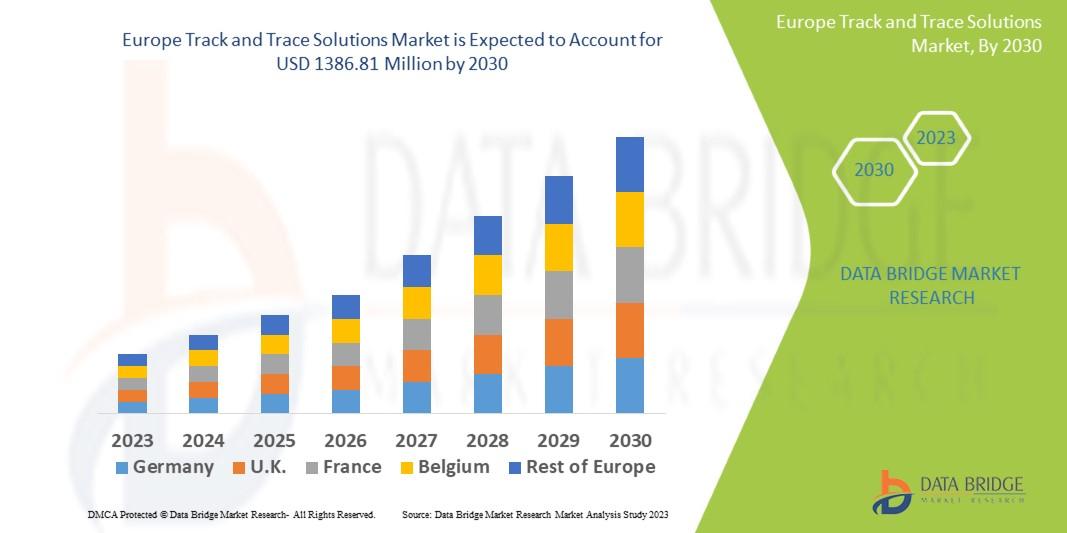
In an era defined by supply chain transparency, anti-counterfeiting regulations, and product safety, the demand for track and trace solutions in Europe has never been higher. From the stringent regulations governing pharmaceutical serialization to the traceability demands in food, electronics, and luxury goods, the Europe Track and Trace Solution Market is evolving as a cornerstone of modern logistics and compliance.
With increasing adoption of technologies like RFID, barcoding, blockchain, and cloud-based monitoring systems, European industries are rapidly transforming how products are tracked from manufacturing to the end consumer. The market is driven not only by regulation but also by the growing consumer expectation for trust, authenticity, and safety in the products they purchase.
Get More Details: https://www.databridgemarketresearch.com/reports/europe-track-and-trace-solutions-market
Market Overview
The Europe Track and Trace Solutions Market was valued at approximately USD 2.3 billion in 2023 and is projected to reach over USD 4.1 billion by 2030, growing at a CAGR of 8.5% during the forecast period.
Key factors influencing this growth include:
- Enforcement of EU Falsified Medicines Directive (FMD)
- Pharmaceutical Serialization Mandates
- Growth in e-commerce and cross-border logistics
- Increasing threats from counterfeit goods
Key Market Drivers
1. Pharmaceutical Compliance
The EU Falsified Medicines Directive (Directive 2011/62/EU) mandates serialization and tamper-evident features on all prescription medicines. This has dramatically increased the demand for track and trace software, barcode scanners, and serialization hardware in the pharmaceutical industry.
2. Rise of E-Commerce
Online retail continues to grow exponentially across Europe, creating pressure for real-time visibility, last-mile tracking, and return traceability. Track and trace solutions help meet these demands.
3. Food & Beverage Traceability
Consumer demand for food safety and origin transparency is pushing producers to adopt traceability systems to monitor sourcing, production, and distribution.
4. Regulatory Pressure in Cosmetics and Tobacco
The EU Tobacco Products Directive (TPD) and growing guidelines around cosmetics packaging are creating new market segments for traceability tools.
Technological Trends
- RFID & NFC Tags for high-value items and real-time logistics.
- Blockchain-Based Track and Trace for unalterable, decentralized traceability records.
- Cloud-Based and SaaS Platforms for scalable and remote access to traceability data.
- AI and Analytics for predictive insights into supply chain efficiency and disruption risk.
Market Segmentation
By Solution Type
- Software (Serialization, Aggregation, Reporting, Compliance)
- Hardware (Printers, Scanners, Labelers)
By Technology
- Barcode
- RFID
- IoT-enabled Sensors
- Blockchain
By Application
- Pharmaceuticals & Life Sciences
- Food & Beverages
- Electronics
- Logistics & Warehousing
- Luxury Goods & Fashion
Country-Level Insights
🇩🇪 Germany
A leader in pharma and automotive logistics, Germany has robust infrastructure and regulatory enforcement driving adoption of traceability systems.
🇫🇷 France
Active in implementing RFID and digital labeling in both retail and pharmaceuticals, with strong government support.
🇮🇹 Italy
A major player in food and wine traceability, Italy is investing heavily in agricultural traceability technology.
🇪🇸 Spain
Focused on improving supply chain transparency in healthcare and retail sectors.
Challenges in the Market
- High Implementation Costs: Particularly burdensome for SMEs in compliance-heavy sectors.
- System Integration Issues: Difficulty linking new tracking software with legacy enterprise systems.
- Data Privacy Regulations: Compliance with GDPR adds complexity to storing and transmitting traceability data.
- Fragmented Supply Chains: Coordinating standardized systems across diverse partners can be difficult.
Future Outlook
The Europe Track and Trace Solutions Market will continue to thrive due to:
- Expansion of smart packaging technologies
- Growing role of decentralized tracking via blockchain
- Adoption of AI-powered anomaly detection
- Increased government funding for digital infrastructure
Investment in end-to-end traceability ecosystems will be critical for businesses to remain competitive, secure, and compliant.
Conclusion
The track and trace landscape in Europe is undergoing rapid transformation, propelled by regulatory mandates, technological innovations, and consumer expectations. As the region takes a lead in global traceability standards, companies operating in Europe must prioritize transparent, scalable, and interoperable tracking systems. The future of this market is not just about logistics—it's about building trust in every transaction.
FAQs
1. What is the main purpose of track and trace solutions?
Track and trace systems ensure product authenticity, regulatory compliance, and real-time visibility in the supply chain. They allow manufacturers and distributors to monitor products throughout their lifecycle.
2. Which sectors are leading the adoption of these solutions in Europe?
The pharmaceutical industry, followed by food & beverages, electronics, and logistics, are the primary adopters due to regulatory pressures and consumer safety demands.
3. What role does serialization play in traceability?
Serialization involves assigning a unique identifier to each product unit, enabling end-to-end traceability and validation throughout the supply chain.
4. Is RFID better than barcode for tracking?
RFID offers real-time tracking and bulk scanning, but barcodes are more cost-effective. The choice depends on budget, use case, and data needs.
5. How is blockchain influencing the track and trace market?
Blockchain offers tamper-proof, decentralized data storage, making it ideal for verifying product origins, preventing fraud, and enhancing transparency in global supply chains.