


Achieving the Professional Engineer (P.Eng.) designation in Saskatchewan is a formal regulatory process managed by the Association of Professional Engineers and Geoscientists of Saskatchewan (APEGS). To achieve professional engineer status, candidates have to go through the CBA (Competency-Bases Assessment) assessment by APEGS.
CDRAustralia.Org is Canada’s leading APEGS CBA Report Writing Services provider in Saskatchewan. They have a team of professional writers and ensure AI-free and plagiarism-free CBA preparation. This status is a legal requirement for any individual who intends to practice engineering independently and take professional responsibility for technical projects within the province. The journey involves a combination of academic validation, disciplined work experience, and an assessment of professional ethics.
The Competency-Based Assessment (CBA) System
The CBA system is the primary tool APEGS uses to verify that an applicant is ready for professional licensure. Instead of a simple narrative summary, candidates must provide detailed evidence of their proficiency across 34 distinct competencies.
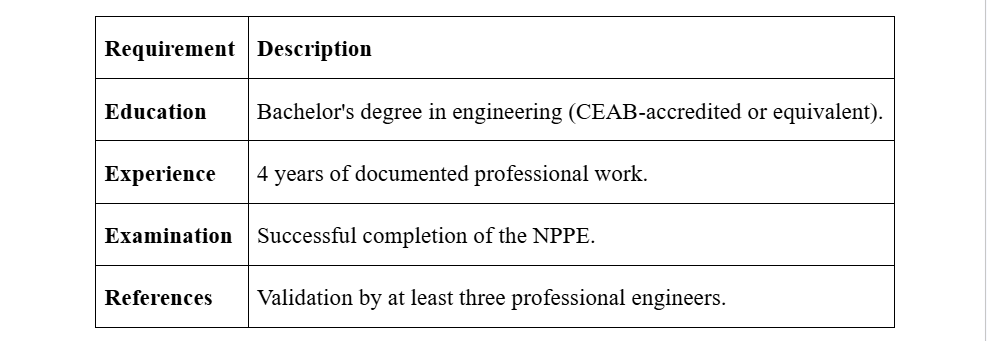
- Experience Duration: A minimum of 48 months of verifiable, post-graduate engineering work experience is mandatory.
- Canadian Context: At least 12 months of this experience must be obtained in a Canadian environment to ensure the candidate understands local climate conditions, legislation, and safety standards.
- STAR Methodology: Applicants must use the Situation, Task, Action, and Result (STAR) format to document their specific contributions to engineering projects.
- Pre-graduation Credit: A maximum of 12 months of experience gained during an internship or co-op placement can be credited toward the total 48-month requirement, provided a P.Eng supervised it.
If you are looking to earn your P.Eng (Professional Engineer) Status with APEGS, here is a simple step-by-step guide to help you through the process.
Establishing Academic Eligibility and EIT Registration
The first stage of the licensure process involves proving that your educational background meets the rigorous standards set by the Canadian engineering profession. For most, this begins with registering as an Engineer-in-Training (EIT).
This preliminary registration allows the association to monitor your progress as you work toward full professional status. It also serves as an official acknowledgement that your foundational knowledge is sufficient to begin gaining professional experience under the supervision of a licensed engineer.
Academic Assessments and International Credentials
Graduates from Canadian programmes accredited by the Canadian Engineering Accreditation Board (CEAB) typically face a direct path to EIT registration. However, international graduates must undergo a more comprehensive evaluation. This usually involves submitting a World Education Services (WES) ICAP report.
The APEGS Board of Examiners reviews these credentials to determine if they are equivalent to a Canadian degree. When gaps are identified, applicants may be required to complete confirmatory examinations or additional coursework.
Language Competence Requirements
Effective communication is vital for safety and professional collaboration. APEGS requires all applicants to demonstrate proficiency in English. This ensures that the practitioner can accurately interpret Canadian codes, standards, and regulatory documents while effectively communicating technical information to clients and the public.
Practical Experience and Competency Requirements
After securing EIT status, candidates must complete a supervised practice period. The goal is to transition from theoretical knowledge to the practical application of engineering principles in a professional environment.
APEGS evaluates this experience through a structured framework that measures specific skill sets rather than just time spent on the job.
Final Certification and Ethical Standards
The final phase of the application focuses on the legal and ethical responsibilities inherent in the engineering profession. This ensures that every P.Eng. operates with a primary regard for public safety.
The National Professional Practice Exam (NPPE)
The NPPE is a mandatory computer-based exam that covers law, ethics, and professional practice. It does not test technical engineering knowledge but focuses on the candidate's understanding of their legal liability and ethical obligations.
Professional References and Validation
To conclude the application, candidates must provide references from Professional Engineers who have direct knowledge of their work. These referees verify the accuracy of the CBA report and attest to the candidate's technical competence and character.
Achieving your P.Eng. licence with APEGS is a significant career milestone. For professional support with your competency-based assessment and reporting, contact CDR Australia to ensure your application meets all regulatory standards.