

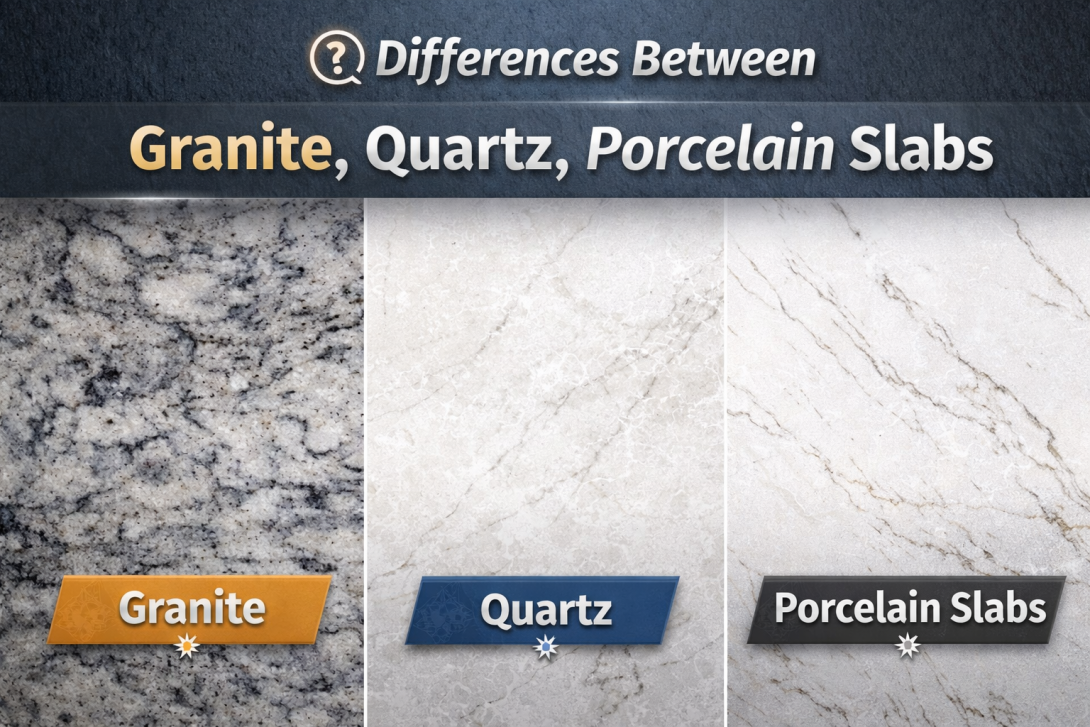
When planning a kitchen or bathroom renovation, choosing the right surface material is one of the most important decisions you’ll make. Granite, quartz, and porcelain slabs are three of the most popular options on the market today. Each material offers unique benefits in terms of durability, appearance, maintenance, and cost. Understanding the differences can help you select the best fit for your lifestyle and design goals.
Granite: Natural Beauty and Strength
Granite is a 100% natural stone formed deep within the earth. Each slab is unique, with natural veining, color variations, and mineral patterns that create a one-of-a-kind look.
Key Benefits of Granite:
- Highly durable and heat-resistant
- Natural, organic appearance
- Resistant to scratches when properly sealed
- Adds resale value to homes
Granite performs exceptionally well in kitchens due to its heat resistance. You can place hot pots directly on the surface without damage. However, since it is porous, granite requires periodic sealing to prevent staining and bacteria absorption.
Granite is ideal for homeowners who appreciate natural variation and want a timeless, classic aesthetic.
Quartz: Engineered Consistency and Low Maintenance
Quartz is an engineered stone made from crushed natural quartz crystals combined with resins and pigments. Unlike granite, quartz is non-porous and does not require sealing.
Key Benefits of Quartz:
- Non-porous and stain-resistant
- No sealing required
- Uniform patterns and colors
- Low maintenance
Because it’s engineered, quartz offers more consistent patterns and a wide range of modern color options. It’s also highly resistant to stains, making it a popular choice for busy households.
However, engineered quartz is not as heat-resistant as granite. Direct exposure to high heat can potentially damage the resin binders, so trivets are recommended.
Quartz is perfect for homeowners who want durability with minimal upkeep and a sleek, contemporary appearance.
Porcelain Slabs: Modern Versatility and Ultra Performance
Porcelain slabs are rapidly gaining popularity in both residential and commercial design. Made from refined clay and minerals fired at extremely high temperatures, porcelain is incredibly dense and durable.
Key Benefits of Porcelain Slabs:
- Extremely heat-resistant
- UV-resistant (great for outdoor use)
- Non-porous and stain-resistant
- Lightweight compared to natural stone
- Available in large-format designs
One of the biggest advantages of porcelain slabs is their versatility. They can mimic marble, concrete, wood, or natural stone while offering superior durability. Because they are non-porous, they resist moisture, stains, and bacteria without sealing.
Porcelain slabs are also thinner and lighter than granite, making them suitable for walls, shower panels, fireplace surrounds, and even exterior cladding.
For homeowners seeking a modern aesthetic with high performance and minimal maintenance, porcelain slabs are an excellent choice.
Comparing the Three Materials
Here’s a quick side-by-side overview:
Durability:
- Granite: Very durable, heat-resistant
- Quartz: Highly durable, but moderate heat resistance
- Porcelain: Extremely durable, highly heat-resistant
Maintenance:
- Granite: Requires periodic sealing
- Quartz: No sealing required
- Porcelain: No sealing required
Appearance:
- Granite: Natural, unique patterns
- Quartz: Consistent, engineered look
- Porcelain: Large-format, seamless modern designs
Best For:
- Granite: Traditional kitchens, natural stone lovers
- Quartz: Busy families, low-maintenance homes
- Porcelain: Contemporary designs, indoor & outdoor applications
Which One Should You Choose?
Your choice ultimately depends on your priorities. If you love natural stone with organic movement, granite may be ideal. If you prefer consistency and easy care, quartz is a strong contender. If you want cutting-edge design flexibility and exceptional performance, porcelain slabs offer unmatched versatility.
Before making a final decision, it’s always helpful to view full slabs in person. Seeing the material’s color, texture, and scale can make all the difference in selecting the perfect surface for your space.