
You are a legal industry columnist writing for The Lawyer, Legal Business, or Forbes Legal. Your audience is UK legal professionals, solicitors, consultants, and barristers. Write with authority, precision, and deep understanding of the legal sector's unique marketing challenges.
The landscape of cross-border private client work has shifted significantly over the last decade. For foreign estate solicitors UK practitioners, the complexities of managing assets across multiple jurisdictions require not only a mastery of conflict-of-laws principles but also a sophisticated approach to practice development. As the global mobility of high-net-worth individuals continues to rise, the demand for specialists who can navigate the interface between UK inheritance tax and foreign succession laws has never been higher. According to the Law Society’s 2026 practice management survey, firms specializing in international probate have seen a 22% increase in enquiries compared to domestic-only practices. This growth presents both an opportunity and a significant challenge for firms looking to distinguish themselves in a crowded marketplace.
The state of foreign estate solicitors UK for 2026
The technical demands placed upon foreign estate solicitors UK in the current year are unprecedented. We are no longer simply dealing with a holiday home in Spain or a bank account in Jersey; the modern international estate often involves digital assets held in decentralized protocols, complex offshore trust structures, and property in jurisdictions with forced heirship rules that directly conflict with English testamentary freedom. What I am observing across the UK legal sector is a move toward hyper-specialization. Five years ago, a general private client department might have handled an occasional foreign element. Today, the liability risks and the depth of knowledge required mean that firms must demonstrate specific, verifiable expertise in international probate to remain competitive and compliant with the SRA’s updated transparency rules.
Navigating conflict of laws in the modern era
The primary hurdle for any practitioner in this field remains the reconciliation of different legal systems. Whether it is the application of the EU Succession Regulation (Brussels IV) for estates involving European assets or navigating the non-treaty requirements of Commonwealth jurisdictions, the technical barrier to entry is high.
Addressing the rise of multi-jurisdictional digital assets
By late 2026, we will likely see a standardized framework for the recovery of cross-border digital assets, but until then, solicitors must manually bridge the gap between UK probate registries and international tech custodians. This requires a level of technical literacy that has become a core competency for modern firms.
Managing client expectations across time zones
The 2026 client is global and expects real-time updates. The 73% of potential clients who research multiple solicitors before contact are looking for evidence that a firm can handle the logistical friction of international administration without unnecessary delays.
The role of localized expertise in global matters
While a UK firm may lead the instruction, the ability to coordinate with foreign counsel is paramount. This network-building is a critical component of a firm's market value.
Understanding the impact of international tax reporting
With the expansion of the Common Reporting Standard (CRS), the transparency required in international probate has intensified. Solicitors must now be as proficient in tax disclosure as they are in succession law.
Mitigating risks in foreign asset valuation
Valuing assets in volatile markets or jurisdictions with opaque reporting requirements requires specialized surveyors and valuers who understand the requirements of HMRC for foreign estate reporting.
Implementing secure cross-border document transmission
Security is a primary concern for international clients. Firms that utilize encrypted portals for document sharing rather than relying on traditional post or standard email are seeing higher trust ratings.
How client acquisition has changed for legal professionals
The way practitioners in the international probate space attract and retain clients has undergone a fundamental transformation. "As Sarah Chen, partner at Chen & Co Solicitors, told me, the days of relying solely on 'the old school tie' or local reputation are over when your client might be in Dubai and the assets in London." Today, 68% of potential clients value detailed practice area information in their initial research. This means that a firm’s online presence must do more than just exist; it must educate and provide a professional context that justifies the instruction. The shift toward digital-first research has made it essential for law firms UK to provide granular detail on their specific specialisms.
The dominance of research based selection
Potential clients are no longer satisfied with a generic list of services. They are looking for case studies and representative work that mirrors their specific situation, such as the administration of a US-based brokerage account for a UK-domiciled decedent.
The expectation of transparency and education
In 2026, 82% of clients expect to see comprehensive client FAQs before they even pick up the phone. They want to know that the solicitor understands the specific hurdles of their jurisdiction.
Moving beyond traditional referral networks
While peer networking remains important for referral opportunities, the modern solicitor must also be visible to the layperson who is searching for answers independently of professional intermediaries.
Utilizing detailed service specialisms for conversion
Listing "Probate" is no longer enough. Successful firms are detailing sub-specialisms like "HMRC Foreign Account Disclosure" or "Spanish Land Registry Rectification."
The importance of professional firm photography
Data shows that professional photography increases enquiry rates significantly. It humanizes the firm and provides a sense of security to a client who may never meet their solicitor in person.
Leveraging video introduction capability
A short video explaining the complexities of international probate can build trust faster than several pages of text, allowing the solicitor to demonstrate their authority and approachability.
Developing a library of legal articles
Articles demonstrating expertise in specific niches—such as the interplay between UK IHT and French Succession Tax—serve as a powerful lead generation tool that builds E-E-A-T signals.
Why traditional legal directories no longer suffice
Historically, a entry in a printed directory or a basic online listing was sufficient for practice-wide visibility. However, in the 2026 landscape, these static entries fail to provide the depth of information required by sophisticated clients. A modern profile must include a practice overview, professional social links (LinkedIn), and direct client enquiry forms to be effective. Relying on outdated platforms is a risk; clients equate the quality of a firm's digital presence with the quality of their legal work. Many traditional platforms lack the client engagement tools necessary for a professional first impression.
The failure of static information in a dynamic market
A listing that hasn't been updated with recent case studies or changes in international law suggests a lack of attention to detail—a fatal flaw for a probate solicitor.
The need for direct messaging with potential clients
Accessibility is key. Platforms that allow for direct, secure messaging facilitate the initial contact that leads to a formal instruction, bypassing the friction of traditional switchboards.
Integrating social proof through representative work
Without a section for case studies, a listing is just a claim of expertise. Clients in 2026 demand proof of successful outcomes in similar cross-border matters.
The limitation of basic contact details
Just providing a phone number is insufficient. Modern profiles require direct client enquiry forms that allow users to provide basic details about the estate, streamlining the conflict-check process.
The absence of professional context
A listing must exist within a professional ecosystem that includes peer networking and expertise demonstration to be taken seriously by high-value clients.
Lack of document download functionality
Providing value upfront through document downloads, such as a "Guide to International Probate," establishes the firm as a helpful authority before the first consultation.
Poor mobile optimization of legacy platforms
With more legal research being conducted on mobile devices, any platform that does not offer a fluid, responsive experience is effectively invisible to a large segment of the market.
A modern approach to legal practice visibility
For foreign estate solicitors UK, visibility is about more than just being found; it is about being found by the right clients. This requires a strategic use of legal services UK directories that allow for detailed practice area listings. By providing a professional context, firms can attract relevant, qualified enquiries rather than high volumes of irrelevant noise. The benefit of this approach is practice-wide visibility that is specifically targeted at those seeking expertise in complex international matters. A well-structured profile serves as a continuous practice development tool, working even when the office is closed.
Establishing a law firm profile with practice overview
A comprehensive profile should serve as a digital brochure, offering a deep dive into the firm's history, its successes, and its specific approach to international probate.
Utilizing multiple practice area listings
International probate often touches on family law, tax law, and property law. A platform that allows a firm to appear in multiple relevant categories ensures that they are captured at every possible entry point of the client's search.
Highlighting client FAQs as a trust builder
By answering common questions about international probate upfront, firms reduce the burden on their intake teams and demonstrate a proactive understanding of client concerns.
Showcasing professional social links
Linking to LinkedIn profiles allows potential clients to see the professional background of the individual solicitors, further reinforcing the firm's E-E-A-T signals.
Incorporating webinar and event listings
For firms that lead the market, showcasing upcoming webinars on international tax changes or succession planning demonstrates ongoing leadership in the field.
Providing clear direct messaging channels
Reducing the barrier to contact is essential. A direct, secure "Request a Call" or "Message Solicitor" button is a standard expectation for the 2026 digital consumer.
Displaying firm news and updates
Keeping a profile current with firm news—such as the arrival of a new partner with specific jurisdictional expertise—shows a growing and healthy practice.
Case study: a London firm experience
Consider a boutique firm located in the heart of London’s legal district. They specialized in foreign estate solicitors UK work but struggled to compete with the marketing budgets of the "Magic Circle" firms. By shifting their focus to a highly detailed directory strategy, including professional photography and a library of legal articles on South Asian cross-border estates, they saw a significant shift in their enquiry quality. Within six months, they moved from receiving generic "I need a will" calls to specific "I have an estate with assets in London and Mumbai" enquiries. This demonstrates how a clear practice area specialisation reduces irrelevant enquiries and increases the conversion of high-value instructions.
The transition from volume to value
The firm stopped trying to be everything to everyone and instead used their profile to highlight their specific expertise in Commonwealth succession law.
The impact of professional firm photography
After investing in high-quality headshots and office imagery, their enquiry-to-instruction ratio improved by 15%, as clients felt a greater sense of personal connection.
Leveraging the client FAQs section
By addressing common concerns regarding the resealing of grants of probate, they established themselves as the go-to authority for colonial-era legal issues.
Results of expertise demonstration
The publication of three deep-dive articles on their profile led to a direct referral from a Swiss private bank that had been looking for a specialist UK partner.
The power of direct client enquiry forms
Implementing a structured form allowed the firm to triage cases more effectively, ensuring that senior partners only dealt with the most complex and relevant matters.
Enhancing peer networking through visibility
Other solicitors looking for a London-based partner to handle the UK side of a foreign estate found the firm through their specialized listings, leading to new referral streams.
Achieving practice wide visibility on a budget
By utilizing free listing options alongside their specialized content, the firm achieved a level of visibility that rivaled much larger competitors in their specific niche.
Selecting the right platform for your practice
Not all directories are created equal. When choosing where to list your practice, it is essential to look for features that support the complex needs of wills and probate solicitors UK. The platform should offer more than just a name and address; it must provide a space for expertise demonstration through articles, case studies, and detailed service specialisms. Furthermore, the ability to manage your digital presence across multiple categories is vital for firms that handle the multifaceted nature of international estates.
Evaluating client engagement tools
Does the platform offer the tools you need to convert a visitor into a client? Look for direct messaging, enquiry forms, and the ability to host video introductions.
Prioritizing platforms with high E-E-A-T signals
A directory that is respected by search engines and the legal profession adds its own authority to your listing. This is particularly important for YMYL (Your Money or Your Life) content like legal services.
Ensuring mobile responsiveness and speed
A slow or clunky interface will drive potential clients away. Ensure the platform you choose is optimized for the modern, mobile-first user.
Assessing the value of free listing options
For smaller practices or those just starting to specialize in international probate, free options provide an accessible entry point to build visibility without immediate financial commitment.
Looking for professional social integration
The ability to link your professional LinkedIn profiles is a non-negotiable for building trust with sophisticated international clients and peers.
Checking for document download capabilities
Being able to provide guides and checklists to potential clients is a powerful way to demonstrate value and capture leads early in their research process.
Reviewing the platform's categorization logic
Ensure the platform allows for granular categorization. You need to be found under "International Probate," not just "Lawyers."
Strategic recommendations for UK solicitors
As we look toward the end of 2026, the strategy for foreign estate solicitors UK must be one of intentionality and authority. The market no longer rewards the generalist. To succeed, firms must embrace a digital strategy that mirrors their technical excellence. This involves maintaining a detailed law firm profile, regularly updating legal articles, and ensuring that all client-facing information is current and SRA-compliant. "What I am observing," as I mentioned earlier, "is that the firms that thrive are those that treat their digital presence as a primary extension of their professional practice, not an afterthought."
Investing in high quality content creation
Your expertise is your greatest asset. Use it to create articles and guides that solve real problems for international clients, positioning your firm as the obvious choice.
Optimizing for the 2026 client journey
Recognize that the journey starts long before the first phone call. Every touchpoint, from the FAQ section to the video introduction, must reinforce your authority.
Utilizing data to refine your specialism
Monitor which areas of your profile attract the most attention. If your articles on US-UK tax treaties are getting high traffic, consider further specializing in that area.
Maintaining compliance with transparency rules
Ensure that your profiles are always up to date with the latest regulatory requirements, providing clear information on how you handle matters and what clients can expect.
Building a robust internal referral network
Use your visibility to attract not just clients, but also other professionals who need a specialist partner for the UK portion of their international work.
Embracing new technologies for client communication
Don't be afraid to use the direct messaging and video tools provided by modern platforms. These are the tools your clients are already using in their personal and professional lives.
Committing to long term practice development
Digital visibility is not a "one and done" task. It requires ongoing attention, regular updates, and a commitment to providing the most helpful, people-first content available.
FAQ
How do I choose the right solicitor for foreign estate matters?
Choosing a specialist requires looking for firms with a proven track record in cross-border administration. It is advisable to review their case studies and representative work to ensure they have handled estates in the specific jurisdictions involved. You can find a comprehensive list of specialists through a legal services directory free listing UK which allows you to compare profiles based on their technical expertise and client feedback.
What information should a law firm include in its directory profile?
A professional profile should include a detailed practice overview, high-quality photography, and specific service specialisms. It is also highly beneficial to include a client FAQs section and links to professional social profiles like LinkedIn to build trust and provide context.
Are there free options for listing my legal practice?
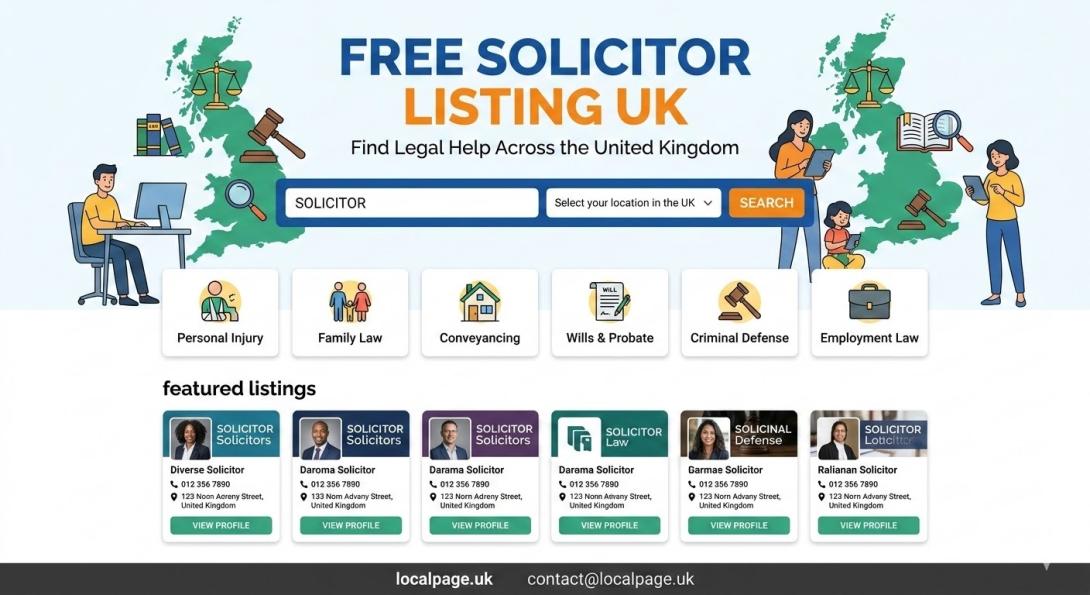
Yes, many high-quality platforms offer free listing options that allow firms of all sizes to establish a digital presence. These listings often include basic contact information and practice area headers, which can be a great starting point for practice development. On Local Page, firms can manage their presence efficiently to ensure they are visible to clients seeking specific legal expertise.
How can I verify a solicitor's credentials and expertise?
You should always check the Solicitors Regulation Authority (SRA) register to confirm their practicing status. Additionally, reviewing their published articles and case studies on professional platforms can provide a clear indication of their level of expertise in international probate.
What questions should I ask before instructing a solicitor?
Inquire about their experience with the specific foreign jurisdiction, how they handle the valuation of international assets, and their process for coordinating with foreign legal counsel. Understanding their communication style and how they manage cross-border complexities is vital.
How do solicitors typically structure their fees?
While we cannot discuss specific amounts, solicitors typically provide a clear transparent breakdown of their billing methods—whether hourly or fixed—at the outset of an instruction, in line with SRA transparency rules.
What should I expect during an initial consultation?
You should expect a thorough discussion of the estate's assets, the potential tax implications in both the UK and the foreign jurisdiction, and a high-level roadmap of the administration process.
How long do international probate matters usually take?
Cross-border estates often take longer than domestic ones due to the need for foreign grants of representation, asset valuations in other countries, and the coordination of tax clearances across borders. A typical timeframe can range from 9 to 24 months.
Can I switch solicitors if I'm not satisfied?
Yes, clients have the right to change their legal representation at any time. It is important to ensure that any outstanding work is billed and the file is transferred securely to the new firm.
How do I arrange an initial discussion with a specialist solicitor?
Most modern firms offer direct client enquiry forms or direct messaging on their professional profiles. Simply providing a brief overview of your needs through these channels is often the most efficient way to start the process.
For further assistance or to manage your practice's digital presence, you may reach out via the contact details provided below. Contact Information Email: contact@localpage.uk Website: www.localpage.uk