

Have you ever noticed discomfort while chewing, frequent jaw pain, or that your teeth don’t seem to align properly when you close your mouth? These are often signs of underlying bite issues that many people tend to ignore. In reality, such problems can affect not just your smile but also your overall oral health and daily comfort.
Many individuals begin researching solutions online, especially when searching for an orthodontist near Irving, but understanding the root cause of these issues is the first step toward effective treatment. Bite problems are more common than you might think—and the good news is that they are highly treatable with the right orthodontic care.
What Are Bite Problems?
A “bite” refers to how your upper and lower teeth come together when your mouth is closed. Ideally, teeth should align in a way that allows smooth chewing and balanced pressure distribution. However, when this alignment is off, it leads to what orthodontists call malocclusion, or bite problems.
Common types include overbite, underbite, and crossbite, but there are several other variations that can impact both function and appearance. Identifying these issues early can help prevent more complex dental concerns in the future.
Why Bite Issues Should Not Be Ignored
Ignoring bite problems can lead to more than just cosmetic concerns. Over time, misalignment can cause uneven wear on teeth, jaw strain, headaches, and even speech difficulties. In some cases, untreated bite issues may worsen and require more extensive treatment later.
Addressing these concerns early not only improves your smile but also supports better oral function and long-term dental health.
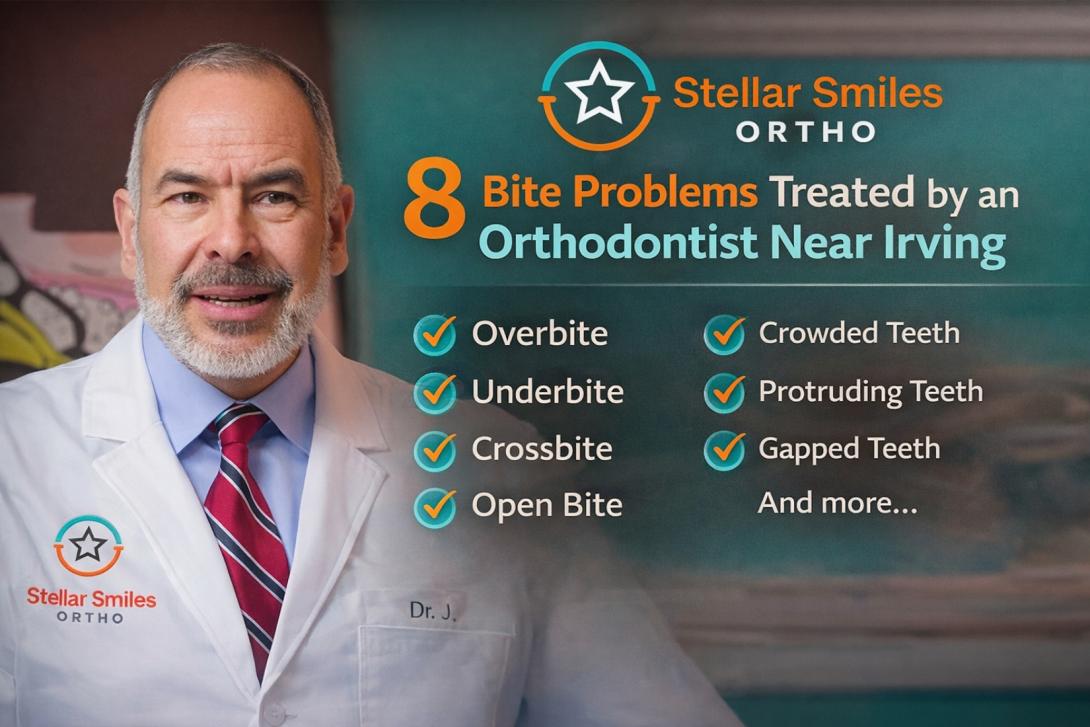
8 Bite Problems Treated by an Orthodontist Near Irving
1. Overbite
An overbite occurs when the upper front teeth excessively overlap the lower teeth. While a slight overlap is normal, a pronounced overbite can lead to gum irritation, tooth wear, and jaw discomfort. Orthodontic treatments such as braces or clear aligners can gradually reposition the teeth for better alignment.
2. Underbite
An underbite is when the lower teeth extend beyond the upper teeth. This condition can affect chewing, speech, and facial balance. Treatment often involves braces or aligners to correct the positioning of the jaw and teeth.
3. Crossbite
A crossbite happens when some upper teeth sit inside the lower teeth instead of outside. This can cause uneven wear, gum issues, and even bone loss if left untreated. Early intervention is key to preventing long-term complications.
4. Open Bite
An open bite occurs when the upper and lower front teeth don’t touch when the mouth is closed. This can make biting into food difficult and may affect speech. Orthodontic treatment helps bring the teeth into proper contact.
5. Crowded Teeth
Crowding happens when there isn’t enough space in the jaw for all teeth to fit properly. This leads to overlapping or crooked teeth, making cleaning difficult and increasing the risk of decay. Treatment focuses on creating space and aligning teeth effectively.
6. Spacing Issues (Gaps Between Teeth)
Excess spacing between teeth can occur due to missing teeth or natural jaw structure. While some may view gaps as cosmetic, they can also affect bite balance and oral health. Orthodontic solutions help close these gaps for improved function and appearance.
7. Deep Bite
A deep bite is a more severe form of overbite where the upper teeth significantly cover the lower teeth, sometimes causing the lower teeth to touch the roof of the mouth. This can lead to discomfort and damage if not corrected.
8. Misaligned Jaw (Jaw Discrepancy)
In some cases, the issue isn’t just with the teeth but with how the upper and lower jaws align. Jaw discrepancies can affect facial symmetry, chewing efficiency, and overall comfort. Orthodontic treatment, sometimes combined with other approaches, can help correct this condition.
How Orthodontists Treat Bite Problems
Orthodontists use a variety of techniques to correct bite issues depending on the severity and type of problem. Common treatment options include:
- Traditional braces for kids, teens, and adults for precise tooth movement
- Clear aligners like invisalign treatment near Irving for a more discreet option
- Retainers to maintain results after treatment
- Advanced digital planning tools for accurate diagnosis and treatment mapping
These treatments are designed not only to improve teeth alignment but also to restore proper bite function and long-term stability.
Choosing the Right Orthodontist Near Irving for Bite Correction
When it comes to correcting bite issues, choosing the right provider is essential. Experience, use of modern technology, and a personalized approach to treatment all play a crucial role in achieving successful outcomes.
Many patients look beyond just proximity and focus on finding an orthodontist who offers comprehensive care, clear communication, and proven results.
Exploring Trusted Orthodontic Care Options
When researching treatment options, many individuals consider providers who serve multiple nearby communities and offer advanced orthodontic solutions.
Practices like Stellar Smiles Ortho, based in Grapevine, are known for helping patients from Irving and surrounding areas address a wide range of bite and alignment concerns.
When to See an Orthodontist for Bite Problems
- Difficulty chewing or biting food
- Jaw pain or frequent headaches
- Teeth that appear misaligned or shifting
- Speech difficulties related to alignment
If you notice any of these signs, it may be time to seek professional evaluation.
Conclusion
Bite problems such as overbite, underbite, and crossbite are more than just cosmetic concerns—they can impact your comfort, oral health, and overall quality of life. The good news is that with modern orthodontic treatments, these issues can be effectively corrected.
If you're searching for an orthodontist near irving, understanding these common bite problems is the first step toward making an informed decision. With the right care and timely treatment, achieving a healthier, more confident smile is well within reach.