
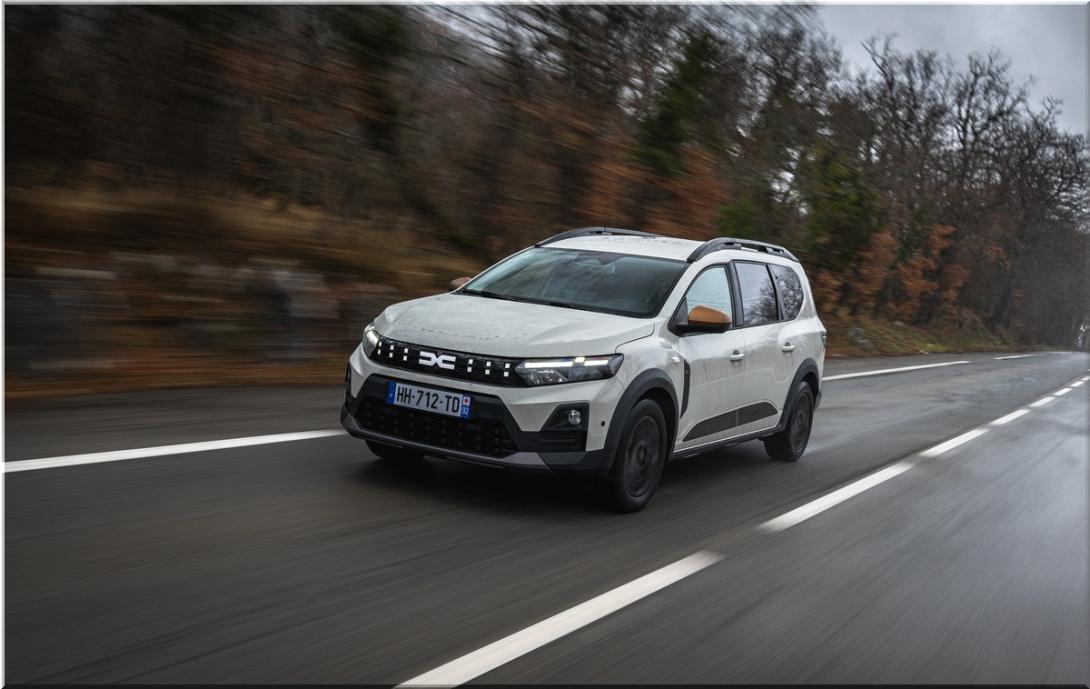
The 2026 Dacia Jogger represents a deliberate departure from the rising price trends in the European C-segment. Dacia utilizes the CMF-B platform to deliver a vehicle that weighs significantly less than its competitors while offering superior interior volume. By focusing on weight management and mechanical simplicity, the Jogger achieves high fuel efficiency without the expensive complexity of a heavy battery array.
Mechanical Architecture and Weight Optimization
Dacia engineers prioritize a low curb weight of approximately 2,645 pounds (1,200 kg) to maximize the performance of smaller displacement engines. The CMF-B platform utilizes high-strength steel and localized reinforcements to maintain structural rigidity during high-load scenarios. Specifically, the extended wheelbase of 114 inches (2,898 mm) allows for a stable footprint while distributing the weight of seven occupants evenly across the axles.
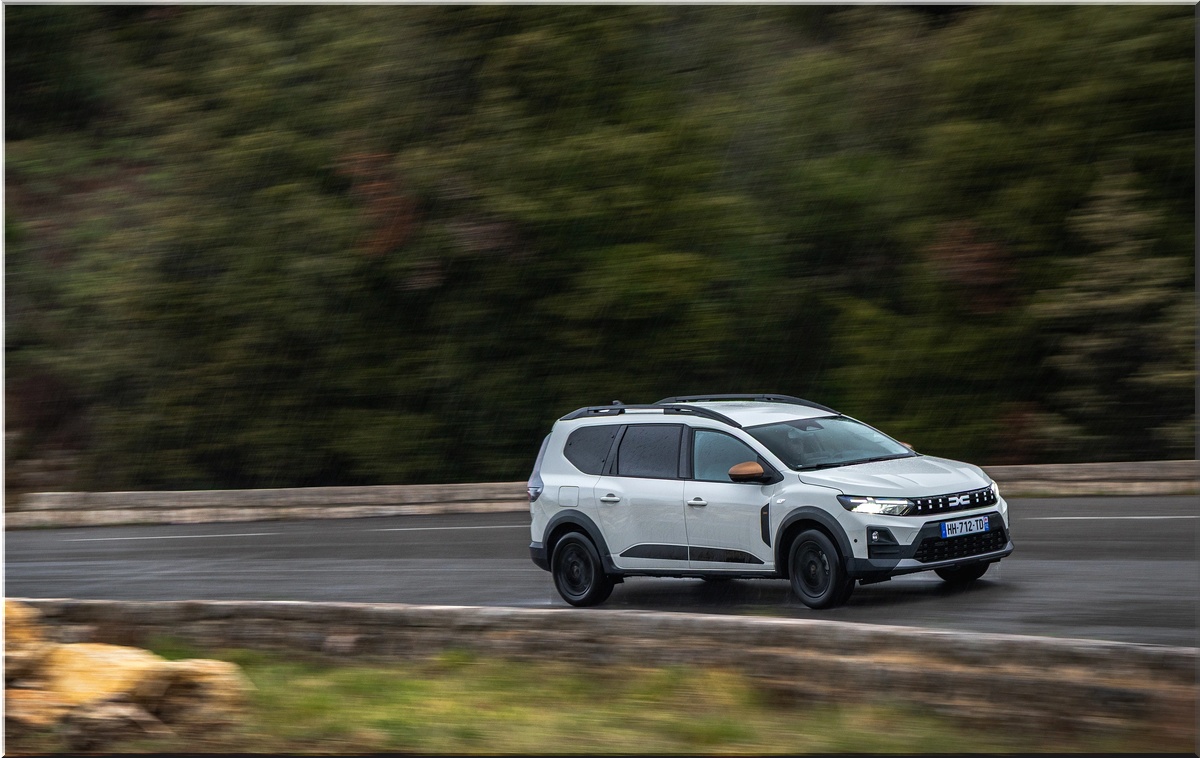
Looking at the data, the choice of a torsion beam rear suspension reduces manufacturing costs and saves interior space. This compact rear setup permits a flat floor, which is necessary for the folding seat mechanisms. Consequently, the vehicle handles with the agility of a standard hatchback despite its 179-inch (4,549 mm) length.
- Engine Configuration: 1.0L 3-cylinder turbo (TCe 110) or 1.6L 4-cylinder hybrid (Hybrid 140).
- Total Power Output: 110 hp for the gasoline variant and 140 hp for the hybrid system.
- Torque Rating: 148 lb-ft (200 Nm) for gasoline and 151 lb-ft (205 Nm) for the hybrid electric motor.
- Transmission Type: 6-speed manual or a multi-mode automatic gearbox.
- Fuel Capacity: 13.2 gallons (50 liters) across all standard internal combustion models.
The Hybrid 155 and 140 Powertrain Logic
The 2026 Dacia Jogger Hybrid 140 system remains the most technically advanced option for the 2026 Dacia Jogger, though a new Hybrid 155 variant now offers more power. These systems employ a gasoline engine assisted by two electric motors and a 1.2 kWh lithium-ion battery. The system relies on a clutchless multi-mode gearbox that utilizes a "dog-clutch" design rather than a traditional friction-based system. This eliminates wear components and improves thermal efficiency by reducing internal mechanical drag.
In city driving environments, the vehicle operates in electric mode for up to 80% of the time. The secondary electric motor acts as a high-voltage starter-generator, synchronizing the engine speed with the gearbox for smooth transitions. By comparison, traditional hybrids often suffer from a "rubber band" effect during acceleration; the Jogger avoids this through precise electronic mapping of its four internal combustion gears and two electric drive ratios.
Pro-Tip: Maximizing Regeneration
Use the "B-Mode" on the gear selector to increase regenerative braking force. This setting recovers kinetic energy more aggressively during deceleration, which recharges the battery faster and reduces physical brake pad wear.
Interior Volumetric Efficiency and Utility
The seven-seater configuration utilizes a 2-3-2 layout designed for rapid reconfiguration. Each third-row seat weighs only 22 pounds (10 kg), allowing a single user to remove them without specialized tools. With the rear seats removed, the cargo space expands from a modest 5.6 cubic feet to a substantial 21 cubic feet (595 liters) behind the second row.
- Remove the third-row seats to reduce vehicle weight by 44 pounds.
- Fold the second-row bench (60/40 split) to accommodate long items up to 78 inches.
- Utilize the modular roof rails to carry an additional 176 pounds (80 kg) of external cargo.
The modular roof rails feature an integrated swivel mechanism. Owners can rotate the rails 90 degrees using a simple Allen key, turning the longitudinal bars into a cross-rack system. This engineering choice removes the need for aftermarket crossbars, which reduces wind noise and improves aerodynamic profiles when not in use.
- 7-Seat Mode Capacity: 5.6 to 7.5 cubic feet (160 to 212 liters) of space behind the third row.
- 5-Seat Mode Capacity: 21.0 to 24.7 cubic feet (595 to 700 liters) with the third row removed.
- 2-Seat Mode Capacity: 64.2 to 73.6 cubic feet (1,819 to 2,085 liters) with all rear rows folded.
- Load Sill Height: 26.0 inches (661 mm) for easy access to the trunk floor.
Safety Systems and Driver Assistance
For 2026, the Jogger integrates essential Advanced Driver Assistance Systems (ADAS) to meet updated safety regulations. The system uses a camera and bumper-mounted radar to provide automatic emergency braking and lane departure warnings. In addition, the vehicle includes traffic sign recognition and a "My Safety" button on the dashboard that allows drivers to customize their preferred alert settings quickly.
The Media Display system provides an 8-inch touchscreen that supports wired smartphone integration. This avoids the cost of high-end onboard processors while ensuring the user always has access to current maps and streaming data. Specifically, the inclusion of a built-in phone mount and a dedicated USB port next to the screen reflects Dacia's focus on practical ergonomics.
Market Positioning and Economic ROI
The 2026 Dacia Jogger starts at approximately $27,200 and reaches roughly $36,600 for the fully equipped Hybrid 155 in the Extreme trim. This price point undercuts the average C-segment SUV by nearly $10,000. For families, the return on investment comes from the combination of a low purchase price and low running costs.
The Eco-G 120 variant offers a factory-fitted LPG (Liquefied Petroleum Gas) system, which provides a combined range of over 600 miles (1,000 km) when both tanks are full. Looking at the data, LPG remains significantly cheaper than gasoline in many regions, allowing owners to recoup the initial cost of the vehicle through reduced fuel expenditures.
Definitions: Dog-Clutch Gearbox
A dog-clutch gearbox uses interference rather than friction to lock gears together. In the Jogger Hybrid, this allows the electric motor to synchronize rotational speeds perfectly before the gears mesh, resulting in a durable and highly efficient transmission system without a traditional clutch plate.
What now?
Determine your primary driving environment to select the correct powertrain. If your routine involves highway commuting and long distances, the TCe 110 or Eco-G 120 provides the best initial value. If you drive primarily in congested urban areas, the Hybrid 155 offers the highest long-term savings through reduced fuel consumption and electric-only operation.