
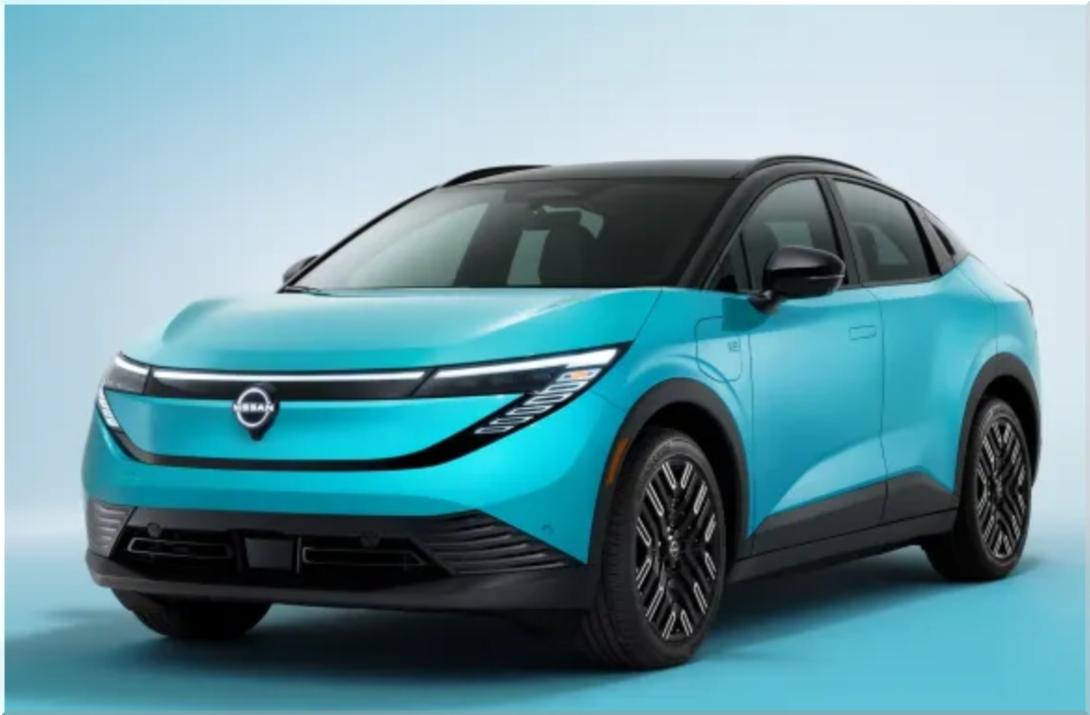
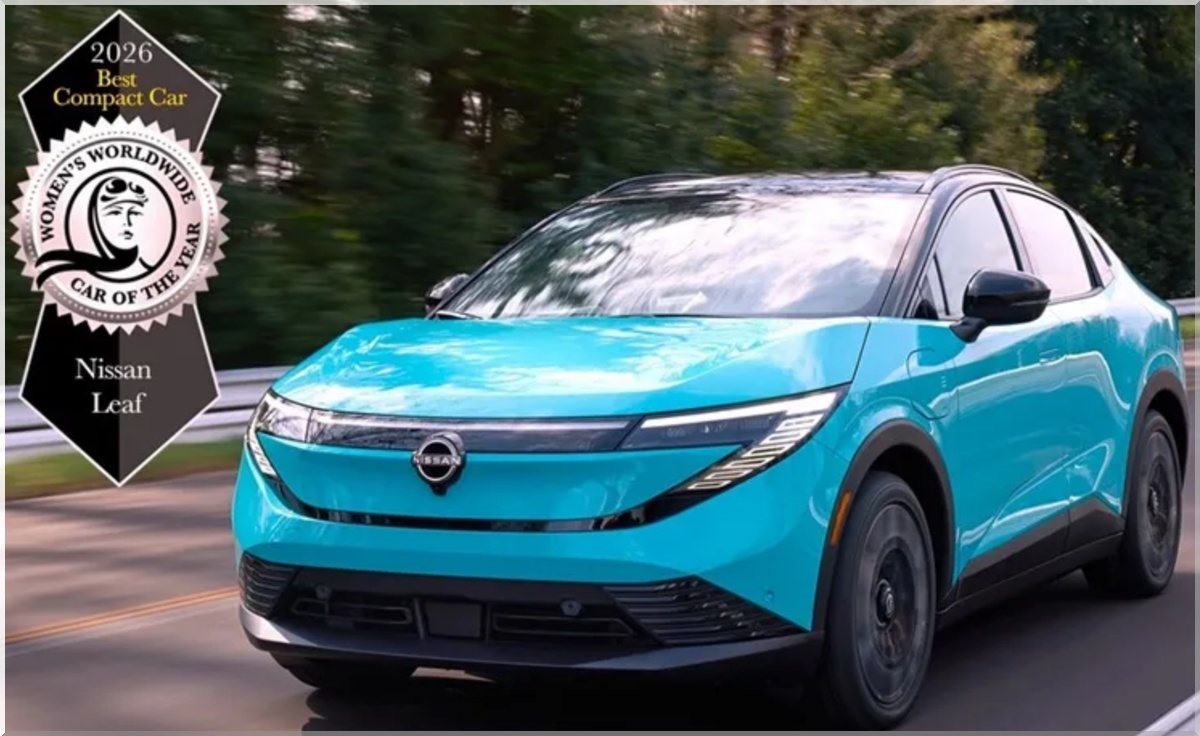
The Nissan LEAF just proved longevity still matters in the electric car market. In January 2026, the third-generation LEAF earned the World’s Best Compact Car title from the Women’s Worldwide Car of the Year jury.
That jury spans 84 automotive journalists from 54 countries. They rate cars on how they work in daily life. Price. Safety. Ease of driving. Efficiency. Real ownership value. The Nissan LEAF won because it still delivers where it counts.
This award does not chase hype cycles. It rewards execution. That distinction explains why the LEAF continues to stay relevant while many newer EVs struggle to balance cost, usability, and trust.
Why This Award Matters in Today’s EV Market
Electric vehicles now crowd every segment. Many promise long range or aggressive performance. Fewer deliver consistency at scale.
WWCOTY focuses on factors buyers face every day:
- Safety systems that work without distraction
- Quality that holds up over years
- Pricing that aligns with segment expectations
- Design that improves efficiency
- Ease of driving in traffic and tight spaces
- Environmental footprint across the vehicle lifecycle
The LEAF fits this brief cleanly. It targets practical ownership instead of novelty. That approach resonates with buyers who want an EV that fits routine life, not one that rewrites it.
Third-Generation Nissan LEAF: What Changed and Why It Works
The third-generation LEAF builds on more than a decade of global EV data. Nissan did not reset the formula. It refined it.
Battery Strategy Built Around Real Usage
Nissan now offers two battery options:
- 52 kWh battery for urban and suburban driving
- 75 kWh battery for higher daily mileage and longer trips
This split avoids forcing buyers to overpay for unused capacity. It also controls weight, cost, and efficiency. Both packs support fast charging for public use and home charging through Level 2 setups.
For most owners, predictable overnight charging remains the core advantage of a battery electric vehicle. Nissan designed the LEAF around that reality.
Powertrain Tuned for Smooth, Predictable Driving
The LEAF does not chase extreme acceleration numbers. It focuses on smooth torque delivery and linear response.
That tuning reduces fatigue in traffic. It also improves control in wet or low-traction conditions. The low-mounted battery lowers the center of gravity, which stabilizes the car during cornering and lane changes.
Short sentence. Clear outcome. Less drama behind the wheel.
Design Driven by Aerodynamics and Efficiency
The LEAF’s exterior prioritizes airflow management. Smooth surfaces and controlled edges reduce drag. That design choice directly supports EV range without increasing battery size.
Inside, visibility stays strong. Controls sit where drivers expect them. The layout avoids unnecessary learning curves.
This matters for buyers transitioning from internal combustion vehicles. Familiarity shortens adaptation time.
Interior Technology Focused on Daily Use
Nissan equipped the new LEAF with Google built-in. That decision reduces friction.
Drivers get:
- Native Google Maps with EV-aware routing
- Google Assistant for hands-free control
- App access through the Play Store
The system integrates navigation, climate, and media without relying on a connected phone. That setup improves reliability and reduces distraction.
The interface stays clean. Text remains legible. Menus stay shallow. This approach supports safer driving instead of screen engagement.
Safety Systems That Support, Not Interrupt
The LEAF includes a full suite of driver assistance features designed to operate quietly in the background.
Key systems include:
- Forward collision mitigation
- Lane keeping assistance
- Blind spot monitoring
- Adaptive cruise control
These systems intervene smoothly. They avoid abrupt corrections. That behavior builds trust over time.
Safety scores matter. Driver confidence matters more.
Cost Positioning and Ownership Logic
Compact EV buyers care about total cost of ownership. Nissan understands this segment.
Lower maintenance needs, predictable charging costs, and mature supply chains keep ownership expenses controlled. Insurance costs also remain competitive due to the LEAF’s long safety record.
This balance explains why the LEAF continues to attract first-time EV buyers.
Environmental Footprint and Manufacturing Scale
The LEAF benefits from Nissan’s established EV production infrastructure. High-volume manufacturing improves consistency and reduces waste.
Battery sourcing and assembly follow processes refined over multiple generations. That maturity lowers defect rates and improves long-term reliability.
Sustainability works best when paired with scale.
How the LEAF Stacks Up Against Newer Rivals
Many newer compact EVs push aggressive styling or oversized screens. Some offer strong specs on paper. Fewer deliver balanced ownership.
The LEAF’s advantage comes from restraint:
- Competitive range without excess weight
- Technology that simplifies driving
- Pricing aligned with segment expectations
- Proven global service network
That combination remains hard to replicate.
What This Award Signals for Nissan
Winning World’s Best Compact Car reinforces Nissan’s EV strategy. The company continues to prioritize accessibility over spectacle.
That focus positions the LEAF as a stable entry point into electrification. It also supports Nissan’s broader transition strategy across markets with varying infrastructure readiness.
Consistency builds trust. Trust builds volume.
What Buyers Should Take Away
For shoppers evaluating compact electric cars, the LEAF’s latest recognition sends a clear message.
- The platform remains current
- The technology supports daily life
- The ownership model stays predictable
Awards alone do not sell cars. Practical value does.
What Now
If you want an EV that fits existing routines, the LEAF still deserves attention. Compare charging access at home. Estimate daily mileage. Match battery size to usage.
The third-generation LEAF proves that experience still matters in the electric transition.