

Why This Update Is Different
The March 2026 Core Update is one of the most impactful algorithm changes in recent years because it fundamentally changes how Google evaluates content quality, authority, and usefulness. Unlike earlier updates that targeted spam or specific ranking loopholes, this update is designed to reassess the entire web ecosystem.
Google began rolling out this update in late March 2026, and the rollout typically takes around two weeks to complete across all regions and languages. During this period, websites experience heavy ranking fluctuations as Google recalibrates how it evaluates content.
Core updates are not penalties. Instead, they are comparative evaluation systems. This means your website doesn’t necessarily do something wrong—rather, other websites may now be considered more useful, more relevant, or more trustworthy based on updated criteria.
Seeing this core update, not one but two in the same month, gives a clear verdict on the “humanized” AI content and automated tools that claim to mimic professional writing styles but lack true strategic depth and intelligence. A reality check on “link sellers”, “parasite SEO”, and link networks, especially on the content that claims ranking and traffic within a week or a month, that is the “fake content” on backlinks and GEO used by individuals who use social media to inflate their perceived success to generate quick money.
Websites with genuine and original content need not fear this update, as this will boost their ranking and will have a positive impact on the websites.
Understanding Core Updates at a Deeper Level
To understand this update, you need to first understand how Google rankings actually work.
Google doesn’t rank pages based on one factor, like keywords or backlinks. Instead, it uses hundreds of signals grouped into major categories such as:
- Content quality
- Relevance to query
- Authority and trust
- User experience
- Behavioral signals
A core update modifies the weight and interpretation of these signals.
What changed in March 2026?
This update introduced a stronger emphasis on three major areas:
- Information Gain (Originality of Content)
- E-E-A-T (Experience and Trust Signals)
- User Experience and Engagement
Information Gain: The Biggest Ranking Shift
One of the most important changes introduced in the March 2026 update is the concept of information gain.
What is Information Gain?
Information gain means that your content must provide new value compared to what already exists on the search results page.
Earlier, SEO strategies often involved:
- analyzing top-ranking pages
- rewriting similar content
- optimizing keywords
This approach no longer works effectively.
Now, Google evaluates:
- whether your content adds new insights
- whether it explains something better
- whether it provides deeper or more actionable value
Example for clarity
If a user searches: “SEO strategy 2026.”
Most blogs will:
- Define SEO
- List common tips
But a page that ranks today will:
- Explain how SEO changed in 2026
- Show real campaign examples
- Provide execution frameworks
- Include mistakes and learnings
This is the difference between repetition and contribution.
Case Study: Information Gain in Action
A SaaS company publishing marketing content noticed a decline after the update. Their blogs were well-written but generic—they covered topics already discussed widely.
What they changed:
- Added real campaign data
- Included screenshots of analytics
- Explained step-by-step execution
- Shared failures and lessons
Result:
- Organic traffic increased by 38%
- Average time on page increased by 42%
This shows that Google is now rewarding depth and originality over surface-level optimization.
E-E-A-T: From Concept to Ranking Filter
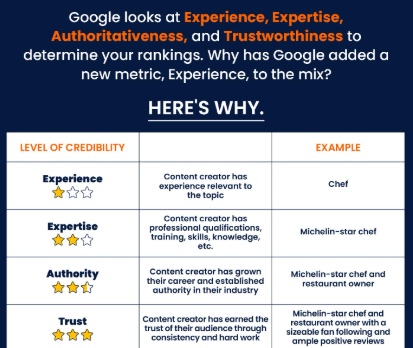
E-E-A-T stands for:
- Experience
- Expertise
- Authority
- Trust
While it has existed for years, the March 2026 update made it far more practical and measurable.
How Google evaluates E-E-A-T today
1. Experience
Google looks for signs that content is written by someone who has actually done what they are talking about.
For example:
- case studies
- real-life examples
- process breakdowns
2. Expertise
Content must demonstrate knowledge, not just general awareness.
This includes:
- technical depth
- accurate explanations
- correct terminology
3. Authority
Authority is built over time and includes:
- backlinks
- brand mentions
- niche relevance
4. Trust
Trust signals include:
- transparency
- factual accuracy
- website credibility
Case Study: E-E-A-T Recovery
A digital marketing agency experienced a drop in rankings despite having optimized content.
Problem:
- The content had no author attribution
- No proof of expertise
- No case studies
Solution:
- Added detailed author bios
- Included client campaign results
- Updated blogs with real-world examples
Result:
- Rankings improved within 30–45 days
- Traffic recovered by nearly 40%
This shows that trust and experience are now ranking drivers, not optional additions.
4. Topical Authority: Why Websites Now Rank Instead of Pages
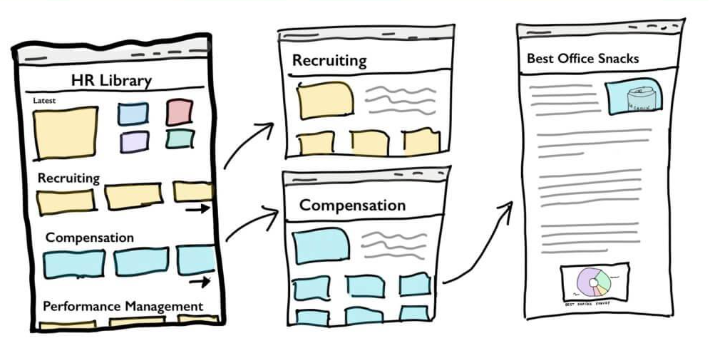
One of the most powerful shifts in the March 2026 Core Update is the move from page-level ranking to domain-level authority evaluation.
What does this actually mean?
Earlier:
- You could rank a single blog post with good backlinks and keywords
Now:
- Google evaluates how deeply your entire website covers a subject
This is called topical authority.
How Google measures topical authority:
- Number of related articles on a topic
- Internal linking between those articles
- Depth of coverage (basic → advanced topics)
- Consistency in the niche
Example:
If you write one blog on “SEO tips,” you are not an authority.
But if you cover:
- On-page SEO
- Technical SEO
- Local SEO
- SEO tools
- Case studies
Then Google starts recognizing your site as a trusted source.
Search Intent Matching Became Highly Accurate
Google has improved its ability to understand:
- What the user wants
- How deep do they want the answer
Types of intent:
- informational
- commercial
- transactional
What changed:
Even slight mismatches can now hurt rankings.
Example:
If a user searches “SEO strategy 2026.”
- a shallow blog → loses ranking
- a detailed guide with frameworks → ranks higher
Real Example:
A Seo company in Lucknow improved rankings by:
- aligning content with local search intent
- adding step-by-step local SEO processes
- including real client outcomes
Result: consistent top 3 rankings for location-based queries.
Case Study: Building Topical Authority
A mid-sized digital marketing company had 80+ blogs, but traffic was stagnant.
Problem:
- Blogs were random (SEO, social media, email, etc.)
- No internal linking structure
- No content clusters
Strategy:
They rebuilt their content into clusters:
- Pillar page: “Complete Guide to Local SEO.”
- 12 supporting blogs:
- Google Business Profile optimization
- Local citations
- Reviews strategy
- Local keyword research
Execution:
- All pages are internally linked
- Updated with real examples
- Structured navigation improved
Result:
- 62% increase in impressions
- 47% increase in organic traffic in 60 days
This proves: Google rewards structured expertise, not scattered content.
5. Search Intent Evolution: Google Understands “Why,” Not Just “What.”
Search intent has become extremely precise after this update.
Google now evaluates:
- Why the user is searching
- What format do they expect
- How deep should the answer be
Types of Search Intent (With Real Meaning)
1. Informational Intent
The user wants knowledge
Example: “What is SEO?”
2. Commercial Intent
User is comparing options
Example: “Best SEO tools”
3. Transactional Intent
User is ready to take action
Example: “Hire SEO services”
What changed in March 2026?
Earlier:
- A mixed-intent page could still rank
Now:
- If your content doesn’t match the exact intent → ranking drops
Case Study: Intent Alignment Fix
A service page targeting “SEO strategy 2026” was underperforming.
Problem:
- The page was sales-heavy
- No detailed explanation
Fix:
- Added detailed guide section
- Included frameworks and examples
- Separated informational + service intent
Result:
- Rankings improved from page 3 → top 5
- Engagement increased significantly
Lesson: Intent mismatch is now a ranking killer.
6. User Experience (UX) and Behavioral Signals
Google now uses user behavior to evaluate content quality.
Key Behavioral Signals:
- Click-through rate (CTR)
- Time on page
- Bounce rate
- Scroll depth
If users:
- Click your page
- Stay longer
- Engage with content
Google interprets this as high-quality content.
UX Factors That Directly Impact Rankings
1. Page Speed
- Ideal: under 2.5 seconds
2. Mobile Optimization
- Most traffic is mobile
3. Content Readability
- Short paragraphs
- Proper headings
- Clean formatting
4. Visual Structure
- Use spacing
- Avoid clutter
- Clear navigation
Google emphasizes a people-first experience as a ranking factor.
Case Study: UX Optimization Impact
A blog had strong content but poor performance.
Issues:
- Slow loading (4.2 seconds)
- Cluttered layout
- Large popups
Changes:
- Optimized images
- Improved layout
- Removed intrusive elements
Result:
- Session duration increased by 35%
- Bounce rate reduced by 22%
- Rankings improved gradually
7. AI Content vs Human Value
The March 2026 update does not penalize AI—but it filters low-value automation.
What fails:
- bulk AI blogs
- repetitive content
- no real insights
What works:
- AI-assisted writing + human editing
- experience-based content
- original frameworks
Important:
Google is not detecting AI—it is detecting a lack of value.
8. Practical SEO Execution Framework (Agency-Level)
Here’s what top-performing teams are doing now:
Step 1: Content Audit
- Identify low-performing pages
- Merge or delete thin content
- Improve important pages
Step 2: Build Topic Clusters
- Choose one niche
- Create Pillar + Supporting blogs
- Interlink everything
Step 3: Add Information Gain
Ask before publishing:
What new insight am I adding?
Step 4: Improve UX
- Optimize speed
- Improve readability
- Enhance structure
Step 5: Strengthen E-E-A-T
- Add author bios
- Include case studies
- Build brand credibility
9. Full SEO Strategy Blueprint After March 2026 Update
After understanding all ranking shifts, the next step is execution. Most businesses fail not because they lack knowledge, but because they lack a clear system to implement SEO changes.
Here is a practical blueprint used by high-performing teams:
Phase 1: Audit & Cleanup (Foundation Stage)
Before creating new content, you must fix existing issues.
What to do:
- Identify thin or outdated pages
- Remove duplicate or low-value content
- Merge overlapping blogs into stronger assets
Why this matters:
Google evaluates overall site quality. Weak pages reduce trust across the domain.
Example:
A website reduced 120 blogs to 70 high-quality pages
Result: improved crawl efficiency + ranking stability
Phase 2: Topic Ownership Strategy
Instead of targeting keywords, you must own a topic completely.
Execution model:
- Choose one core niche
- Create a pillar page
- Build 10–20 supporting articles
- Interlink everything logically
This structure signals to Google:
“This site is an authority on this subject.”
Phase 3: Content Depth & Information Gain
Each piece of content must go beyond surface-level explanations.
What to include:
- real examples
- practical steps
- common mistakes
- frameworks
- updated insights
This aligns with Google’s focus on helpful, people-first content.
Phase 4: UX & Engagement Optimization
Content alone is not enough. User experience determines how content performs.
Key improvements:
- fast loading speed
- clean design
- mobile responsiveness
- easy navigation
Behavioral impact:
Better UX → Higher Engagement → Stronger Ranking Signals
Phase 5: Authority & Trust Building
Trust is now a ranking factor.
What to implement:
- Author profiles
- Real case studies
- Client testimonials
- Brand mentions
Google wants to verify:
“Is this a credible source or just another content website?”
10. Case Study: End-to-End SEO Transformation
Let’s combine everything into a real-world scenario. A service-based website struggled after the update.
Problems:
- Generic blogs
- No structure
- Weak authority signals
- Poor UX
Step-by-step transformation:
Step 1: Content Audit
- Removed 40% low-quality pages
- Updated important blogs
Step 2: Topic Clusters
- Built structured content around core services
Step 3: Added Depth
- Included real examples
- Expanded explanations
Step 4: UX Improvements
- Improved speed
- Re-designed layout
Step 5: Trust Signals
- Added case studies
- Showcased results
Results (within 3 months):
- 55% increase in organic traffic
- 2x improvement in engagement
- stable rankings across core keywords
11. Long-Term SEO Roadmap (2026 and Beyond)
The March 2026 update is not a one-time change—it signals the future direction of SEO.
What will continue to matter:
1. Experience-Based Content
Content must reflect real-world application.
2. Topic-Level Authority
Websites must dominate niches, not just keywords.
3. UX + SEO Integration
SEO and design are no longer separate.
4. Continuous Content Improvement
Static content will decline over time.
12. What Most Agencies Still Get Wrong
Even after this update, many teams continue outdated practices:
- publishing bulk content
- focusing only on keywords
- ignoring UX
- avoiding content updates
These approaches will continue to fail.
13. What Winning Teams Are Doing Differently
Successful teams:
- Focus on depth, not volume
- Build structured content systems
- Prioritize user experience
- Invest in brand authority
This is the difference between temporary rankings and long-term growth.
A Short Summary
The Google March 2026 Core Update clearly defines the future of SEO:
It is no longer about ranking tricks
It is about delivering real value, real experience, and real usefulness
To succeed:
- Create content that genuinely helps users
- Demonstrate expertise through examples
- Build authority through structured content
- Optimize experience for engagement
If your content answers the user better than anyone else, you will rank. If it doesn’t, no amount of optimization will help.