

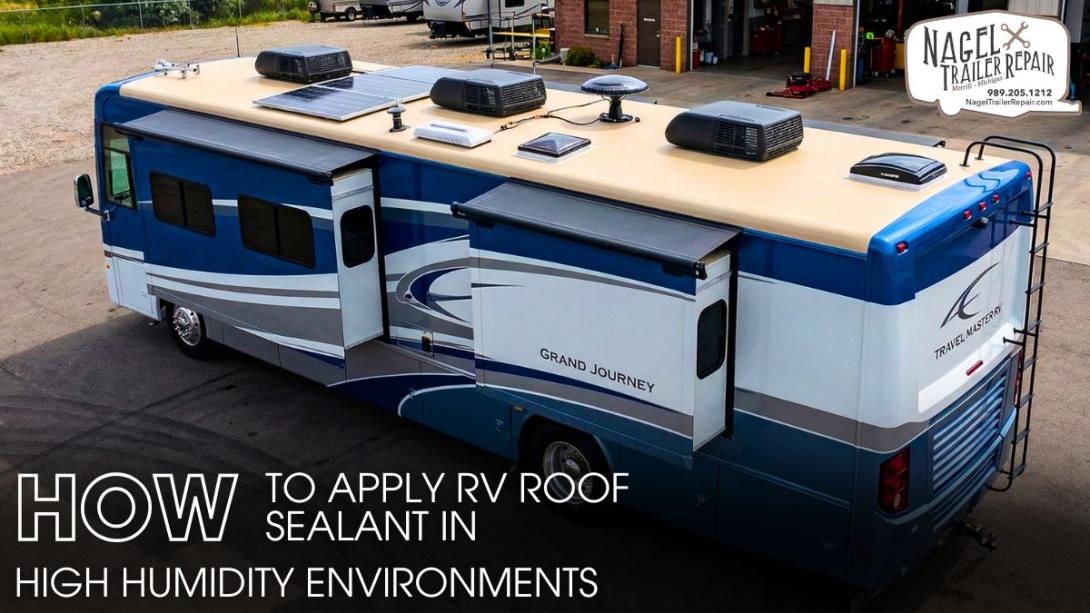
Applying RV roof sealant during humid weather requires extra care and proper preparation. High moisture levels in the air can affect how sealant bonds to the roof surface and how quickly it cures. If the sealant does not attach properly, it may crack or peel over time, allowing water to seep into the roof structure. This can eventually lead to interior damage, mold growth, and expensive repairs. Understanding the correct approach helps RV owners protect their vehicles from these risks.
In this guide, we have discussed practical methods that help RV owners apply roof sealant successfully even when humidity levels remain high. The first step always begins with a detailed inspection of the RV roof. Carefully check areas around seams, vents, skylights, antennas, and roof-mounted equipment. These locations are the most common entry points for water, so they require special attention before applying sealant.
Cleaning the roof thoroughly is another essential step. Dirt, debris, pollen, and leftover sealant can prevent the new sealant from bonding correctly. Washing the roof with a gentle RV-safe cleaner removes buildup and prepares the surface for proper adhesion. After cleaning, allow the roof to dry completely. Even a small amount of trapped moisture can weaken the seal and reduce its lifespan.
When applying the sealant, use slow and steady movements to create smooth, even lines along seams and joints. Thin layers work better than thick applications because they cure more evenly and reduce the chance of trapping moisture underneath. Timing also plays an important role. Applying sealant during the warmest and least humid part of the day can improve curing results.
Some RV owners prefer to handle this maintenance themselves, but others rely on professional RV roof sealing in Michigan to ensure the job is done correctly. Experienced technicians understand how humidity affects sealants and know how to apply them for long-lasting performance.
With the right preparation, quality materials, and careful application, RV owners can keep their roofs sealed, protected, and ready for travel in any weather.