

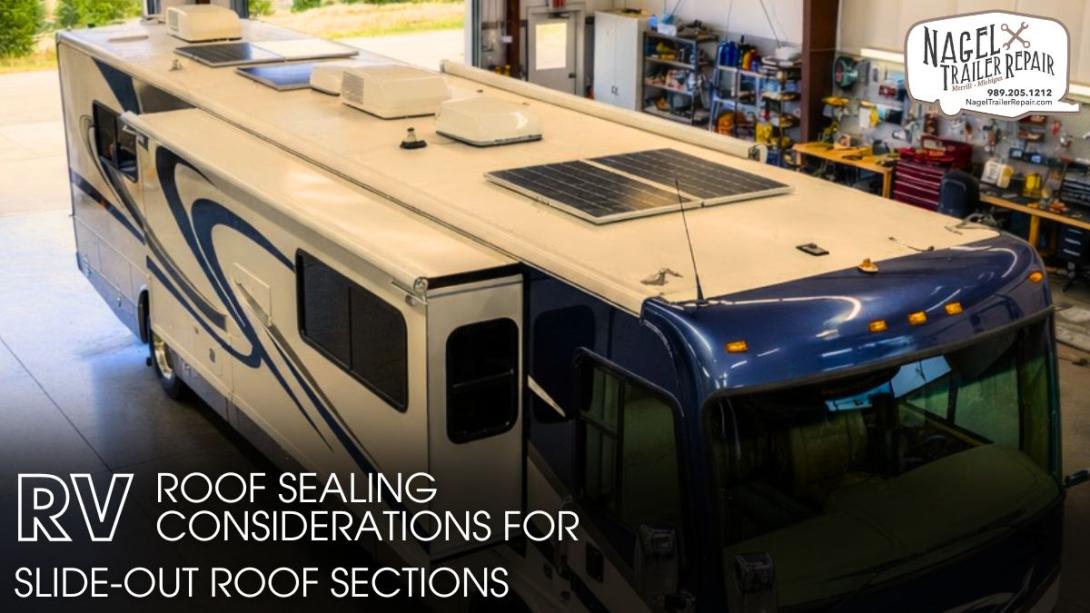
Slide-out roof sections require extra care because movement introduces stress that stationary RV roofs never experience. Each time a slide-out operates, the roof flexes, seams shift, and sealants stretch. Over time, this constant motion weakens adhesion and creates openings that allow water to penetrate beneath the surface. Without proper attention, minor seal failures can quickly turn into major repairs.
Environmental exposure makes these roofs even more vulnerable. For Travel Trailer owners focused on RV roof sealing Michigan services, harsh winters, heavy snow, and freeze-thaw cycles accelerate sealant deterioration. Moisture trapped on flat slide-out roofs expands when frozen, forcing gaps wider with each cycle. During warmer months, UV exposure further degrades sealant elasticity, reducing its ability to recover after movement.
Choosing the right sealing materials makes a significant difference. Sealants must remain flexible, adhere strongly to roofing materials, and withstand repeated motion. Proper cleaning and surface preparation ensure sealants bond correctly, while applying the right amount prevents cracking or uneven curing. Allowing sealants to fully cure before operating slide-outs helps maintain long-term integrity.
Consistent inspection and maintenance remain essential. Early warning signs such as cracking, discoloration, or lifting edges indicate sealant fatigue. In this guide, we have discussed how slide-out roof design and climate conditions impact sealing performance. By addressing issues early and using proper techniques, RV owners protect their investment, reduce repair costs, and enjoy worry-free travel year-round.