

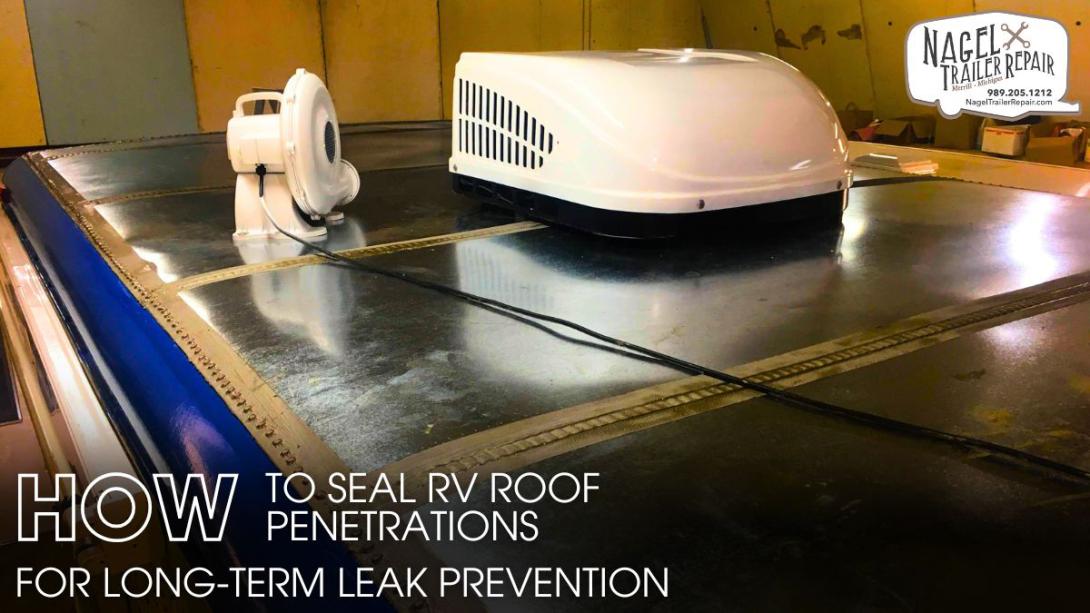
Sealing RV roof penetrations is the key to stopping leaks before they become serious problems. Any place where something breaks through the roof surface—vents, fans, solar mounts, antennas, plumbing vents—creates an opportunity for water to enter your RV.
When you add Michigan’s unpredictable climate, it becomes even more important to follow proper sealing techniques. That’s why RV roof sealing Michigan requires both the right materials and the right approach to keep the roof fully protected.
In this guide, we have discussed how important it is to remove old sealant, clean the area thoroughly, and check for early signs of roof wear. These steps help you avoid sealing over dirt or moisture, which weakens the bond and leads to premature failure. Once the surface is ready, applying new sealant correctly ensures a strong, watertight layer around the penetration.
Using industry-recommended materials not only protects the roof but also improves its ability to handle expansion and contraction during seasonal changes. When you reinforce weak areas with butyl tape or sealing tape, you give your roof added protection against snow, ice, and constant sun exposure.
After sealing the penetrations, maintenance keeps everything working as it should. Inspecting your roof at least a few times a year helps you catch problems early. Sealing roof penetrations may take a little time, but it saves you from costly repairs and protects your RV’s value in the long run.