

The problem of aquatic weed overgrowth creates more than visual concerns because it poses a major operational danger to businesses that need open and sustainable water routes. The accumulation of invasive aquatic vegetation affects multiple sectors including utility providers and industrial water systems and ports and power plants and large-scale agricultural operations by blocking intake pipes and blocking waterways and reducing operational speed and increasing maintenance expenses.
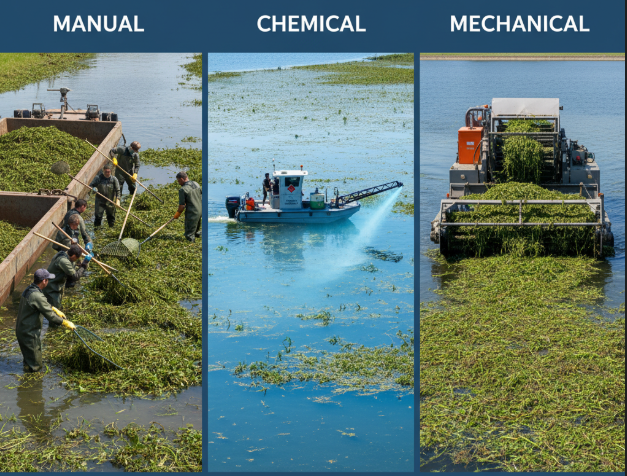
When it comes to industrial aquatic weed removal, three common methods are used: manual, chemical, and mechanical. The three options offer different benefits and drawbacks yet only one solution provides industrial-scale production at affordable prices while being environmentally friendly.
Manual Removal: Limited in Scale
The process of manual weed removal requires workers to use rakes and cutters and nets for pulling weeds out of the water. The method proves useful for limited applications but fails to meet requirements for industrial operations.
Drawbacks of Manual Removal:
- Labor-intensive and time-consuming
- Ineffective for large or hard-to-reach areas
- The plant tends to release roots or plant parts which result in new growth.
The essential need for continuous operations and timely maintenance in industrial settings makes manual removal an inappropriate solution for permanent use.
Chemical Treatment: Quick But Risky
Chemical herbicides are widely used for aquatic weed control. They can offer quick suppression of surface weeds and are relatively easy to apply. The deployment of these technologies leads to major environmental issues which need extensive regulatory control.
Risks of Chemical Treatment:
- Potential contamination of water supplies
- The water contamination causes damage to fish populations and aquatic life and native plant species.
- Requires permits and strict compliance with environmental laws
- Short-lived results, often requiring repeat applications
The combination of industrial water systems with intake structures makes chemical runoff a dangerous situation. It may also lead to oxygen depletion as decaying weeds sink and rot, resulting in sludge buildup and water quality issues.
Mechanical Removal: The Smart Industrial Solution
Mechanical removal requires specialized equipment to extract aquatic vegetation along with its roots and entire biomass. The method delivers the best results for industrial use because it operates at big scales with maximum performance while providing sustainable operations.
Weedoo Boats provides industrial aquatic weed removal machines that operate in demanding environments through their complete line of industrial aquatic weed removal machines.
Why Choose Weedoo Mechanical Workboats?
- Heavy-Duty Equipment: Built to tackle dense vegetation, silt, and debris in both shallow and deep waters.
- Eco-Friendly: No chemicals, no harm to surrounding ecosystems.
- Customizable Attachments: The Weedoo modular system provides weed harvesters and cutters and trash skimmers and shoreline conveyors which can be customized according to your needs.
- Shallow Water Access: Perfect for industrial ponds, canals, reservoirs, cooling lakes, and wastewater lagoons.
- Cost-Effective: Reduces long-term maintenance costs and prevents system shutdowns.
A Clear Choice for Industrial Applications
The management of hydroelectric facilities and agricultural irrigation networks and coastal port authorities require active vegetation control practices. Mechanical solutions, especially those offered by Weedoo, are fast becoming the industry standard for safe, sustainable, and effective industrial aquatic weed removal.