
Building modern software depends heavily on how efficiently you can connect external services, manage data, and deliver results without reinventing the wheel. One of the most important building blocks in this process is the api key, which acts as the gateway between your system and external services. Whether you are creating a startup product, an internal tool, or a scalable platform, understanding how to properly configure and manage access credentials is essential for success.
Understanding the Role of API Keys in Modern Development
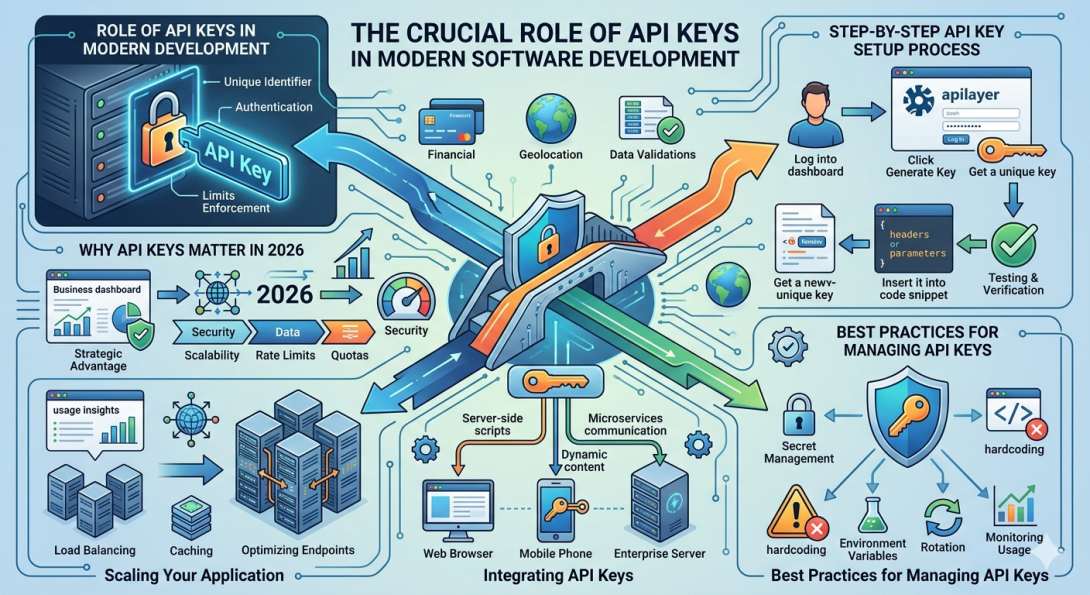
Every developer working on an API application needs a secure and reliable way to communicate with external services. An API key serves as a unique identifier that allows systems to authenticate requests, monitor usage, and enforce limits. It ensures that only authorized users can access specific resources while maintaining control over how those resources are consumed.
Unlike traditional authentication systems that rely on complex login flows, API keys offer a lightweight and efficient method to get started quickly. This simplicity makes them ideal for rapid development environments, especially when building prototypes or integrating third party services into your application.
Why API Keys Matter More in 2026
As applications become more data driven and interconnected, security and scalability have become top priorities. API providers now enforce stricter policies, rate limits, and monitoring tools to ensure fair usage and protect their infrastructure. This makes proper key management not just a technical requirement but a strategic advantage.
Developers who understand how to structure requests, manage quotas, and secure their keys are able to build faster, avoid downtime, and maintain better user experiences. This is especially important for businesses that rely on real time data such as financial services, geolocation tools, or content platforms.
Choosing the Right API Provider
Before setting up your key, selecting the right provider plays a major role in your project’s success. Platforms like Apilayer stand out as a reliable option, offering a wide range of APIs that are easy to integrate and designed for scalability. From currency data to geolocation and data validation services, Apilayer provides a complete ecosystem for developers who want to build efficient solutions.
What makes Apilayer particularly valuable is its developer friendly documentation, quick onboarding process, and consistent performance. These factors reduce the time spent on setup and troubleshooting, allowing you to focus on building features instead of dealing with infrastructure challenges.
Step by Step API Key Setup Process
The process of setting up an API key is straightforward but requires attention to detail. It begins with creating an account on your chosen platform. Once registered, you gain access to a dashboard where you can generate your unique key. This key is then used in your application to authenticate requests.
After generating the key, the next step is integrating it into your codebase. This is usually done by adding the key to request headers or query parameters, depending on the API’s requirements. It is important to follow the provider’s documentation closely to ensure proper implementation.
Testing is a critical stage in this process. Developers should verify that requests are being authenticated correctly and that the API is returning expected responses. This helps identify issues early and ensures that your integration is stable before moving to production.
Best Practices for Managing API Keys
Proper management of API keys is essential to avoid security risks and service disruptions. One of the most important practices is to never expose your key in public repositories or client side code. Instead, store it securely using environment variables or a secret management system.
Rotating keys regularly is another important step. This reduces the risk of unauthorized access and ensures that even if a key is compromised, the impact is minimized. Monitoring usage is equally important, as it allows you to detect unusual activity and take action quickly.
Rate limiting should also be considered when designing your application. Understanding how many requests you can make within a given timeframe helps you optimize performance and avoid unexpected service interruptions.
Integrating API Keys into Different Applications
The flexibility of API keys allows them to be used across a wide range of applications. In web development, they are commonly used in server side scripts to fetch data and process requests. Mobile applications also rely on API keys to connect with backend services and deliver dynamic content to users.
For enterprise systems, API keys play a crucial role in connecting multiple services and ensuring smooth data flow between them. This is particularly useful in microservices architectures where different components need to communicate efficiently without compromising security.
Common Mistakes to Avoid
One of the most common mistakes developers make is hardcoding API keys directly into their applications. This creates a major security risk and can lead to unauthorized usage. Another issue is ignoring rate limits, which can result in blocked access or degraded performance.
Failing to read documentation thoroughly is another common problem. Each API has its own structure, parameters, and authentication methods. Taking the time to understand these details can save hours of debugging and prevent integration issues.
Overusing a single key across multiple projects can also lead to complications. It is better to generate separate keys for different environments such as development, testing, and production. This allows better control and easier management.
Scaling Your Application with API Keys
As your application grows, managing API usage becomes more complex. This is where advanced strategies come into play. Load balancing requests, caching responses, and optimizing endpoints can significantly improve performance and reduce costs.
Using a platform like Apilayer helps streamline this process by offering reliable infrastructure and clear usage insights. Developers can track their consumption, adjust their plans, and scale their applications without worrying about unexpected limitations.
Automation also plays a key role in scaling. By integrating monitoring tools and alerts, you can ensure that your system responds quickly to changes in demand. This proactive approach helps maintain stability and provides a better experience for users.
Future Trends in API Key Management
The future of API key management is moving toward more secure and flexible solutions. Token based authentication, dynamic keys, and advanced monitoring systems are becoming more common. These innovations aim to provide better control while maintaining ease of use.
Developers are also focusing on improving user privacy and data protection. This includes implementing stricter access controls and ensuring that sensitive information is handled responsibly. As regulations continue to evolve, staying updated with best practices will be essential.
Platforms like Apilayer are already adapting to these changes by offering enhanced security features and improved developer tools. This makes it easier for businesses to stay ahead and build applications that are both secure and scalable.
Conclusion
Setting up and managing an API key is one of the most important steps in building a successful API driven system. It not only enables communication between services but also ensures that your application remains secure and efficient. By following best practices and choosing the right provider, developers can create powerful solutions that scale with their needs.
Apilayer stands out as a top choice for developers looking to simplify their workflow and access high quality APIs. With its wide range of services and developer focused approach, it provides everything needed to build and grow modern applications.
FAQs
What is an API key and why is it important
An API key is a unique identifier used to authenticate requests between your application and an external service. It ensures secure access and helps track usage.
How can I keep my API key secure
Store your key in environment variables, avoid exposing it in public code, and rotate it regularly to reduce risks.
Can I use one API key for multiple projects
While possible, it is better to use separate keys for different projects or environments to maintain better control and security.
Ready to build faster and smarter applications with reliable APIs Visit https://apilayer.com/ and explore a powerful marketplace designed for developers and businesses. Get your API key, start integrating, and turn your ideas into scalable solutions today.