
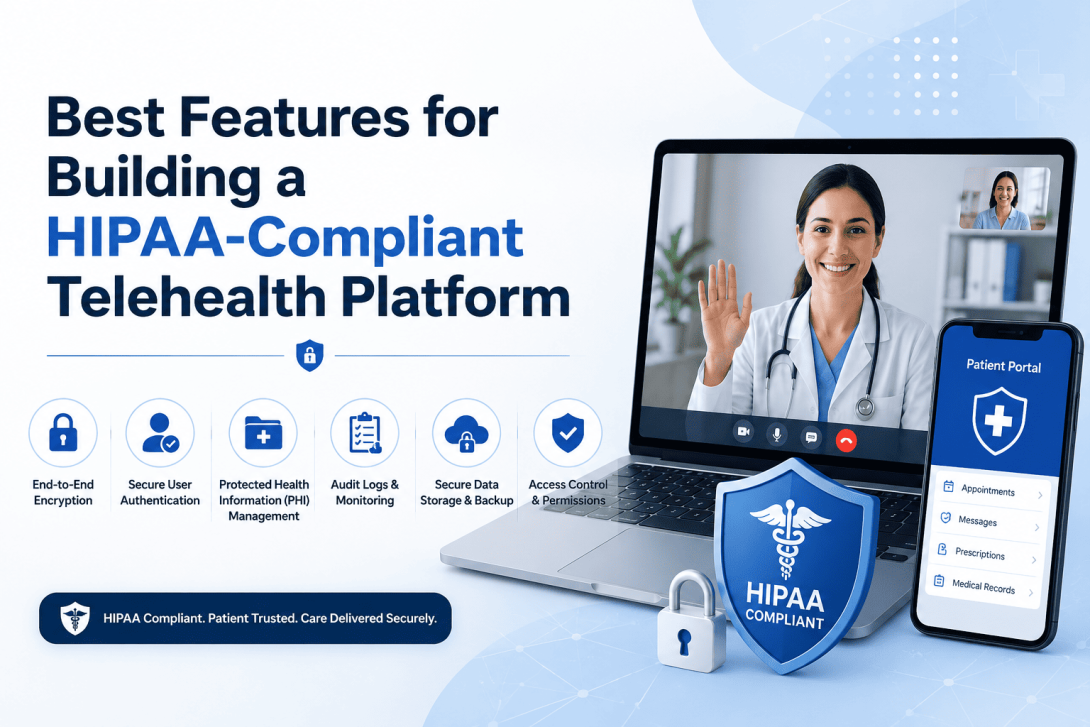
The healthcare industry has rapidly embraced digital transformation, and telehealth has become one of the most important innovations in modern patient care. From virtual consultations to remote patient monitoring, healthcare providers now rely heavily on digital tools to improve patient access and operational efficiency. However, with this growth comes a major responsibility, protecting sensitive patient data.
Building a HIPAA-compliant telehealth platform is no longer optional for healthcare organizations operating in the United States. Healthcare providers, startups, and software companies must ensure their telehealth systems meet strict security, privacy, and compliance standards while still delivering a seamless patient experience.
In this guide, we’ll explore the essential features, challenges, and future trends involved in developing a secure and scalable telehealth solution.
Why HIPAA Compliance Matters in Telehealth
The Health Insurance Portability and Accountability Act (HIPAA) establishes strict guidelines for handling Protected Health Information (PHI). Any telehealth platform that stores, processes, or transmits patient data must comply with these regulations.
A HIPAA-compliant telehealth app helps healthcare organizations:
- Protect sensitive patient information
- Prevent unauthorized access and cyber threats
- Avoid costly legal penalties
- Build trust among patients and healthcare providers
- Maintain secure healthcare communication
Without proper healthcare software compliance, telemedicine platforms become vulnerable to data breaches, ransomware attacks, and privacy violations.
As virtual healthcare services continue to grow, healthcare cybersecurity solutions are becoming a critical investment for organizations worldwide.
Core Requirements of a HIPAA-Compliant Telehealth Platform
Developing a secure telemedicine platform involves much more than adding video calls. The platform must include advanced security measures, compliance-focused infrastructure, and patient-centric features.
Below are the most important telemedicine app features every platform should include.
1. Secure User Authentication and Access Control
Strong authentication mechanisms are essential for protecting patient records and preventing unauthorized access.
Key security features include:
- Multi-factor authentication (MFA)
- Role-based access control (RBAC)
- Secure password policies
- Biometric authentication
- Automatic session timeouts
These features significantly improve healthcare mobile app security and reduce the risk of insider threats.
2. HIPAA-Compliant Video Conferencing
Video consultations are the foundation of any telehealth platform. However, standard video conferencing tools may not meet HIPAA standards.
A HIPAA-compliant video conferencing system should provide:
- End-to-end encryption
- Secure audio and video transmission
- Session monitoring and logging
- Waiting room controls
- Secure file sharing during consultations
Secure virtual consultations help healthcare providers maintain patient confidentiality while delivering high-quality remote care.
3. End-to-End Data Encryption
Encryption is one of the most critical elements of secure patient data management.
A HIPAA-compliant healthcare app should encrypt:
- Data at rest
- Data in transit
- Stored medical records
- Chat messages
- Prescription information
Advanced encryption standards ensure patient data remains protected even if systems are compromised.
4. EHR Integration in Telehealth
Modern telehealth systems must seamlessly connect with Electronic Health Record (EHR) systems.
Benefits of EHR integration in telehealth include:
- Faster access to patient history
- Improved care coordination
- Reduced administrative workload
- Better treatment accuracy
- Centralized medical records
Smooth integration also improves workflow efficiency for doctors, nurses, and administrative staff.
5. Secure Patient Portal
A secure patient portal allows users to access healthcare services conveniently while maintaining compliance.
Important patient portal security features include:
- Appointment scheduling
- Prescription management
- Secure messaging
- Billing and payment systems
- Access to medical records
- Test result viewing
A user-friendly patient portal significantly improves patient engagement and satisfaction.
6. Audit Logs and Activity Monitoring
HIPAA regulations require healthcare organizations to maintain detailed records of data access and system activity.
Audit logging features should include:
- Login tracking
- File access history
- User activity monitoring
- Failed login attempts
- System modification records
These logs help organizations detect suspicious behavior and maintain regulatory compliance.
7. HIPAA-Compliant Cloud Hosting
Cloud infrastructure plays a major role in telehealth software development.
Choosing HIPAA-compliant cloud hosting provides:
- Scalable infrastructure
- Data redundancy
- Disaster recovery
- Secure backups
- Advanced cybersecurity controls
Cloud-based telemedicine platforms also support faster deployment and improved system reliability.
AI and Remote Patient Monitoring Features
Artificial intelligence and connected healthcare devices are transforming virtual care delivery.
Integrating AI in telehealth platforms enables healthcare providers to improve diagnostics, automate workflows, and personalize treatment plans.
AI-Powered Healthcare Features
Modern telehealth platforms increasingly use AI for:
- AI-driven symptom checking
- Predictive health analytics
- Automated appointment scheduling
- Medical transcription
- Chatbots for patient support
- Clinical decision assistance
AI can reduce physician workload while improving patient outcomes.
Remote Patient Monitoring Solutions
Remote patient monitoring solutions allow healthcare providers to track patient health outside traditional clinical settings.
Common RPM features include:
- Wearable device integration
- Real-time health monitoring
- Blood pressure tracking
- Glucose monitoring
- Heart rate monitoring
- Emergency alerts
These tools are especially valuable for chronic disease management and elderly patient care.
Common Challenges in Building a HIPAA-Compliant Telehealth Platform
Developing a compliant telemedicine solution comes with several technical and operational challenges.
1. Managing Complex Compliance Requirements
HIPAA regulations involve strict technical, physical, and administrative safeguards. Ensuring complete compliance requires deep healthcare industry expertise.
Companies must also stay updated with changing healthcare regulations and cybersecurity standards.
2. Data Security and Cyber Threats
Healthcare systems are among the most targeted industries for cyberattacks.
Common threats include:
- Ransomware attacks
- Phishing attempts
- Insider threats
- Data breaches
- API vulnerabilities
Strong telemedicine platform security is essential to minimize these risks.
3. Integration with Legacy Healthcare Systems
Many hospitals still use outdated infrastructure that may not easily integrate with modern telehealth applications.
Ensuring compatibility while maintaining performance and compliance can be technically challenging.
4. Scalability and Performance
As user demand grows, telehealth platforms must handle:
- Large video traffic volumes
- Real-time communication
- Multiple simultaneous consultations
- Expanding patient databases
Scalable architecture becomes crucial for long-term growth.
5. User Experience and Accessibility
Patients expect telehealth applications to be simple, fast, and accessible across devices.
Complicated interfaces may reduce adoption rates, especially among elderly users.
Balancing compliance, security, and user experience is one of the biggest challenges in telehealth app development.
How to Choose the Right Telehealth Development Partner
Selecting the right telehealth app development company is critical for project success.
Here are key factors to consider:
Healthcare Industry Experience
Choose a development partner with proven experience in healthcare software development and HIPAA compliance.
They should understand:
- Healthcare workflows
- Regulatory requirements
- EHR integrations
- Healthcare cybersecurity standards
Security Expertise
Your development team should prioritize:
- Secure coding practices
- Penetration testing
- Vulnerability assessments
- Encryption standards
- Compliance documentation
Strong security expertise is essential for building a secure telemedicine software.
Scalability and Technology Stack
The ideal partner should build scalable solutions using modern technologies such as:
- Cloud-native architecture
- AI and machine learning
- IoT integrations
- Secure APIs
- Cross-platform mobile frameworks
Future-ready technology ensures long-term platform growth.
Post-Launch Support and Maintenance
Telehealth platforms require ongoing monitoring, updates, and compliance maintenance.
Choose a company that offers:
- 24/7 technical support
- Security monitoring
- Compliance updates
- Feature enhancements
- Performance optimization
Long-term support is critical for maintaining a stable healthcare application.
Future Trends in HIPAA-Compliant Telehealth Platforms
The future of telemedicine is evolving rapidly with emerging technologies and changing patient expectations.
Here are some major trends shaping the industry.
AI-Driven Personalized Healthcare
AI will continue improving personalized treatment recommendations, predictive diagnostics, and automated healthcare workflows.
Healthcare providers will increasingly rely on intelligent systems for faster and more accurate care delivery.
Expansion of Remote Patient Monitoring
The demand for remote patient monitoring solutions will continue growing as healthcare shifts toward preventive and home-based care.
Connected devices and wearable technologies will become standard features in telehealth ecosystems.
Advanced Cybersecurity Solutions
Healthcare organizations are expected to invest heavily in:
- Zero-trust security frameworks
- Advanced threat detection
- AI-powered cybersecurity tools
- Blockchain-based medical records
- Biometric authentication
Cybersecurity will remain a top priority for telehealth software development.
Greater Interoperability
Future telehealth platforms will focus on improved interoperability between:
- Hospitals
- Clinics
- Pharmacies
- Insurance providers
- Wearable health devices
Seamless data exchange will improve healthcare efficiency and patient outcomes.
Voice and Conversational Interfaces
Voice-enabled healthcare assistants and conversational AI will simplify patient interactions and improve accessibility for users with disabilities or limited technical skills.
Conclusion
Building a HIPAA-compliant telehealth platform requires a careful balance of security, compliance, scalability, and user experience. Healthcare organizations must invest in advanced cybersecurity measures, secure patient data management, HIPAA-compliant cloud hosting, and seamless healthcare integrations to deliver reliable virtual care services.
From secure video conferencing to AI-powered remote patient monitoring solutions, modern telehealth platforms are transforming how healthcare is delivered worldwide.
As digital healthcare adoption continues to grow, organizations that prioritize compliance, patient privacy, and innovative telemedicine app features will gain a significant competitive advantage in the evolving healthcare landscape.