

Search engine results pages (SERPs) are the backbone of modern SEO, market research, and competitive intelligence. From tracking keyword rankings to analyzing featured snippets and ads, businesses rely on structured SERP data to make informed decisions. Instead of building fragile scrapers, most teams now use dedicated APIs that deliver clean, ready-to-use results.
In this guide, we compare SERP scraping APIs based on features, accuracy, and pricing to help you choose the best SERP API for SEO in 2026.
What Is a SERP Scraping API?
A SERP scraping API is a service that programmatically fetches search engine result pages (Google, Bing, etc.) and returns the data in structured formats such as JSON.
Instead of managing proxies, CAPTCHA solving, and browser automation, developers simply send a query and receive parsed results.
Key benefits include:
- Automated SERP data collection
- Reliable infrastructure for large-scale queries
- Clean output for SEO tools and analytics dashboards
This makes SERP APIs ideal for keyword tracking, competitor monitoring, and SEO automation.
Key Factors for SERP API Comparison
To fairly evaluate providers, we compare them using the following criteria:
1. Data Accuracy & Freshness
How closely the API matches real Google results and how often it refreshes data.
2. Location & Device Targeting
Support for country, city, and mobile/desktop SERPs.
3. Output Format & Structure
Availability of clean JSON responses with organic results, ads, snippets, and local packs.
4. Scalability & Speed
Ability to handle thousands of requests without throttling or failures.
5. Ease of Integration
Developer-friendly documentation and SDKs.
6. Pricing Transparency
Clear pricing models suitable for startups, agencies, and enterprises.
Top 5 SERP Scraping API Providers
Zenserp
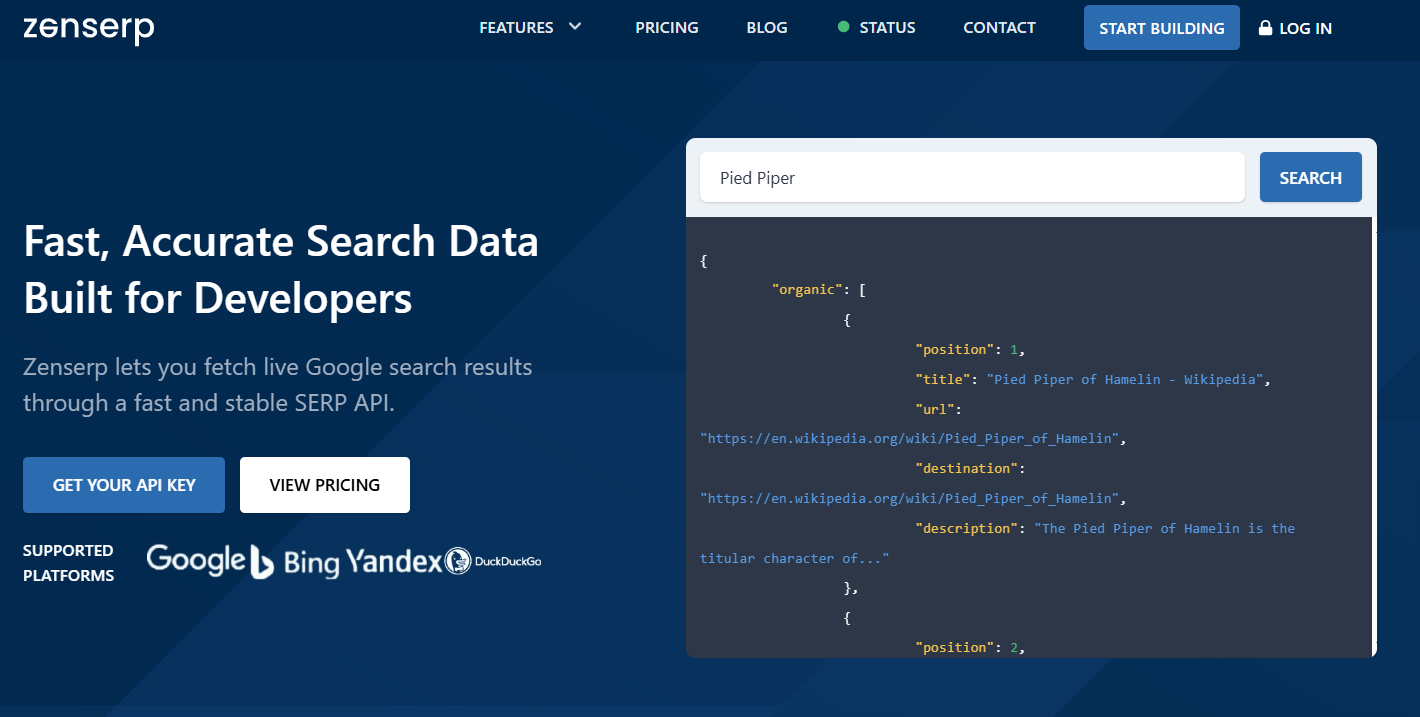
Zenserp is widely recognized as one of the most reliable and developer-friendly SERP scraping APIs. It focuses on providing highly accurate Google results with strong global targeting and structured output, making it ideal for SEO platforms and analytics tools.
Core Features:
- Real-time Google SERP data
- Country, city, and language targeting
- Mobile and desktop results
- Structured JSON responses
- Supports organic results, ads, featured snippets, and local packs
Data Accuracy:
Zenserp emphasizes matching live Google SERPs with minimal discrepancies. Its infrastructure handles proxy rotation and CAPTCHA solving automatically, improving result consistency.
Pricing Model:
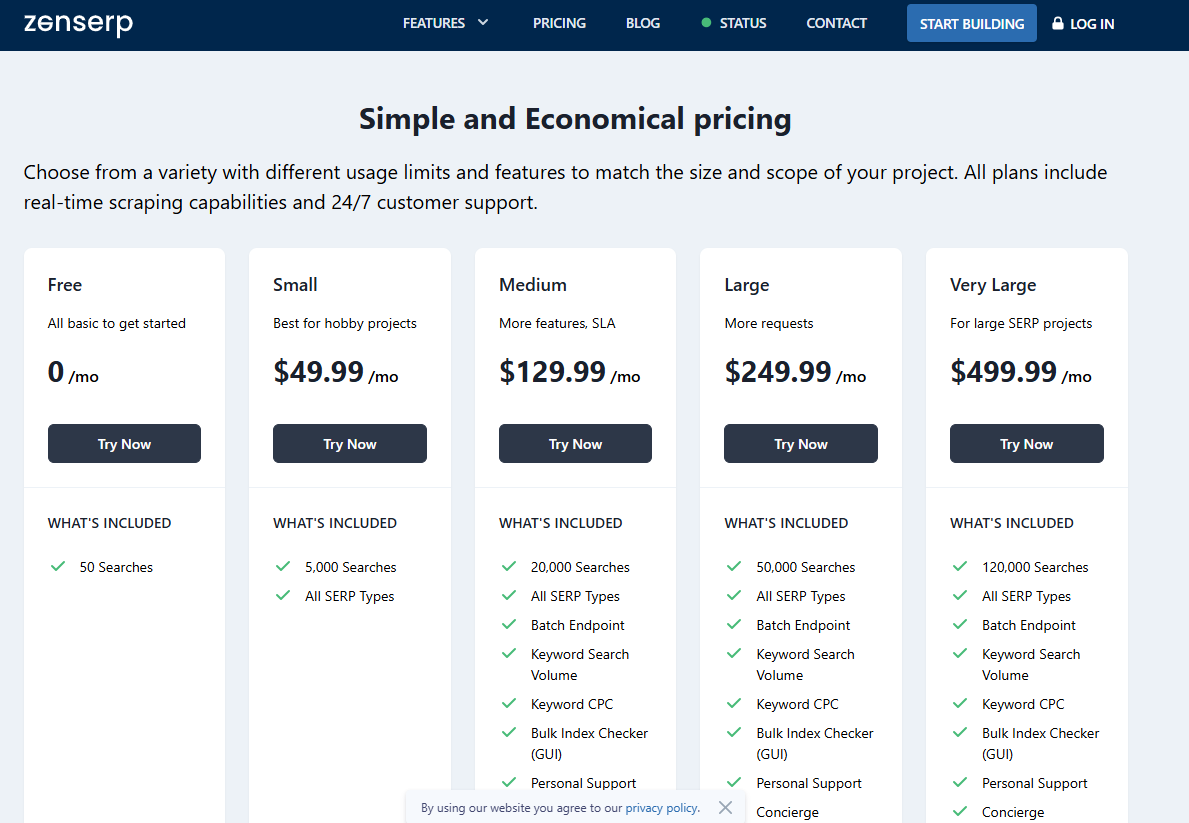
Zenserp uses a request-based pricing structure with affordable starter plans and scalable tiers for agencies and SaaS products.
Best Use Cases:
- SEO rank tracking tools
- Keyword research platforms
- SERP monitoring systems
Serpstack
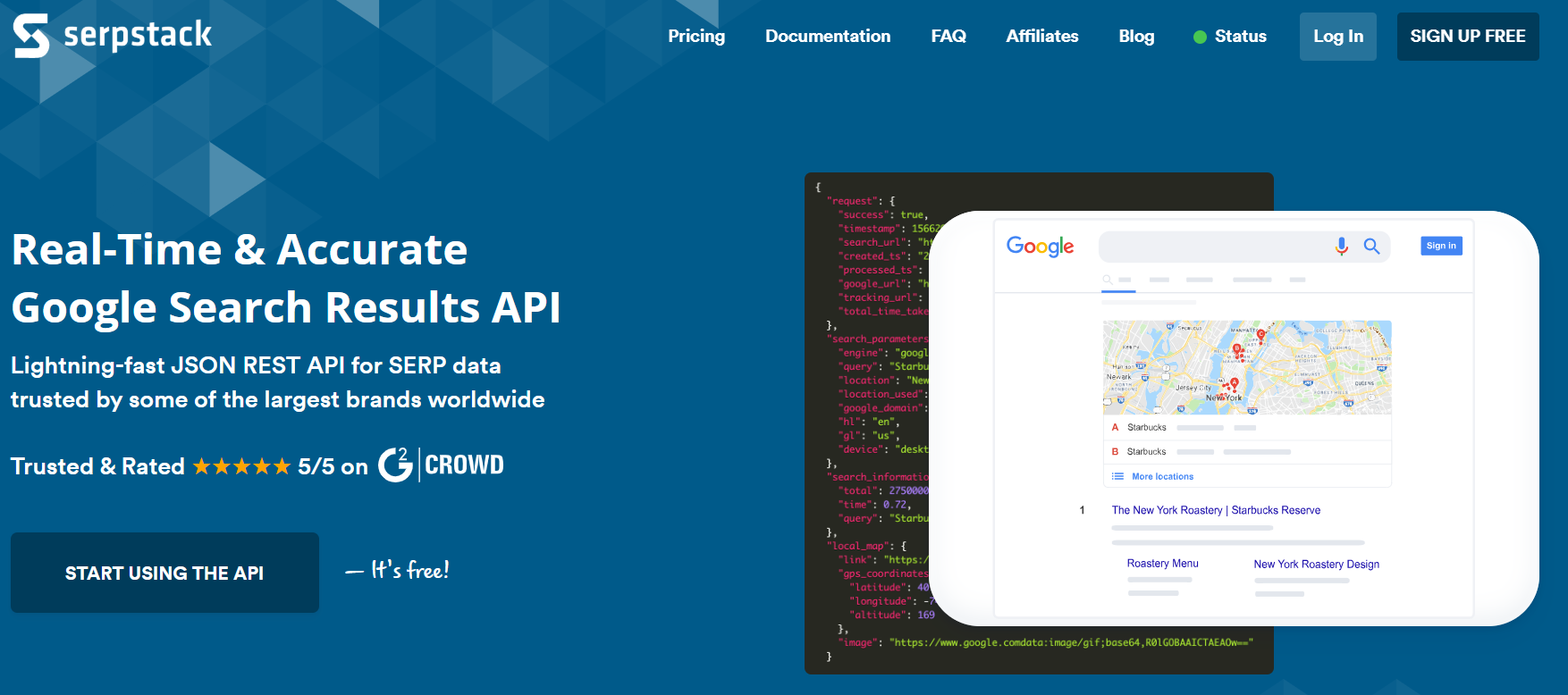
serpstack offers a simple REST API for retrieving SERP data from Google and other search engines. It focuses on ease of use and affordability.
Core Features:
- Real-time SERP queries
- JSON output with organic and paid results
- Location and device targeting
- Supports Google, Bing, and Yahoo
Data Accuracy:
serpstack provides reliable results for general rank tracking but may show slight variations in complex SERP features compared to premium providers.
Pricing Model:
Credit-based pricing with free and paid plans. Entry-level tiers are suitable for small SEO projects and testing.
Best Use Cases:
- Freelance SEO consultants
- Small agencies
- Lightweight rank tracking tools
SerpApi
Overview:
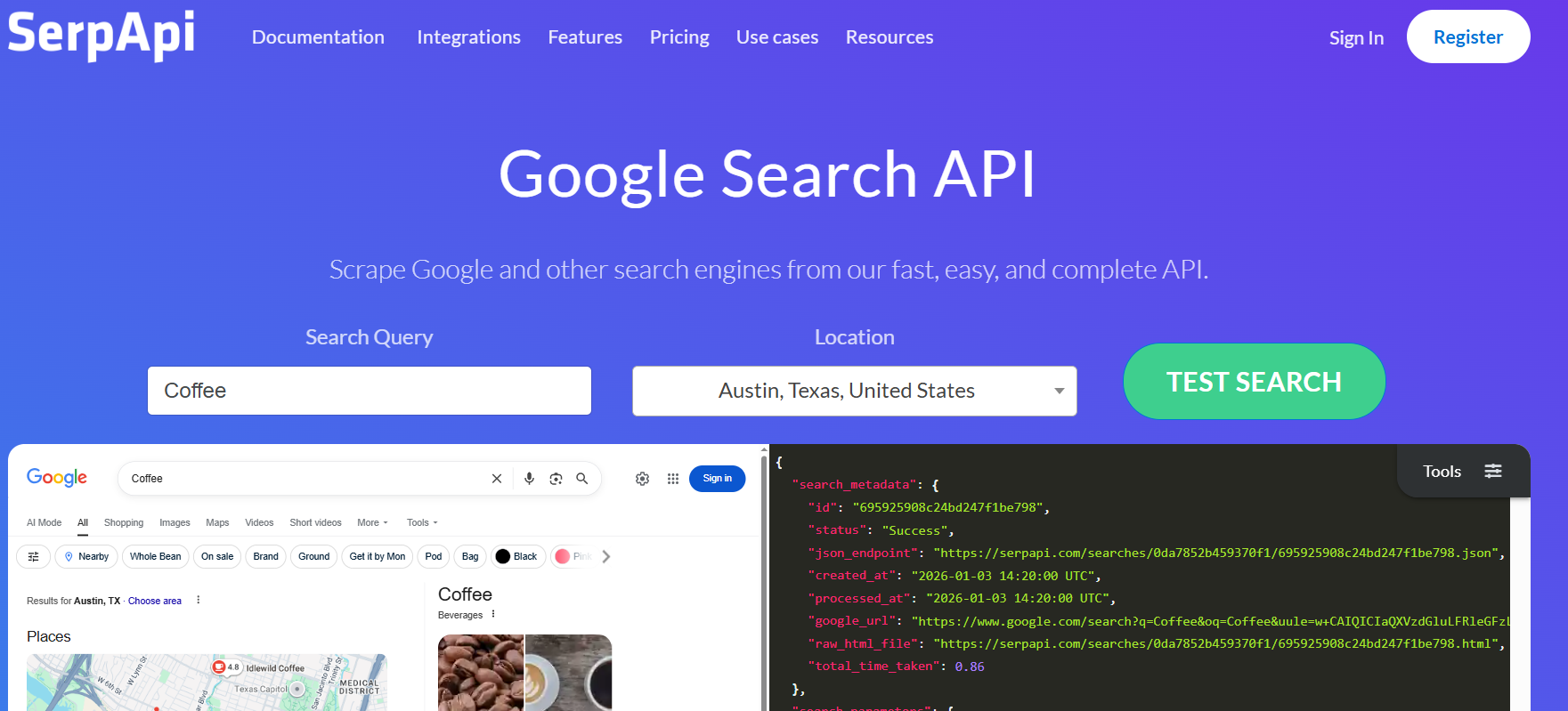
SerpApi is a popular solution for extracting search engine results with structured output and broad search engine support.
Core Features:
- Supports Google, Bing, Baidu, and more
- Handles ads, shopping results, and news
- JSON-based output
- High concurrency options
Data Accuracy:
Known for accurate parsing of SERP elements, including ads and rich results. Suitable for complex SERP analysis.
Pricing Model:
Subscription plans based on request volume. Higher tiers are designed for enterprise workloads.
Best Use Cases:
- Market intelligence tools
- Ad research platforms
- SEO analytics software
DataForSEO
Overview:
DataForSEO provides a broad suite of SEO APIs, including SERP data, keyword research, and backlink metrics.
Core Features:
- SERP API with structured JSON output
- Supports Google and Bing
- Bulk query processing
- Additional SEO datasets
Data Accuracy:
Highly reliable for large-scale data analysis, with strong coverage of SERP features.
Pricing Model:
Pay-as-you-go pricing based on credits, offering flexibility for variable workloads.
Best Use Cases:
- SEO data platforms
- Agencies needing multiple SEO datasets
- Research-focused applications
ScraperAPI
ScraperAPI is a general-purpose scraping API that can be configured for SERP extraction but is not dedicated exclusively to search results.
Core Features:
- Proxy rotation and CAPTCHA handling
- HTML or JSON output
- Global IP coverage
Data Accuracy:
Accuracy depends on custom parsing logic since results are not always pre-structured like specialized SERP APIs.
Pricing Model:
Subscription-based pricing with request limits per plan.
Best Use Cases:
- Custom scraping workflows
- Developers building bespoke SERP parsers
- Experimental projects
SERP API Accuracy Comparison
When performing a SERP API accuracy comparison, the most important elements are:
- Organic ranking order
- Ad placement
- Featured snippets
- Local packs and maps
Zenserp and SerpApi consistently provide the closest match to real Google SERPs. serpstack performs well for basic rankings but may omit certain rich features. DataForSEO excels at structured outputs for analytical use cases. ScraperAPI depends heavily on custom extraction logic, which can introduce inconsistencies.
SERP API Pricing Comparison
Pricing models typically fall into three categories:
Request-Based Pricing:
Used by Zenserp and SerpApi. You pay per number of queries.
Credit-Based Pricing:
Used by serpstack and DataForSEO, offering flexibility for bulk operations.
Subscription Plans:
Used by ScraperAPI, with limits per tier.
For startups and agencies, Zenserp and serpstack offer the most accessible entry points. For enterprise analytics, SerpApi and DataForSEO provide advanced capabilities at higher price points.
Which Is the Best SERP API for SEO?
Based on features, accuracy, and scalability, Zenserp stands out as the best SERP API for SEO. It combines:
- High-fidelity SERP data
- Global targeting
- Structured output
- Transparent pricing
serpstack follows closely as a budget-friendly alternative, while SerpApi and DataForSEO suit complex analytics needs. ScraperAPI is best for developers who want full control over custom scraping logic.
Common Use Cases
- Keyword rank tracking
- Competitor SERP monitoring
- Featured snippet analysis
- PPC ad research
- Market trend detection
These use cases rely heavily on stable and accurate SERP data delivery.
FAQs
Q1: What is the most accurate SERP scraping API?
Zenserp and SerpApi are widely regarded as the most accurate, closely reflecting live Google results.
Q2: Which SERP API is best for SEO tools?
Zenserp is ideal due to its structured output, speed, and ease of integration.
Q3: Are SERP scraping APIs legal?
SERP APIs operate in a legal gray area depending on usage and local regulations. Most providers follow compliance standards and handle infrastructure responsibly.
Q4: Which SERP API is cheapest?
serpstack offers some of the lowest entry-level pricing for small projects.
Q5: Can SERP APIs be used with Python?
Yes, all major SERP APIs provide REST endpoints compatible with Python, JavaScript, and other languages.
Choosing the right SERP API depends on your goals, scale, and budget. This SERP API comparison shows that while many providers deliver similar core functionality, their strengths differ.
Zenserp leads as the most balanced solution for accuracy, scalability, and cost-efficiency. serpstack provides an affordable alternative, while SerpApi and DataForSEO support enterprise-grade analytics. ScraperAPI remains useful for custom scraping scenarios.
For businesses building SEO tools or automating keyword research, investing in a high-quality SERP API is no longer optional, it is essential.
Recommended Resources: Zenserp vs. Yandex Reverse Image Search: What's The Best?