

Generative AI, Tableau Course, and Blockchain: Building Future-Ready Technology Skills
Technology is changing rapidly, and the skills required in today's digital workplace are evolving with it. Artificial Intelligence, data analytics, and decentralized technologies are becoming increasingly important across industries. For students and professionals, learning these technologies can create opportunities to improve technical knowledge, solve practical problems, and prepare for changing career requirements.
Among the technologies attracting significant attention are Generative AI, Tableau, and Blockchain. Although each serves a different purpose, together they represent three valuable areas of modern technology: intelligent content and automation, data visualization and decision-making, and decentralized digital solutions.
Generative AI: The New Era of Artificial Intelligence
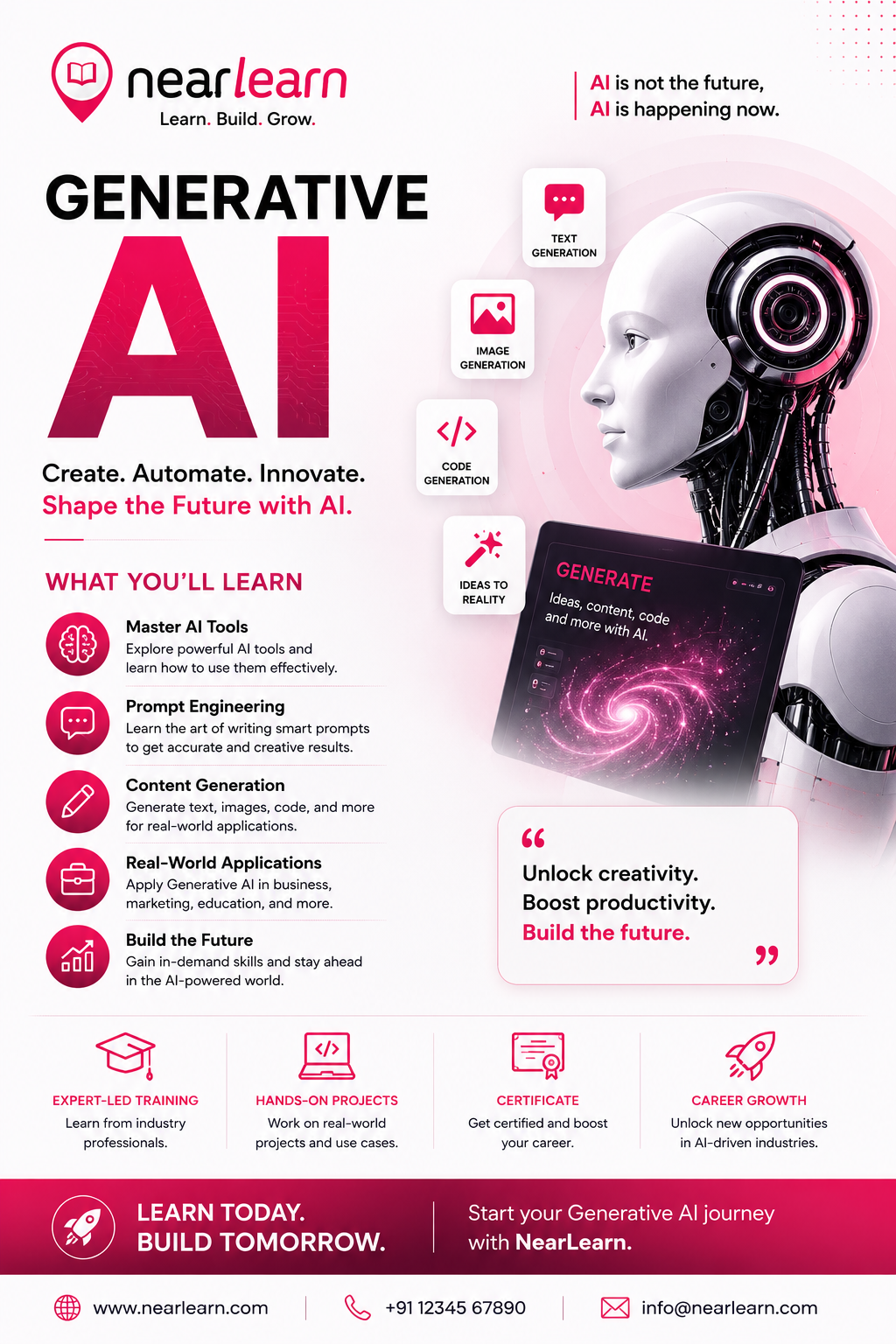
Generative AI is a branch of artificial intelligence that can create new content based on instructions and learned patterns. Depending on the system, it can generate text, images, code, audio, and other forms of digital content.
Tools powered by Generative AI are being explored in areas such as marketing, software development, education, customer service, research, and business operations.
For example, a marketing professional can use Generative AI to brainstorm campaign ideas, while a developer can use AI assistance to understand code or create an initial implementation. An educator may use AI to develop learning materials, and businesses can explore AI-powered assistants for customer support.
What Can You Learn in a Generative AI Course?
A structured Generative AI course can introduce learners to:
- Artificial Intelligence fundamentals
- Generative AI concepts
- Large Language Models (LLMs)
- Prompt engineering
- AI-powered content creation
- AI image generation
- AI-assisted coding
- Chatbot concepts
- Retrieval-Augmented Generation (RAG)
- AI automation and workflows
- Responsible AI practices
Practical training is particularly useful because Generative AI is not simply about knowing how to use an AI tool. Learners also need to understand how to provide effective instructions, evaluate AI-generated results, protect sensitive information, and apply AI responsibly.
Tableau: Turning Data Into Meaningful Insights
Businesses generate huge amounts of data every day. However, raw numbers and spreadsheets can be difficult to interpret without effective visualization.
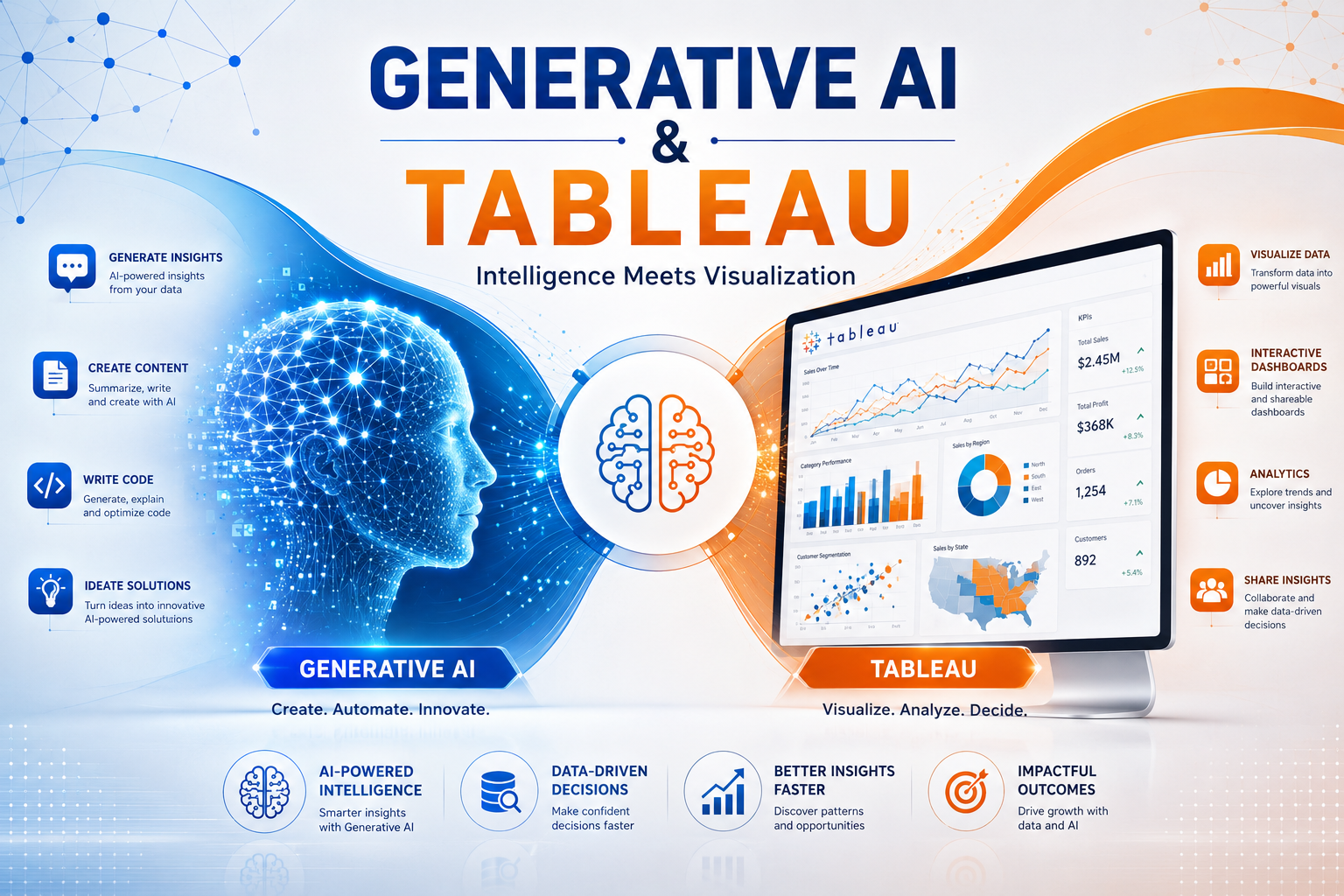
Tableau is a data visualization and business intelligence platform that helps users explore information and create interactive visualizations, reports, and dashboards.
Instead of looking at thousands of rows of data, users can create charts, maps, graphs, and dashboards that make important patterns easier to identify.
For example, a sales dashboard can help a business understand:
- Which products generate the most revenue
- Which regions perform best
- How sales change over time
- Which categories are growing
- Where performance needs improvement
This ability to transform data into understandable visual insights makes data visualization an important skill for modern organizations.
Why Learn a Tableau Course?
A Tableau course can help learners develop practical data visualization and analytics skills.
A typical learning path may include:
- Connecting to data sources
- Data preparation
- Charts and visualizations
- Filters and parameters
- Calculated fields
- Dashboard development
- Data storytelling
- Interactive reports
- Publishing and sharing dashboards
The most effective way to learn Tableau is through practical datasets and projects. Instead of only learning how individual features work, learners can build dashboards around realistic business problems.
Blockchain: Building Decentralized Solutions
Blockchain is another important technology that has expanded beyond its early association with cryptocurrency.
At a basic level, blockchain is a distributed system for recording transactions or information across a network. Depending on the implementation, blockchain can provide features such as transparency, traceability, and tamper resistance.
Blockchain technology is being explored in areas including:
- Financial services
- Supply chain management
- Digital identity
- Smart contracts
- Decentralized applications
- Asset management
- Digital transactions
What Can You Learn in Blockchain Training?
A Blockchain course can introduce learners to important concepts such as:
- Blockchain fundamentals
- Distributed ledgers
- Blocks and transactions
- Cryptography concepts
- Consensus mechanisms
- Smart contracts
- Decentralized applications
- Web3 fundamentals
- Blockchain use cases
Learners with programming experience can also explore development concepts and smart-contract technologies.
How These Three Technologies Connect
At first, Generative AI, Tableau, and Blockchain may seem unrelated. In reality, they can complement one another in modern technology environments.
Consider a business that wants to improve its operations.
Generative AI could help employees automate content-related tasks or build an intelligent assistant.
Tableau could transform business data into dashboards that help managers understand performance.
Blockchain could provide a transparent and traceable system for specific transactions or records.
Together, these technologies demonstrate three different ways technology can create value:
AI → Intelligence and Automation
Tableau → Data Visualization and Decision-Making
Blockchain → Decentralization and Transparency
Understanding more than one technology can therefore help learners develop a broader perspective of the digital ecosystem.
Why Practical Technology Training Matters
Technology courses are most valuable when learners have opportunities to apply their knowledge.
Reading about Generative AI, Tableau, or Blockchain provides a foundation, but practical projects help learners understand how these technologies work in real situations.
For example, learners could:
- Build a Generative AI chatbot
- Create a Tableau sales dashboard
- Develop a blockchain-based application concept
- Analyze business datasets
- Experiment with prompt engineering
- Explore smart-contract use cases
Projects also help learners demonstrate their abilities when building a portfolio.
Who Should Learn These Technologies?
These technologies can be useful for different types of learners.
Students
Students can develop additional technical skills alongside their academic education and explore emerging technology careers.
Working Professionals
Professionals can use these technologies to improve productivity, reporting, automation, and problem-solving within their existing roles.
Technology Enthusiasts
People interested in emerging technology can explore different areas and identify the field that best matches their interests.
Career Changers
Professionals looking to move into technology-related roles can use structured learning and practical projects to begin developing relevant skills.
Career Opportunities
Learning a technology does not guarantee employment, but practical skills can complement education and professional experience.
Depending on their broader background, learners may explore roles related to:
- Generative AI
- AI application development
- Data analytics
- Business intelligence
- Data visualization
- Blockchain development
- Web3
- AI-assisted automation
- Technology consulting
The career path someone chooses should depend on their interests, existing skills, qualifications, and long-term goals.
Why Choose NearLearn?
NearLearn focuses on industry-oriented technical learning designed to help students and professionals develop practical technology skills.
Through courses covering areas such as Generative AI, Tableau, Blockchain, Data Science, Machine Learning, and other emerging technologies, learners can explore concepts through structured training and practical applications.
The objective is to move beyond theoretical knowledge and encourage learners to understand how technology can be applied to real-world problems.
Start Building Future-Ready Skills
The technology landscape will continue to evolve. New AI models, analytics tools, blockchain applications, and digital solutions will continue to emerge.
Instead of trying to learn every technology at once, learners can start with an area that matches their career goals and gradually expand their knowledge.
If you are interested in intelligent automation, Generative AI can be a strong area to explore. If you enjoy working with data and visual storytelling, a Tableau course can help develop your analytics skills. If decentralized systems and Web3 interest you, Blockchain training can provide a foundation for exploring that field.
The important step is to learn consistently, practice with real-world projects, and keep adapting as technology changes.
Final Thoughts
Generative AI, Tableau, and Blockchain represent three exciting areas of modern technology. Generative AI focuses on intelligent content generation and automation, Tableau helps organizations understand data through visualization, and Blockchain introduces new approaches to decentralized digital systems.
Developing practical knowledge in these areas can help students and professionals understand the technologies shaping today's digital world.
Learn today. Build practical skills. Lead tomorrow with NearLearn.