
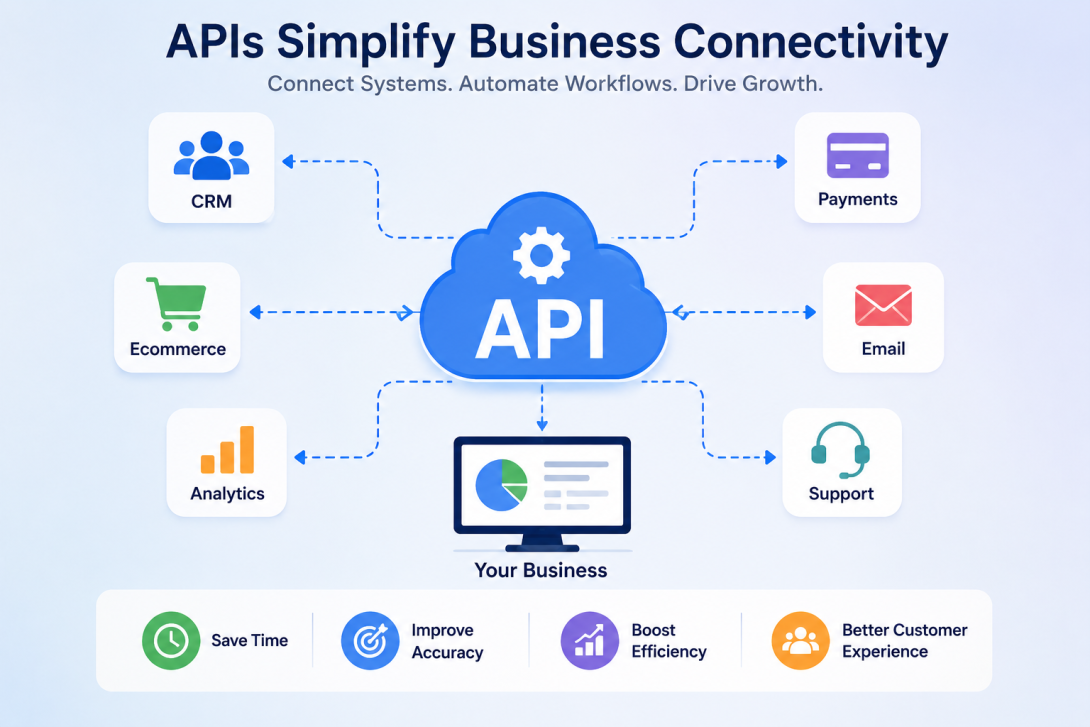
Businesses today rely on multiple software platforms to manage customers, payments, communication, analytics, and operations. While these tools help improve productivity, they often create data silos that make it difficult for information to move smoothly between systems. This challenge has encouraged organizations to look for smarter ways to connect their digital tools and automate workflows.
APIs have become one of the most effective solutions for connecting applications and enabling seamless communication between different platforms. Whether a company is managing customer records, processing transactions, or tracking performance metrics, APIs help ensure that information flows accurately and efficiently.
Why Connected Systems Matter More Than Ever
Modern businesses use a variety of applications every day. Marketing teams work with customer relationship management platforms, finance departments use accounting software, and support teams rely on communication tools. When these systems operate independently, employees often spend valuable time manually transferring information.
Connected systems help organizations:
- Reduce manual work
- Improve operational efficiency
- Minimize data errors
- Enhance customer experiences
- Support faster decision-making
By creating automated connections between software platforms, businesses can focus more on growth and innovation rather than repetitive administrative tasks.
The Growing Role of API Connectivity
As organizations continue expanding their digital ecosystems, the demand for efficient software communication has increased significantly. This is where api data integration plays an important role.
Through API connectivity, businesses can automatically exchange information between applications without requiring complex custom development projects. For example, an ecommerce platform can instantly send order details to inventory management software while simultaneously updating customer records.
This automated approach improves accuracy and helps teams work more efficiently across departments.
Common Business Applications of APIs
APIs support a wide range of business functions across different industries. Their flexibility makes them valuable for organizations of all sizes.
Customer Data Synchronization
Businesses often store customer information across multiple platforms. APIs help synchronize data automatically, ensuring that every department has access to updated information.
Payment Processing
Online stores and subscription services frequently use APIs to connect payment gateways with their websites and mobile applications. This creates a smooth purchasing experience for customers.
Marketing Automation
Marketing teams use APIs to connect email platforms, analytics tools, and CRM systems. This allows campaigns to be personalized based on customer behavior and engagement.
Reporting and Analytics
Organizations collect large amounts of data from different sources. APIs make it easier to gather information into centralized dashboards where teams can monitor performance and identify trends.
Benefits of API Driven Workflows
Businesses that adopt API-based workflows often experience significant improvements in efficiency and scalability.
Faster Operations
Automation reduces the need for manual data entry and repetitive tasks. Employees can focus on higher-value activities that contribute directly to business growth.
Improved Accuracy
When information moves automatically between systems, the likelihood of human error decreases significantly. This leads to more reliable business data.
Better Customer Experiences
Customers expect fast and personalized interactions. APIs help businesses deliver seamless experiences by ensuring that customer information remains updated across platforms.
Greater Scalability
As businesses grow, their technology requirements become more complex. APIs make it easier to add new tools and services without rebuilding existing systems.
Key Factors to Consider Before Integrating APIs
Successful API implementation requires careful planning. Organizations should evaluate several important factors before starting integration projects.
Security
Protecting sensitive business and customer data should always be a priority. Secure authentication methods and encrypted communication help reduce risks.
Reliability
Businesses should choose API providers with strong performance records and dependable infrastructure to ensure uninterrupted operations.
Documentation
Clear and comprehensive documentation makes integration easier for developers and reduces implementation time.
Scalability
Organizations should select solutions capable of handling future growth and increasing data volumes.
How Developers Benefit From Modern API Solutions
Developers are constantly looking for ways to build applications faster while maintaining quality and performance. APIs provide ready-to-use functionality that eliminates the need to create every feature from scratch.
Instead of spending months developing complex systems internally, developers can integrate existing services that provide reliable functionality. This accelerates project timelines and allows teams to focus on creating unique user experiences.
The availability of specialized APIs for payments, communications, location services, financial data, and automation continues to expand opportunities for software development.
Industry Trends Driving API Adoption
Several technology trends are increasing demand for API-based solutions.
Cloud computing has encouraged organizations to adopt multiple software services that require efficient communication.
Remote work environments have increased the need for connected business systems that support distributed teams.
Mobile applications continue growing in popularity, requiring reliable methods for exchanging information with backend systems.
Artificial intelligence and automation platforms also depend heavily on APIs to access and process data from multiple sources.
These trends suggest that API usage will continue expanding as businesses pursue greater efficiency and digital transformation.
Building Future Ready Digital Ecosystems
Organizations that invest in connected technologies position themselves for long-term success. APIs help businesses remain flexible by enabling new tools, services, and platforms to work together effectively.
Many development teams also rely on resources and best practices provided by a google API Developer ecosystem when exploring integration strategies, authentication methods, and scalable application design. Access to reliable development resources helps teams create stronger and more maintainable software solutions.
As digital environments become increasingly interconnected, businesses that embrace API-driven approaches will be better prepared to adapt to changing customer expectations and technological advancements.
FAQs
1. What is API integration in simple terms?
API integration allows different software applications to communicate and share information automatically. This reduces manual work and improves operational efficiency.
2. Why do businesses use APIs?
Businesses use APIs to connect systems, automate workflows, improve data accuracy, enhance customer experiences, and support business growth through better technology integration.
3. How can developers benefit from APIs?
Developers can save time by using existing services instead of building every feature from scratch. APIs accelerate development, improve scalability, and provide access to specialized functionality.