
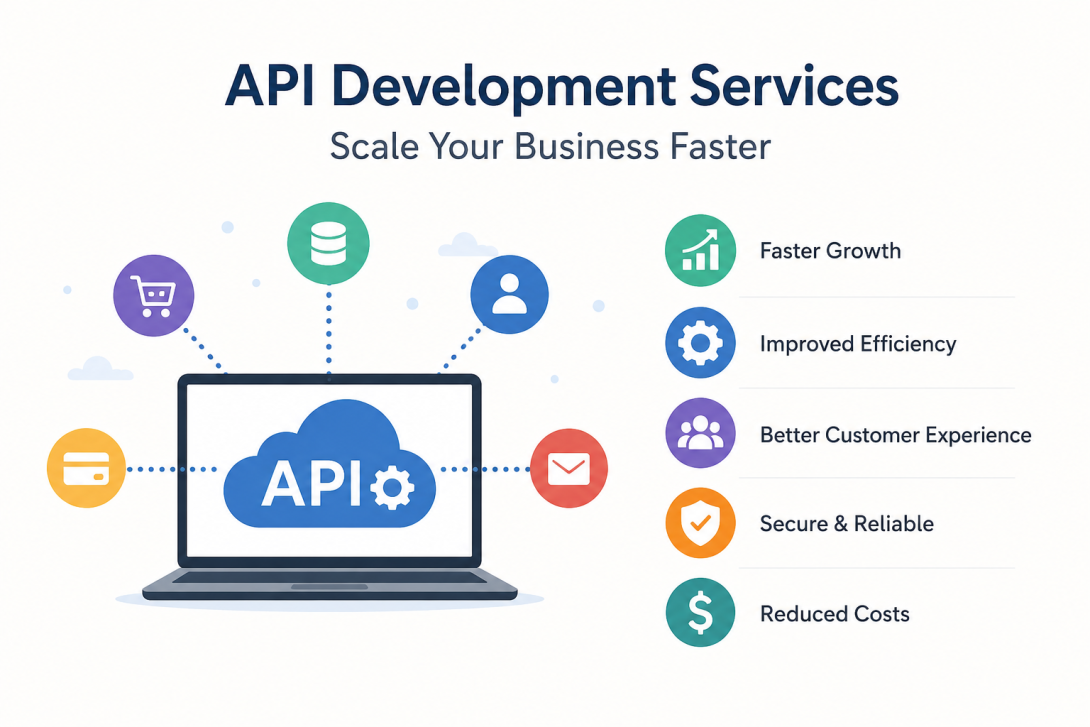
Businesses today rely on digital systems to manage customers, automate operations, process transactions, and deliver better user experiences. As organizations grow, they often face challenges related to efficiency, data management, and system integration. This is where API development services play an important role.
APIs allow different software applications to communicate with each other smoothly. Instead of building every feature from scratch, businesses can connect existing tools, platforms, and services through APIs. This approach helps organizations save time, reduce costs, and scale operations more effectively.Understanding how APIs contribute to business growth can help companies make smarter technology decisions and prepare for future expansion.
Understanding the Role of APIs in Business Growth
An API, or Application Programming Interface, acts as a bridge between different software systems. It allows applications to exchange information and perform actions without requiring manual intervention.For example, an ecommerce platform may connect with payment gateways, shipping providers, customer relationship management systems, and inventory software through APIs. These connections create a seamless workflow that improves efficiency across the entire business.As companies grow, managing multiple systems manually becomes increasingly difficult. APIs help eliminate these bottlenecks by automating communication between platforms and services.
Faster Development and Deployment
One of the biggest advantages of using APIs is faster software development.
Building every feature internally requires significant development resources, testing, and maintenance. APIs allow businesses to integrate existing functionality into their applications without spending months creating similar solutions.
Developers can focus on building unique business features while leveraging external services for tasks such as:
- Payment processing
- User authentication
- Email delivery
- Currency conversion
This approach shortens development cycles and enables businesses to launch products and services more quickly.Faster deployment often translates directly into faster business growth because organizations can respond to market opportunities without long development delays.
Improved Operational Efficiency
Business growth often brings operational complexity. More customers, transactions, and data require better systems and processes.APIs help automate repetitive tasks that would otherwise consume valuable time and resources.For example, customer information can automatically flow between sales, support, and marketing platforms. Inventory updates can synchronize across multiple sales channels in real time. Financial systems can automatically process transaction data without manual entry.
These automated workflows reduce human errors while improving overall productivity.When teams spend less time on manual processes, they can focus more on strategic activities that contribute to growth.
Better Customer Experiences
Customer expectations continue to rise across every industry. Users expect fast, reliable, and personalized experiences regardless of the platform they use.APIs help businesses deliver these experiences by connecting different systems and providing real time access to information.
Customers can receive instant updates on orders, account activity, and service requests. Businesses can personalize recommendations based on customer behavior and preferences. Mobile apps and websites can access consistent data across all customer touchpoints.These improvements create a smoother customer journey and strengthen brand loyalty.Satisfied customers are more likely to return, recommend services, and contribute to long term business growth.
Easier Integration With Third Party Platforms
Modern businesses rarely operate using a single software solution. Most organizations rely on multiple tools for communication, marketing, analytics, accounting, customer management, and operations.Without APIs, connecting these systems would be difficult and expensive.
API integrations allow businesses to build connected ecosystems where information flows freely between platforms. This eliminates data silos and improves visibility across departments.As a result, decision makers gain access to accurate information that supports better business planning and execution.
Supporting Business Scalability
Scalability is essential for sustainable growth.Many businesses struggle when their systems cannot handle increasing customer demand or larger data volumes. APIs provide a flexible framework that allows organizations to expand their capabilities without rebuilding entire systems.New services, applications, and features can be added through API integrations as business requirements evolve.
This flexibility allows companies to adapt quickly to changing market conditions while maintaining operational stability.Scalable technology infrastructure helps businesses grow confidently without facing constant technical limitations.
Access to Valuable External Data
Data has become one of the most valuable business assets. Organizations use data to improve products, understand customers, and make informed decisions.APIs provide access to external data sources that can enhance business operations and customer experiences.
Many developers use Free public APIs to access information such as weather data, currency exchange rates, financial market updates, geographic information, and much more.Integrating relevant external data can create additional value for customers while improving internal decision making processes. Businesses that effectively leverage data often gain a competitive advantage in their industries.
Reduced Development Costs
Building and maintaining software systems requires significant investment.APIs help reduce costs by allowing organizations to use existing solutions instead of developing everything internally.
Rather than dedicating resources to creating standard functionalities, businesses can integrate trusted third party services that already provide those capabilities.This reduces development expenses while also lowering long term maintenance requirements.The ability to achieve more with fewer resources is especially valuable for startups and growing businesses with limited budgets.
Enhanced Security and Reliability
Security is a major concern for modern businesses. Customers expect their information to be protected, and organizations must comply with various regulations and industry standards.Professional API implementations often include security features such as authentication, authorization, encryption, and monitoring.
Well designed APIs help protect sensitive data while ensuring secure communication between systems.In addition, many established API providers maintain high levels of reliability and uptime, helping businesses deliver consistent services to their customers.Reliable systems contribute directly to customer trust and business reputation.
Creating New Revenue Opportunities
APIs are not only tools for improving operations. They can also become valuable business assets.Many companies generate revenue by offering APIs that allow partners, developers, and customers to access their services programmatically.This approach can expand market reach and create entirely new business models.
Organizations can build ecosystems around their products and encourage innovation through developer partnerships.As digital transformation continues across industries, API driven business models are becoming increasingly common.
Supporting Innovation and Future Growth
Innovation often determines whether businesses remain competitive in rapidly changing markets.APIs provide the flexibility needed to experiment with new technologies, services, and business strategies.
Companies can quickly integrate emerging solutions without disrupting existing systems. This makes it easier to test new ideas, improve customer experiences, and respond to evolving market demands.Businesses that embrace API driven architectures are often better positioned to adapt and grow over the long term.
Conclusion
Growth requires more than attracting new customers. Businesses must also improve efficiency, automate processes, manage data effectively, and deliver exceptional customer experiences.Professional API development services provide the foundation needed to achieve these goals. APIs help organizations connect systems, accelerate development, reduce costs, and build scalable digital infrastructures.
At the same time, resources such as Free public APIs allow businesses to access valuable data and functionality without significant investment.As digital transformation continues shaping modern industries, APIs will remain one of the most important tools for organizations seeking faster growth, stronger performance, and long term success.
Frequently Asked Questions
1. What are API development services used for?
API development services are used to create, manage, and integrate APIs that allow different software systems to communicate efficiently. They help businesses automate processes, improve connectivity, and enhance digital experiences.
2. Can small businesses benefit from APIs?
Yes. Small businesses can use APIs to connect software tools, automate routine tasks, access external data sources, and improve customer experiences without investing heavily in custom development.
3. Are Free public APIs safe for business applications?
Many Free public APIs are reliable and secure when provided by trusted organizations. Businesses should review documentation, security practices, usage limits, and support options before integrating any API into production systems.